High Voltage Power Drive for Ion Implantation Process Stability
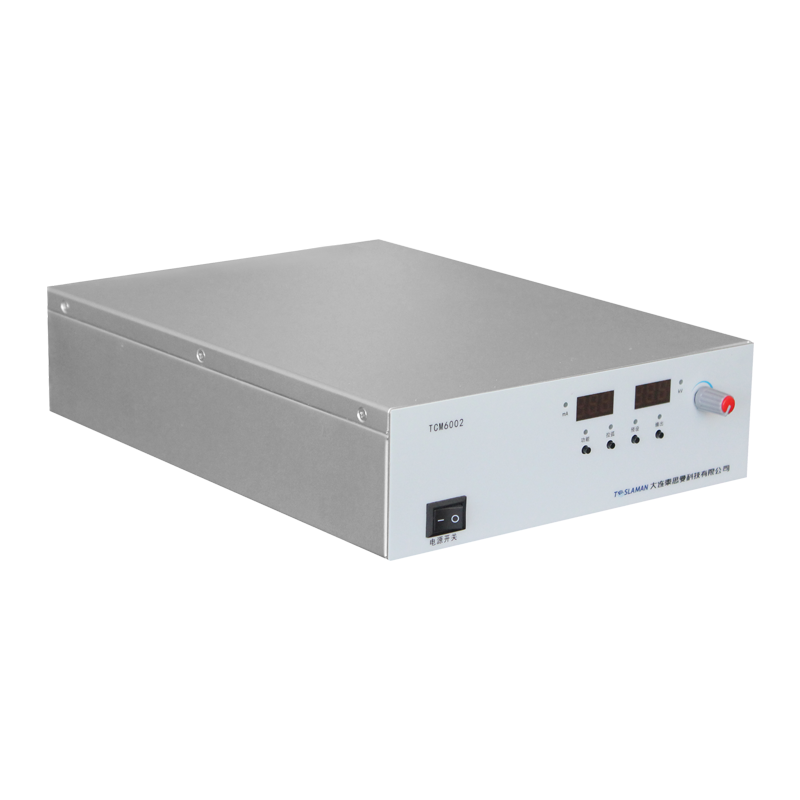
The stability of the ion implantation process—a measure of the consistency of the delivered dose and the uniformity of the depth profile across all wafers—is directly governed by the reliability and precision of the high-voltage (HV) power systems that drive the ion beam. These power supplies provide the necessary energy for four critical functions: ion generation, extraction, mass analysis, and acceleration. Any instability in these HV sources cascades through the machine, manifesting as unacceptable variations in the final doped structure.
The foundation of process stability begins at the ion source. The power supplies dedicated to the ion source plasma generation and ion extraction must maintain a highly stable potential to ensure a consistent and pure beam. Fluctuations in the extraction voltage directly affect the initial trajectory of the ions, influencing the efficiency of the mass analysis magnets and the ultimate focus of the beam at the wafer plane. The primary control challenge is managing beam current loading effects. As the ion beam current (the load on the extraction supply) varies due to changes in the ion source plasma or during beam tuning, the HV power supply must instantaneously compensate to maintain its output voltage within extremely tight tolerances (e.g., $<0.001\%$ deviation). Achieving this requires power supplies with extremely low output impedance, allowing them to source and sink current rapidly without significant voltage sag or overshoot, thus guaranteeing a stable energy input into the rest of the system.
Further enhancing stability is the power provided to the mass analyzer magnets. These magnets use HV-driven bending fields to select the desired ion species, filtering out unwanted contaminant ions (mass-resolution stability). The power supplies driving these magnet coils must offer ultra-low current ripple and drift over extended periods. Current instability translates directly to magnetic field instability, which compromises the mass resolution. Inadequate mass resolution leads to the co-implantation of contaminant ions, causing defectivity and yield loss. Modern solutions achieve this stability through sophisticated linear power stages or highly regulated, temperature-compensated switching supplies that maintain current setpoints with ppm accuracy, ensuring that only the intended dopant species reaches the wafer.
The most critical factor in process stability is the stability of the main acceleration potential. This HV supply determines the kinetic energy of the ions, directly controlling the implant depth. The stability requirement here is extremely stringent: long-term drift over hours of operation must be virtually non-existent, and transient ripple must be minimized. The power supply must utilize precision voltage references and active compensation circuits to counteract the effects of thermal drift and component aging. Furthermore, in high-current implanters, beam loading is significant. The power supply needs a fast response to load changes induced by varying beam current to prevent dose uniformity degradation. If the voltage drops during a high-current phase, the ions are implanted shallower, causing a localized dose error. The design minimizes this effect through high-speed feedback loops that measure the beam current in real-time and provide anticipatory control signals to the HV stage, essentially creating a feed-forward mechanism to ensure the acceleration voltage remains constant irrespective of the load. This comprehensive stability across all HV subsystems is the critical enabler for reproducible, high-quality doping profiles and high manufacturing yield.