Modular Innovation Trends in Power Supplies for Cleaning Equipment
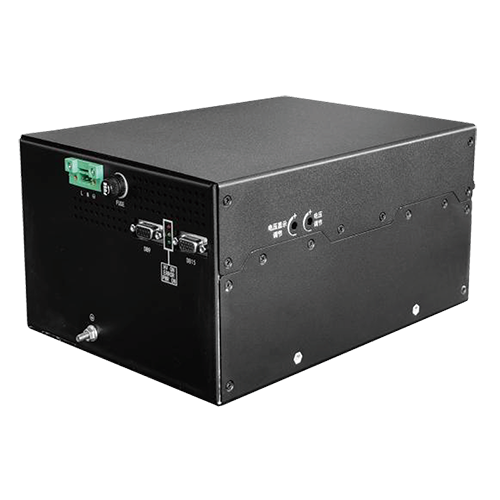
The architecture of high-voltage power systems for wafer cleaning tools is undergoing rapid modularization that mirrors trends observed earlier in deposition and etch platforms but adapted to the unique chemical and duty-cycle demands of wet processing environments. Contemporary designs decompose the traditional monolithic supply into hot-swappable, functionally independent modules that dramatically improve serviceability, scalability, and technology insertion velocity.
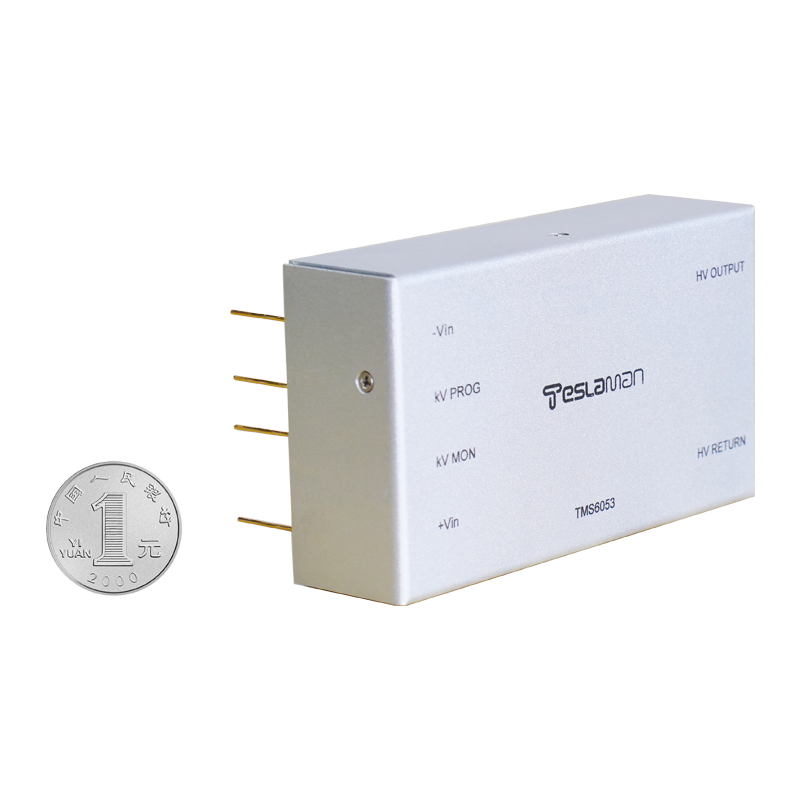
The core building block is the universal high-voltage slice—a compact 2-3 kW module containing inverter, resonant tank, output transformer, rectifier, and digital controller in a fully potted, liquid-cooled brick. Multiple slices connect to a passive backplane that provides only low-voltage DC distribution and fiber-optic communication, eliminating high-voltage bus bars that previously complicated maintenance. A four-platen cleaning tool might employ twelve slices for megasonic drive, four for charge neutralization, and two for auxiliary corona functions, all operating from identical hardware with configuration achieved purely through firmware.
Control intelligence resides in a separate master module that performs waveform synthesis, fault coordination, and host communication while containing no power semiconductors. This separation allows control upgrades—such as implementation of new adaptive cavitation algorithms—without disturbing high-voltage sections qualified for chemical resistance.
Cooling modules have become independently serviceable units with quick-connect manifolds and integrated redundancy. Dual counter-rotating pumps with automatic failover maintain flow even during pump replacement, eliminating the need to power down the entire tool for routine cooling maintenance.
Output interface modules tailored to specific functions represent the latest innovation layer. Megasonic interface bricks incorporate quartz-matched impedance transformation networks and embedded forward/reflected power sensors, while ionizer interface bricks include soft-start current limiting and balance detection optimized for bipolar plasma generation. This function-specific optimization achieves 3-5% higher end-to-end efficiency than universal designs while preserving complete mechanical interchangeability.
Diagnostic modules plug into dedicated backplane slots and perform automated transfer function measurement of connected transducers, storing compensation tables that linearize response across temperature and aging. Results are shared automatically with the fab’s predictive maintenance system, enabling transducer replacement scheduling before performance degradation impacts yield.
Safety architecture benefits enormously from modularity. Each high-voltage slice incorporates independent arc detection, ground fault monitoring, and mechanical contactor isolation, ensuring that a fault in one module cannot propagate high energy to adjacent units or service personnel.
Technology refresh cycles have shortened dramatically. When next-generation silicon carbide devices enable higher switching frequency and lower loss, only the affected slice generation changes while maintaining identical form factor, backplane protocol, and safety certification. This protects capital investment in existing cleaning platforms for a decade or more.
Spare parts inventory complexity drops by more than 80% because a single slice type covers multiple output voltage and waveform requirements through software reconfiguration. Field technicians carry only two physical part numbers regardless of tool configuration or function.
Chemical resistance has improved through module-level hermeticity. Each slice undergoes helium leak testing to 10⁻⁹ atm-cc/s and employs glass-to-metal feedthroughs for all external connections, allowing complete immersion testing in heated SPM without degradation.
The modular approach has proven particularly valuable during cleaning tool conversion from 200 mm to 300 mm operation, where power requirements roughly double. Additional slices are simply inserted into empty backplane slots with automatic load-sharing configuration, avoiding the complete supply replacement previously required.
These modular innovations have reduced mean time to repair from half-shift events to under twenty minutes in most failure scenarios while simultaneously enabling power density increases that support emerging single-wafer cleaning processes requiring simultaneous megasonic, ozone, and electrostatic operation at previously unattainable intensities.