Quad-Independent High-Voltage Power Supplies for Microchannel Plates
Night-vision intensifiers, fast timing detectors, and space-borne mass spectrometers using microchannel plates demand four electrically isolated high-voltage domains—front MCP-in, MCP-out to phosphor or collector, and two gain-control electrodes—with independent regulation better than ±2 V at 800–2200 V while surviving vacuum levels below 10⁻⁸ Torr and radiation doses exceeding 300 krad.
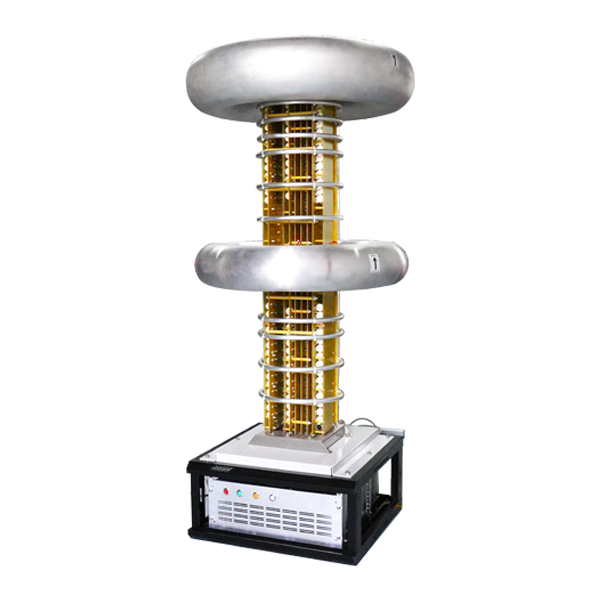
The power system uses four compact resonant flyback converters operating from a common 28 V spacecraft bus, each driving its own air-core transformer and four-stage Cockcroft-Walton multiplier potted in low-outgassing silicone. Physical separation of greater than 25 mm between multiplier assemblies and full mu-metal shielding of transformers prevents crosstalk below 1.8 V when one channel steps 600 V while others remain static.
Gain stability against temperature and radiation is maintained by active feedback from on-board resistive dividers constructed from thin-film ruthenium-oxide resistors selected for less than 60 ppm/krad shift. Each channel incorporates a 16-bit digital-to-analog converter that adjusts primary peak current to null divider drift detected during weekly automated self-test sequences that inject calibrated test currents at the high-voltage terminal.
Current limiting is implemented in two tiers: a fast analog fold-back circuit that restricts MCP current to 180 % of nominal within 800 ns of overload, protecting against vacuum arcs, and a slower digital integrator that reduces gain voltage when sustained current exceeds safe limits for secondary emission yield, preventing runaway gain that previously destroyed plates after solar proton events.
Front-to-back voltage ratio control critical for pulse-height resolution uses a master-slave architecture where MCP-out voltage tracks MCP-in with a digitally programmable ratio from 0.82 to 1.28 in 0.002 steps. Absolute ratio stability remains within 0.4 % over –40 °C to +65 °C by temperature-compensated reference scaling inside the control FPGA.
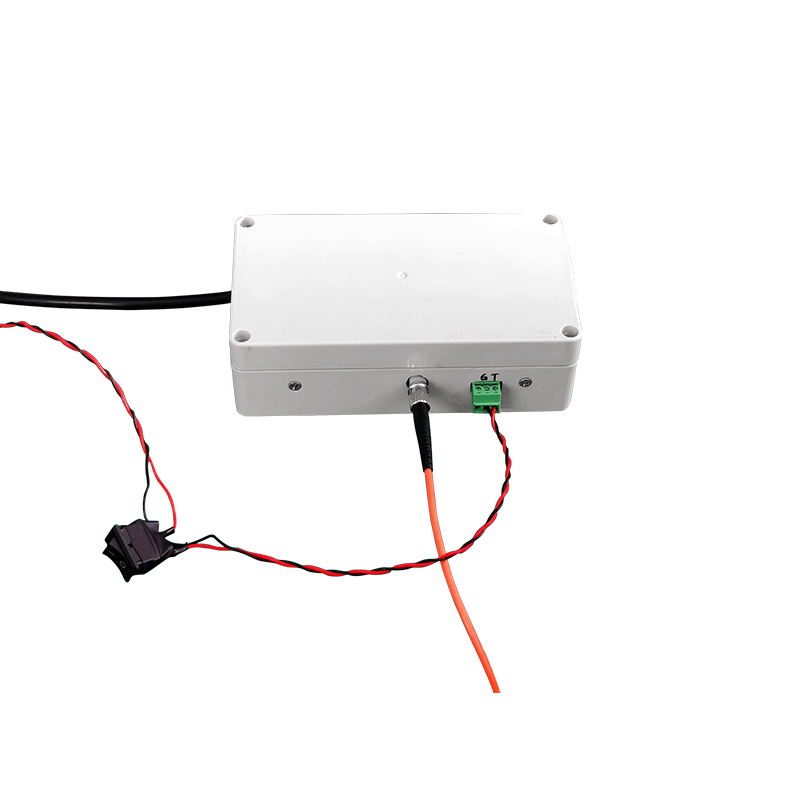
Radiation-tolerant design extends to component selection: ceramic capacitors with no piezoelectric response, optocouplers replaced by fiber-optic transceivers, and FPGA implemented in 65 nm SOI process with triple modular redundancy on all sequencing logic. Total ionizing dose hardness exceeds 500 krad(Si) with no single-event latch-up below 75 MeV·cm²/mg.
These quad-independent supplies routinely deliver greater than 10⁸ gain with pulse-height resolution under 38 % FWHM in photon-counting applications and timing resolution below 28 ps in large-area photomultipliers, while surviving 12-year GEO missions with zero high-voltage failures.