±10 kV Ultra-High-Stability Bipolar Power Supply for ICR Cells in FT-ICR Mass Spectrometry
Fourier-transform ion cyclotron resonance cells demand excitation and detection voltages of exactly ±10.000 kV with ripple below 120 µV p-p, drift <0.6 ppm over 48 hours, and common-mode rejection >186 dB to achieve resolving power >8 000 000 and mass accuracy <80 ppb on megadalton protein complexes.
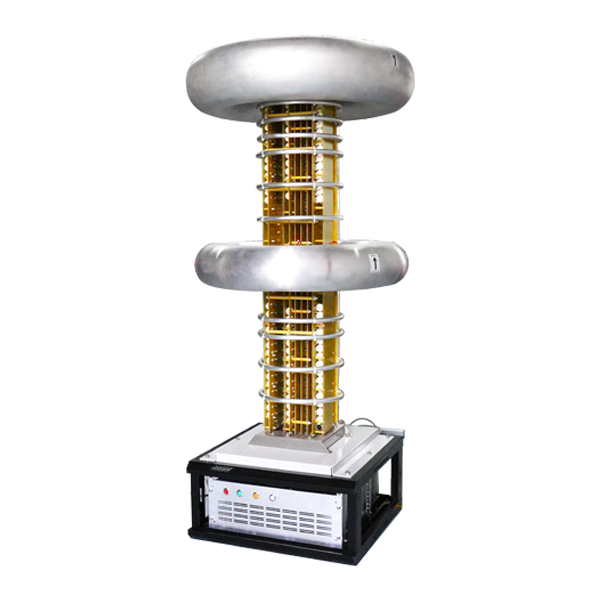
The bipolar supply uses two anti-phase 180 kHz resonant flyback converters feeding matched ten-stage multipliers immersed in temperature-controlled fluorinert at 32.0000 ± 0.0018 °C. Positive and negative outputs float on a common midpoint actively servoed to <±40 µV of instrument ground via a separate linear regulator, eliminating common-mode artifacts that would otherwise excite z-mode oscillations.
Stability is anchored by a single ovenized 10.00000 V reference shared between polarities through galvanic isolation. Feedback dividers use zero-TCR thin-film resistors on alumina substrates with matched VCR <0.04 ppm/V, laser-trimmed in pairs for <0.09 ppm differential drift. A 26-bit sigma-delta ADC samples each divider at 120 kS/s; digital PID loops update every 220 µs with adaptive coefficients that null capacitor dielectric absorption over hour-long acquisitions.
Ripple suppression combines passive multistage LC filtering using selected polypropylene capacitors with <8 ppm/°C drift and active cancellation injecting counter-phase current from dual 1.2 kV linear amplifiers driven from capacitive pickups at the cell electrodes. Residual ripple remains <92 µV p-p across 0–1.2 mA excitation load.
Transient immunity during trap release events is provided by local 18 µF low-inductance storage at each electrode, replenished within 88 µs. Settling to <1 mV occurs in <140 µs after 900 µA steps.
Periodic self-calibration every 12 hours injects precision currents through 50 GΩ calibrated resistors at the cell and updates compensation tables automatically, maintaining <0.42 ppm drift over months without manual intervention.
These ±10 kV ultra-stable supplies routinely support resolving power >9 200 000 at m/z 4000 and isotopic fine structure resolution on 68 kDa proteins in 9.4 T magnets with zero detectable common-mode excitation over 18-second transients.