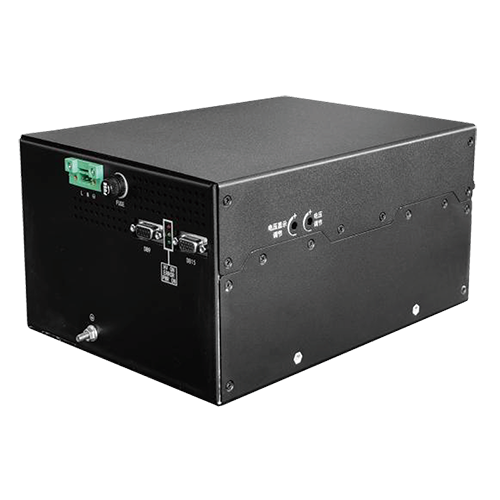
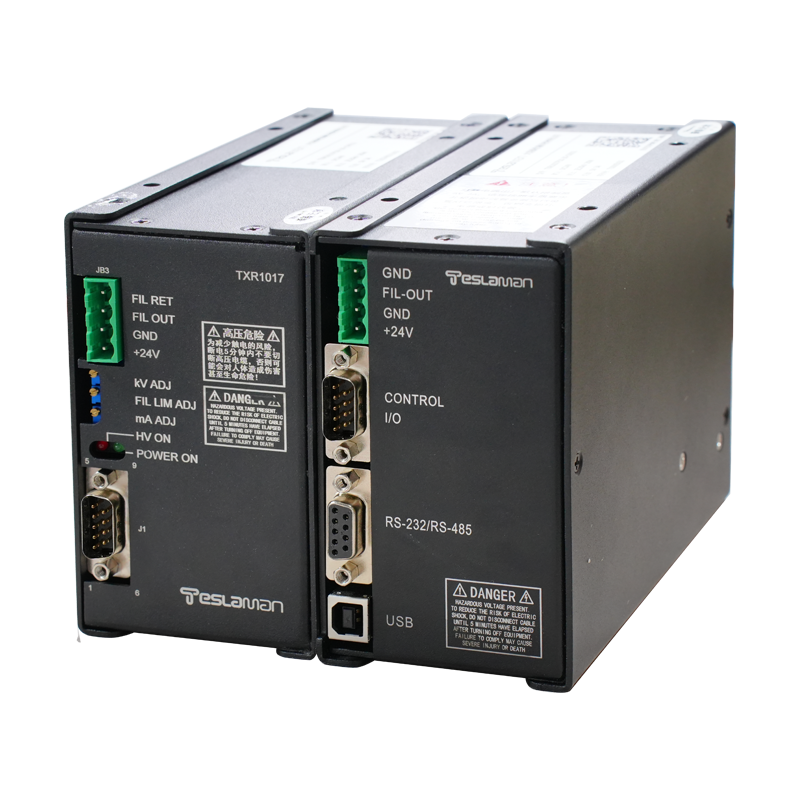
Non-Destructive Testing Power Supply Multi-Frequency Excitation Output
Non-destructive testing (NDT) methodologies such as eddy current testing, pulsed eddy current, and multi-frequency mixing techniques have become indispensable for evaluating material integrity, detecting flaws, and characterizing material properties without causing damage. The excitation source, particularly the power supply system generating the required waveforms, is a fundamental element that defines the capability, resolution, and sensitivity of these inspection systems. The emergence of multi-frequency excitation strategies has placed new and complex demands on these power supplies, requiring them to generate, switch, and combine multiple frequencies with high precision, stability, and low distortion. This examination focuses on the application-driven requirements for high-performance power supplies in multi-frequency excitation NDT applications.
Multi-frequency excitation involves simultaneously or sequentially applying alternating currents of two or more distinct frequencies into a test probe or coil. The primary rationale is to gain more information from a single inspection pass. Different frequencies exhibit different skin depths of penetration into conductive materials; higher frequencies are sensitive to near-surface defects, while lower frequencies penetrate deeper to detect subsurface anomalies. By analyzing the complex impedance response of the probe at multiple frequencies, one can separate the effects of variables such as lift-off (probe-to-sample distance), material conductivity, permeability variations, and the presence of cracks or corrosion. The quality of this extracted information is fundamentally limited by the quality of the excitation signals produced by the power supply.
The core requirement for a multi-frequency excitation power supply is the generation of spectrally pure sinusoidal waveforms. Harmonic distortion or phase noise in the output current introduces spurious frequency components that can alias into the measurement bands of interest, corrupting the impedance data and leading to false indications or reduced signal-to-noise ratios. Therefore, these supplies often utilize direct digital synthesis (DDS) or high-fidelity linear amplification techniques to produce low-distortion sine waves. The output stage must be linear to avoid switching noise associated with simpler class-D amplifiers, which would create a broad noise floor detrimental to sensitive measurements. Each frequency component must have independently controllable and highly stable amplitude and phase, as the relative phase between frequencies is often a critical parameter in data analysis algorithms.
Bandwidth and output power are key specifications. The power supply must cover the frequency range relevant to the NDT application, which can span from tens of Hertz for deep penetration pulsed eddy current to several megahertz for high-resolution surface crack detection. Delivering sufficient current into the typically inductive load of an inspection coil across this entire bandwidth is challenging. The output amplifier must be designed to drive reactive loads without becoming unstable or distorting the waveform. This often requires careful output network design and feedback control that accounts for the load's impedance variation with frequency. The power capability must be sufficient to induce a measurable magnetic field in the material under test, even for low-frequency, high-penetration setups where coil impedance may be low but current requirements high.
For simultaneous multi-frequency excitation, the power supply must sum multiple sinusoidal signals linearly. This summation can occur in the digital domain before digital-to-analog conversion or in the analog output stage. In either case, intermodulation distortion is a critical concern. When two or more frequencies are combined in a non-linear system, sum and difference frequencies (intermodulation products) are generated. These can fall within the measurement band and interfere with the legitimate response signals. Thus, the entire signal chain, from the waveform generator through to the output amplifier, must exhibit exceptional linearity. Dynamic range is also vital; the system must be capable of producing a small, high-frequency signal simultaneously with a large, low-frequency signal without the smaller signal being suppressed or distorted by the larger one.
In sequential or switched multi-frequency operation, the power supply's agility is tested. The system must rapidly switch between frequencies, settle to a stable amplitude and phase within a very short time, and maintain synchronization with the data acquisition system. The settling time after a frequency switch is crucial for high-throughput inspection systems. Any ringing or overshoot during the transition can contaminate the measured response. Fast, stable frequency switching requires a combination of agile waveform generation hardware and an amplifier with a wide, flat frequency response and minimal group delay variation.
Integration with the measurement system is another layer of complexity. Modern multi-frequency NDT systems often employ phase-sensitive detection (e.g., lock-in amplification) at each excitation frequency to extract the in-phase and quadrature components of the probe's voltage response. For this to work accurately, the power supply must provide precise phase-reference signals synchronized to each excitation frequency. This demands low-jitter clock distribution and often a master-slave architecture where the data acquisition system's timing is slaved to the power supply's master clock, or vice-versa, to eliminate relative drift.
Furthermore, programmability and adaptability are increasingly important. Advanced techniques like swept-frequency or chirp excitations require the power supply to generate a continuous spectrum. The ability to be digitally controlled via standard interfaces (e.g., Ethernet, USB) allows the power supply to be seamlessly integrated into automated inspection cells, where excitation profiles can be changed on-the-fly for different part geometries or inspection protocols. In essence, the modern multi-frequency excitation power supply for NDT has evolved from a simple signal generator into a sophisticated, linear, wideband, precision instrument. Its performance directly governs the depth of information that can be retrieved from the material under test. By providing clean, stable, programmable, and multi-faceted excitation signals, these power supplies enable NDT systems to perform complex material discrimination, lift-off suppression, and flaw characterization with unprecedented accuracy and speed, forming the electronic heartbeat of advanced non-destructive evaluation.