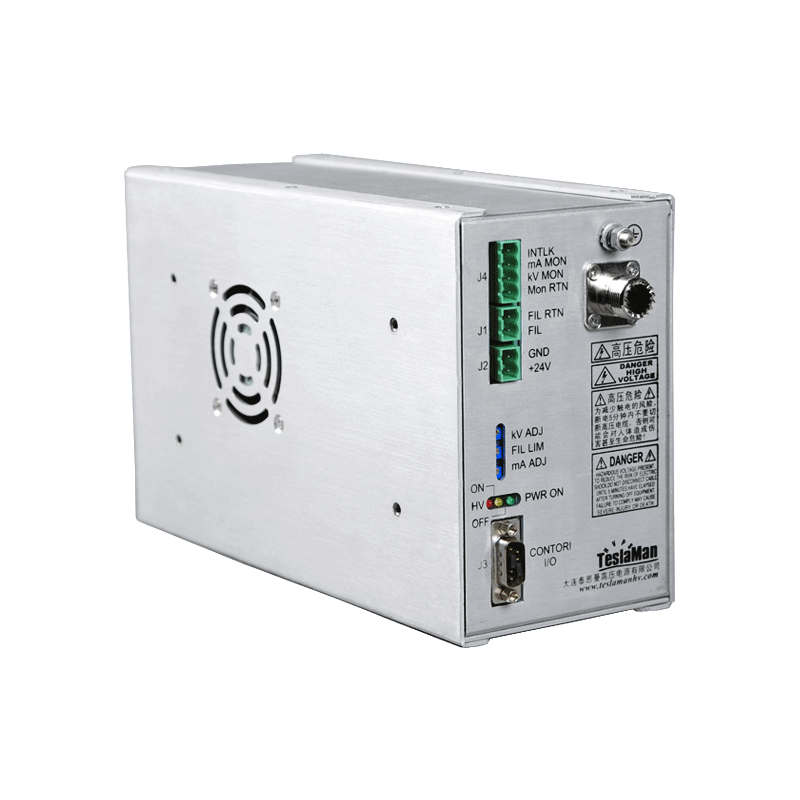
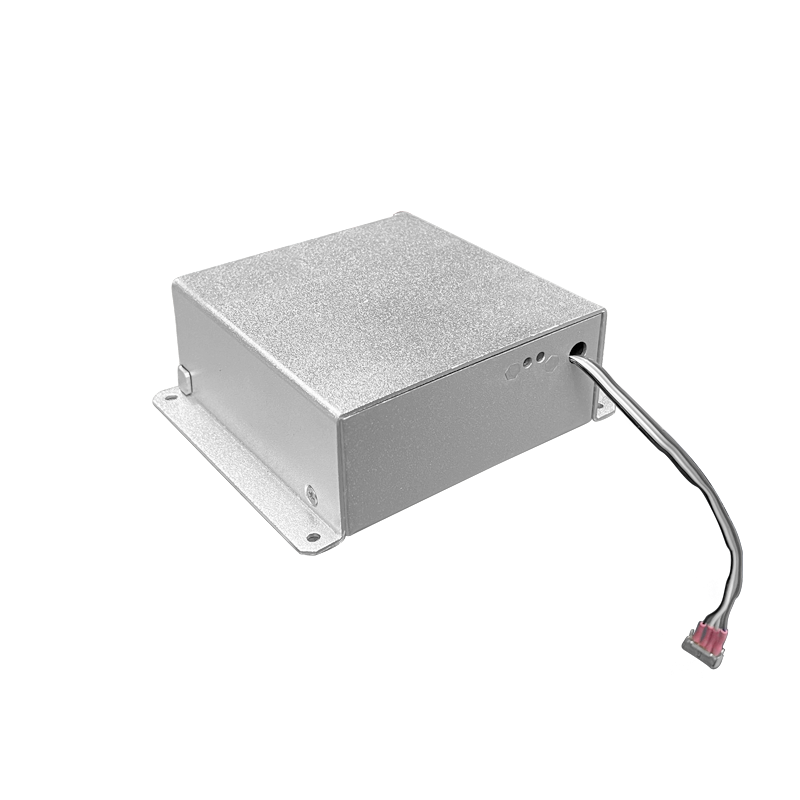
Neutron Source High Voltage Power Supply Beam Extraction Control
High-voltage particle accelerators used as neutron sources, such as those driving deuterium-tritium (D-T) or deuterium-deuterium (D-D) fusion reactions, require precise management of the ion beam from its generation to its impact on the target. The final stage of this management—the controlled extraction of the beam from the accelerator's high-voltage terminal and its transport to the neutron-producing target—is a critical function heavily dependent on the performance and control strategy of the high-voltage power supply system. This discussion focuses on the specific requirements for the high-voltage supplies involved in beam extraction control for such accelerator-driven neutron sources.
In a typical sealed-tube or single-ended accelerator neutron generator, ions (deuterium, tritium) are generated in an ion source housed within a high-voltage terminal, which is held at a negative potential of -80 kV to -300 kV. This terminal contains not only the ion source but also the initial beam focusing and acceleration electrodes. The beam must be extracted from this high-voltage environment, through an insulating column or vacuum tube, and directed onto a target at or near ground potential. The control of this extracted beam's intensity, focus, and position is achieved through a series of electrodes at varying potentials, all of which must be supplied from within the floating high-voltage terminal.
The primary high-voltage deck supply provides the main terminal potential, which defines the final energy of the ions. This supply must be extremely stable, as beam energy directly influences the neutron yield curve for the nuclear reaction. However, the extraction control focuses on the auxiliary supplies inside the terminal. The most critical of these is the extraction (or puller) electrode supply. This electrode, held at a potential slightly more positive (less negative) than the ion source plasma, creates the initial electric field that draws ions out of the source plasma aperture. The voltage on this electrode, often in the range of 1-10 kV relative to the terminal, primarily controls the extracted beam current. A small increase in extraction voltage can dramatically increase the ion flux pulled from the plasma. Therefore, this supply must be highly regulated and allow for precise, fine-adjustment of its output. It must operate reliably in the confined, high-electric-field environment of the terminal, with components rated for the full terminal voltage plus the extraction voltage differential.
Following extraction, the beam passes through one or more Einzel lenses or einzel lenses. These are multi-electrode electrostatic lenses that focus the diverging beam to a desired spot size on the target. Each electrode in an einzel lens requires a specific bias voltage, typically a fraction of the terminal voltage. The stability and accuracy of these bias supplies are paramount for maintaining a consistent beam focus. Any drift will change the focal length, defocusing the beam and reducing the neutron yield by lowering the power density on the target. These lens supplies must be low-noise, as ripple on their outputs can transversely "jitter" the beam, effectively blurring the focus. They are often implemented as precision resistive divider chains from the main terminal voltage, but active, regulated supplies offer superior performance for critical applications.
Beam steering is another essential control function, often required to correct for minor misalignments or to raster the beam across a larger target to manage heat load. This is accomplished by pairs of electrostatic deflection plates (or a steerer lens) placed in the beam path. Applying a differential voltage across a pair of plates bends the beam. The power supplies for these plates must be bipolar—capable of outputting both positive and negative voltages relative to a mid-point—and must be capable of rapid modulation if rastering is employed. Their slew rate and bandwidth determine how quickly the beam position can be changed. For a simple DC correction, stability is key; for rastering, linearity and waveform fidelity are critical.
The entire suite of internal supplies—extraction, lens biases, steerer voltages—must be powered and controlled while floating at the full negative high potential of the terminal. This presents the major systems engineering challenge. Power is typically delivered to the terminal via an insulating core transformer (ICT) or a motor-generator set, which must also carry the control signals. Modern systems use fiber-optic links for command and data transmission to and from the terminal to avoid ground loops and noise pickup. The internal power supplies are thus compact, efficient switching converters that generate the various required biases from a primary bus voltage provided by the ICT. Their design prioritizes low heat generation (due to limited cooling options in vacuum), high reliability, and immunity to the intense electromagnetic fields present during beam operation.
A critical aspect of extraction control is sequencing and protection. During startup, the various electrode potentials must be applied in a specific order to avoid drawing excessive current from the ion source or focusing the beam onto an aperture, causing heating and outgassing. The control system, often using a programmable logic controller (PLC) that includes the high-voltage deck supply and the internal supplies in its control loop, manages this sequence. Furthermore, if the beam is lost (e.g., due to a vacuum spike or an arc), the system must react swiftly. Arc detection circuits in the main high-voltage supply and current monitors on the extraction electrode can trigger a fast shutdown or a reduction in extraction voltage to quench the discharge and protect the delicate ion source filaments and electrodes.
In summary, the high-voltage power system for neutron source beam extraction is a hierarchical, distributed network of supplies. The main deck supply sets the stage, but the precise control of the beam is executed by a family of specialized, floating auxiliary supplies regulating extraction, focus, and steering. The system's effectiveness is measured by the stability and precision of these internal biases, the robustness of their floating implementation, and the intelligence of their integrated control with the main high voltage and ion source. This coordinated control directly determines the neutron flux stability, target lifetime, and overall reliability of the neutron generator, impacting its utility in fields such as oil well logging, security scanning, and materials analysis.