Microchannel Plate Array High Voltage Uniformity Research
Microchannel Plate (MCP) detectors are essential for single-particle and photon detection in applications ranging from night vision and particle physics to mass spectrometry and ultrafast imaging. Their operation relies on the amplification of a single electron or photon event into a measurable charge cloud through a cascade multiplication process within millions of microscopic, lead-silicate glass channels. The gain of each channel is an exponential function of the voltage applied across the plate's thickness. Consequently, any spatial non-uniformity in this applied electric field translates directly into a spatial non-uniformity in gain, manifesting as fixed-pattern noise in the resulting image or signal, degrading the detector's resolution, dynamic range, and quantitative accuracy. Research into high-voltage uniformity for MCP arrays, particularly large-format or stacked configurations, focuses on mitigating field distortions caused by geometric edge effects, inter-plate potentials, and the fundamental challenges of distributing kilovolt potentials across highly resistive, capacitive surfaces.
The basic requirement is to establish a perfectly uniform axial electric field within each microchannel. For a single MCP, this seems straightforward: apply a potential difference between conductive electrodes coated on the front and rear faces. However, several factors disrupt this ideal. The resistive nature of the electrode coating itself, combined with the current drawn by the electron multiplication process, can lead to a voltage drop across the plate's surface. This effect, known as resistive voltage grading, is more pronounced at the edges of the plate and at higher count rates, causing a radial gain gradient. Research addresses this through improved electrode materials with lower sheet resistance and optimized geometries, but the power supply interface is critical. A single-point connection to the electrode can exacerbate the voltage gradient. Therefore, research into distribution methods employs conductive, low-outgassing elastomer gaskets or multiple, symmetrically spaced contact points to ensure a uniform potential is applied to the entire electrode perimeter.
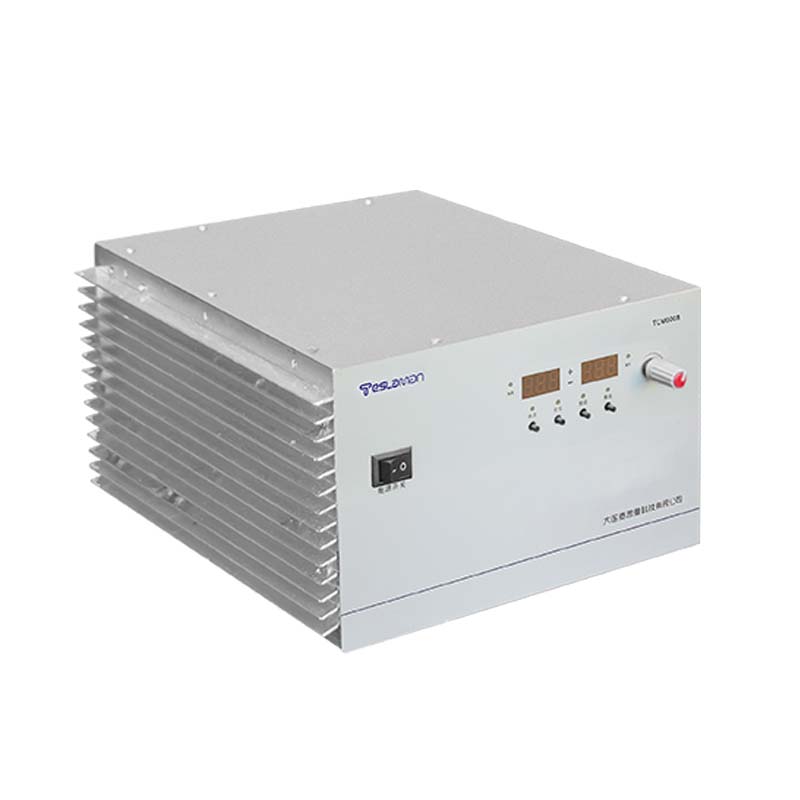
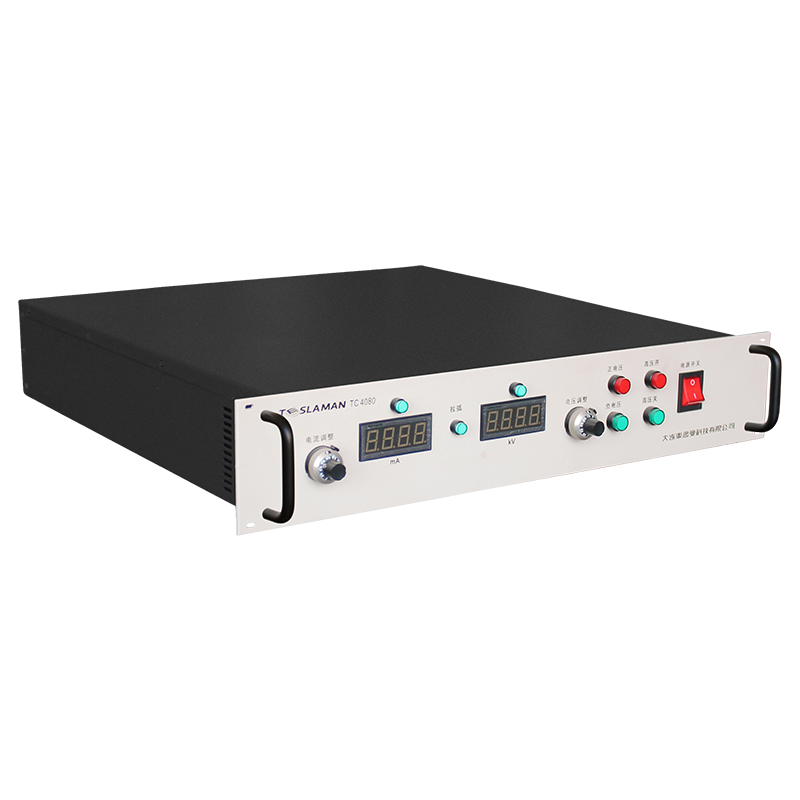
The complexity multiplies in chevron (V-stack) or Z-stack configurations of two or three MCPs, which are used to achieve higher gain with lower feedback noise. Here, a precise potential difference must be maintained not only across each plate but also *between* the plates—the inter-plate gap voltage. This inter-plate voltage influences the electron transfer efficiency between the output of one plate and the input of the next. Non-uniformity in this gap field can cause lateral deflection of electrons, blurring the spatial correlation between the initial event and the final output cloud. Research in this area investigates the use of thin, transparent metal meshes or patterned resistive films suspended between plates to create a more uniform intermediate field. The power supply system must now provide three or more highly stable voltages (e.g., input face of MCP1, between MCP1/MCP2, between MCP2/MCP3, and output face of MCP3) with exceptionally low noise. Any ripple or noise on these supplies modulates the gain, introducing temporal noise. Research-grade power supplies for such stacks employ linear post-regulation stages following switching pre-regulators to achieve output noise levels in the low millivolt range, even at output voltages of 1000V to 2000V per channel.
For large-area MCPs or arrays of MCPs tiled together to form a very large detector, the challenge of field uniformity at the edges and seams becomes paramount. The fringing fields at the physical edge of an MCP are distorted, leading to a "dead" or abnormally low-gain border. Research explores the use of field-guarding techniques, where auxiliary electrodes held at potentials calculated to shape the electric field are placed around the active area. These guard electrodes require their own precisely regulated voltage supplies, derived from a resistive divider string from the main high-voltage rail. The stability and temperature coefficient of this divider network directly impact the long-term uniformity. Furthermore, in tiled arrays, the small gap between adjacent MCP tiles can create a local electric field anomaly. Advanced research involves custom-designed power supply systems that provide independent, fine-tuned voltage adjustment to each tile's electrodes to compensate for these effects, effectively "flattening" the gain response across the entire array.
The research methodology involves sophisticated characterization tools. Flat-field illumination with a uniform photon source (like an integrating sphere) is used to map gain uniformity. The resulting image's pixel-to-pixel variation is analyzed as a function of the applied voltage profile. Researchers then iteratively adjust power supply configurations, contact methods, and guard voltages to minimize this fixed-pattern noise. The ultimate goal is a power delivery system that is electrically "invisible"—one that creates the idealized, textbook-perfect uniform electric field within and between every microchannel across the entire active area. Achieving this is a prerequisite for the quantitative, high-fidelity performance of MCP-based detectors in scientific instruments where every electron or photon carries critical information.