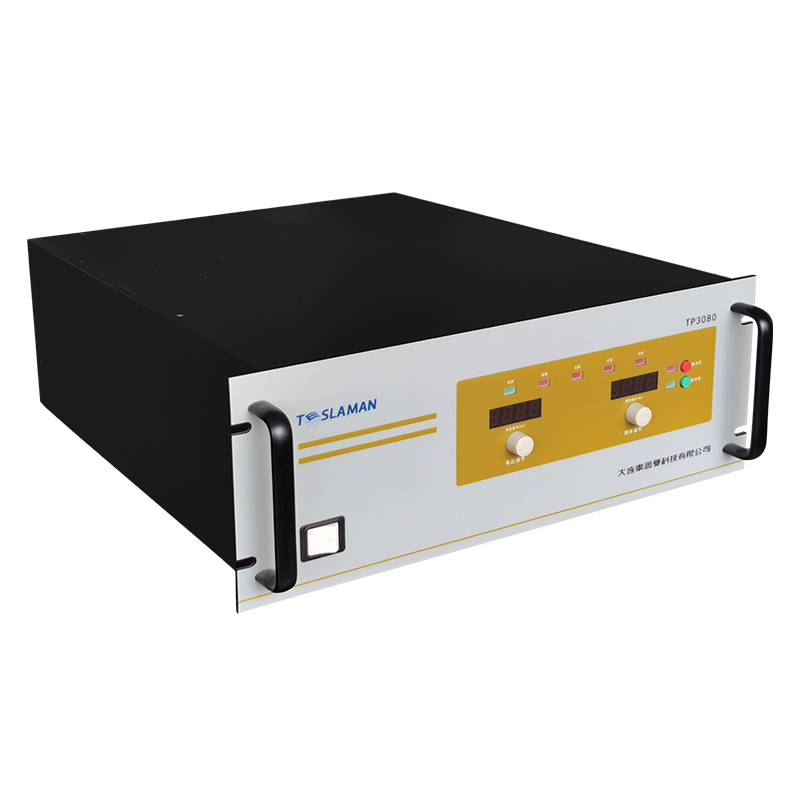
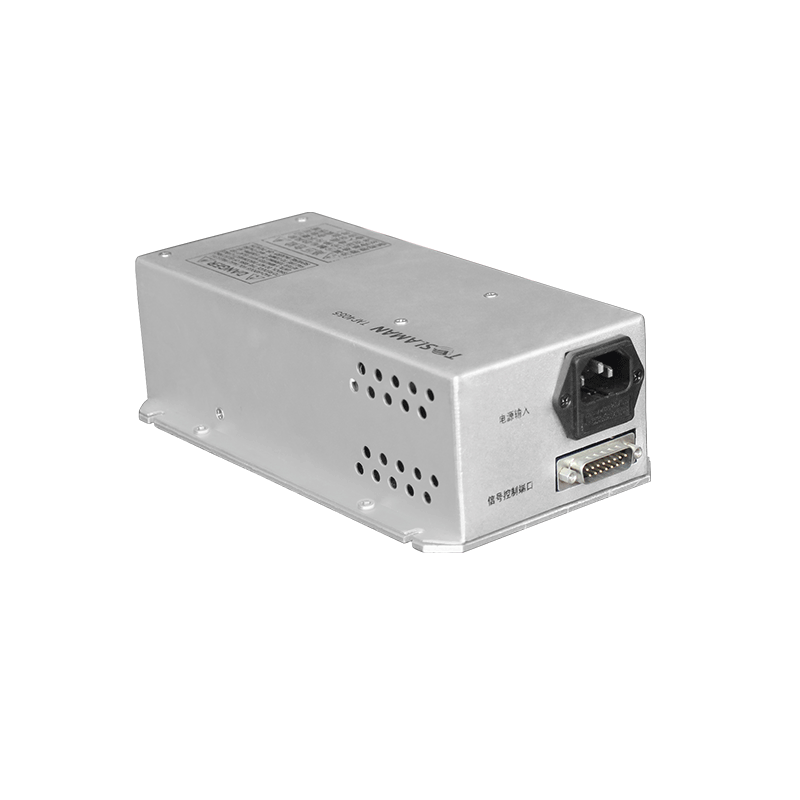
Plastic Photoelectric Sorting Spectral Excitation Power Supply
The automated sorting of plastic polymers based on resin type is a critical process for recycling efficiency. Near-Infrared (NIR) spectroscopy has become the dominant technology for this task, as different plastics exhibit distinct spectral fingerprints in the 1,000 to 2,500 nm wavelength range. The quality and speed of this identification depend fundamentally on the illumination source used to excite the spectral response. For high-speed, industrial-grade sorters, this source is typically a high-intensity, broadband halogen lamp or a set of light-emitting diodes (LEDs). The power supply driving this illumination source is therefore a key component whose characteristics directly influence sorting accuracy, throughput, and reliability. Its design must address the unique demands of stable optical output, high-frequency pulsed operation for synchronization, and resilience in harsh industrial environments.
The primary requirement for the spectral excitation power supply is exceptional output current stability. The intensity of the light source must be constant over time. Any drift or ripple in the lamp's or LED array's driving current will cause a proportional change in the emitted light intensity across all wavelengths. Since the sorting spectrometer measures the reflected or transmitted spectrum relative to a known reference, intensity fluctuations translate directly into apparent changes in the material's reflectivity, leading to misidentification. For halogen lamps, which are typically driven in constant current mode, the supply must provide rock-solid DC with ripple currents well below 0.1%. This demands high-quality filtering, precision current sensing, and a feedback loop with high DC gain. For LED-based excitations, which offer faster switching and longer life, the requirement is similar, though often managed through constant current drivers for each LED string.
However, industrial sorters operate on conveyor belts moving at several meters per second. To obtain a clear spectral "snapshot" of each individual plastic fragment, the illumination and detection must be synchronized with the fragment's passage under the sensor. This is most efficiently achieved by operating the light source in a pulsed mode. The power supply must be capable of driving the lamp or LEDs with high-current pulses at frequencies matching the detection rate, which can be in the kilohertz range. For a halogen lamp, this is a significant challenge due to the thermal inertia of the filament. Pulsing a halogen lamp at high frequency requires a supply that can deliver large current surges to overcome the filament's thermal time constant and achieve rapid rises in optical output, yet without overstressing and prematurely aging the filament. This often involves a two-stage approach: a lower "keep-warm" current maintains the filament at a baseline temperature, upon which high-amplitude pulses are superimposed. The pulse shape, particularly the rise time, must be carefully controlled to maximize light output during the brief detection window while ensuring filament longevity.
For LED arrays, pulsed operation is more straightforward due to their fast electronic response. Here, the power supply becomes a high-speed current pulser. It must deliver rectangular current pulses with very fast rise and fall times (often in the microsecond range) to define sharp illumination edges. The amplitude of each pulse must be identical to ensure consistent excitation intensity for every measurement. This requires a driver with excellent pulse-to-pulse repeatability and minimal overshoot or ringing. The driver is typically triggered by an optical encoder on the conveyor or a master timing signal from the sorter's central processor, demanding nanosecond-level trigger jitter performance to ensure the illuminated spot is perfectly aligned with the field of view of the spectrometer and the high-speed camera used for positioning.
Thermal management is a critical, intertwined concern. Halogen lamps and high-power LED arrays generate substantial heat. The power supply's design must account for the thermal load it imposes on the system and its own thermal stability. The output current regulation of the supply must be immune to internal temperature drifts. Furthermore, in the case of lamps, the supply may include temperature feedback from the lamp housing to slightly adjust the drive current to compensate for changes in lamp efficiency with temperature, maintaining a constant light output over an extended operating period.
The industrial environment imposes additional constraints. Sorting facilities are dusty, vibrating, and electrically noisy. The excitation power supply must be housed in a rugged, sealed enclosure with an ingress protection rating suitable for the environment. Its input must be protected against voltage surges and sags common in industrial power networks. Critically, it must not emit electromagnetic interference (EMI) that could corrupt the sensitive analog signals from the NIR spectrometer's detectors. Conversely, it must be immune to EMI generated by nearby motors, conveyors, and air blast ejectors. This necessitates careful internal layout, shielding, and extensive input/output filtering.
Finally, integration with the broader sorting control system is essential. The power supply status (lamp hours, temperature, fault conditions) needs to be communicated to the central controller for predictive maintenance. Features like soft-start for lamp ignition, fault detection for open filaments or LED failures, and the ability to adjust pulse width or intensity via a digital interface are standard requirements for modern systems. In summary, the spectral excitation power supply for plastic sorting is a specialized instrument-grade power source masquerading as industrial equipment. It combines the stability of a laboratory current source with the speed of a high-frequency pulser, the robustness of a motor drive, and the integration capability of a networked sensor. Its precise and reliable operation ensures that the fundamental data input to the sorting algorithm—the NIR spectrum—is accurate and consistent, directly determining the purity of the sorted plastic streams and the economic viability of the recycling operation.