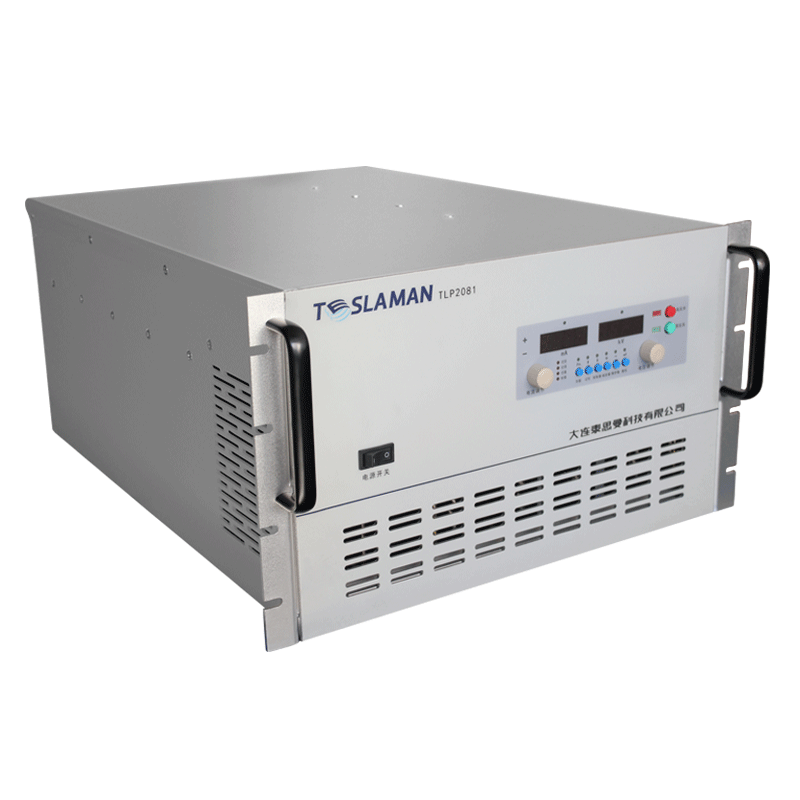
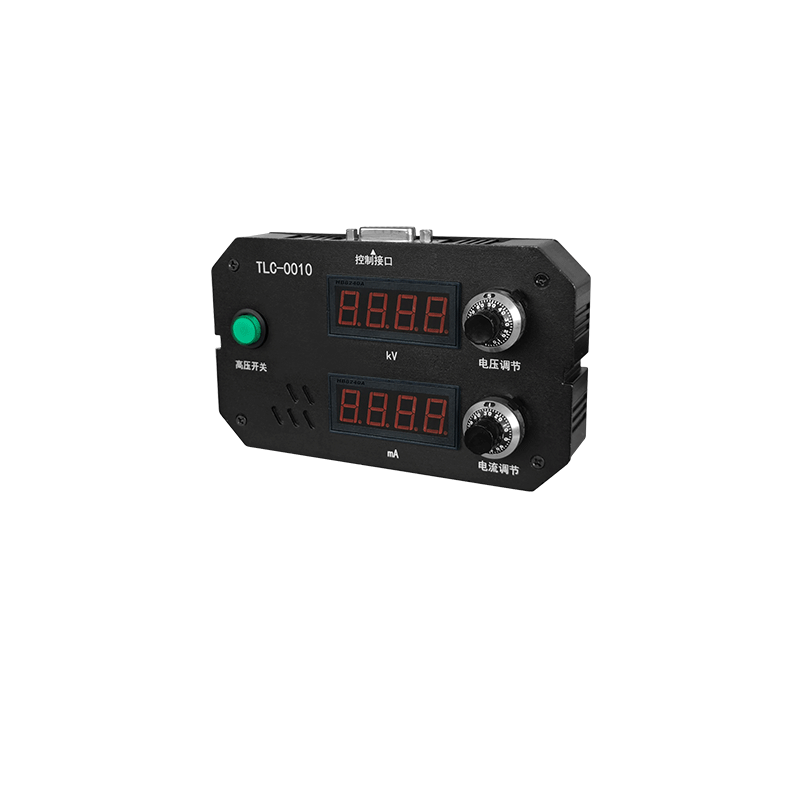
Mass Spectrometer Atmospheric Pressure Ion Source High-Voltage Interface
Modern analytical chemistry heavily utilizes mass spectrometry (MS) with atmospheric pressure ionization (API) sources, such as electrospray ionization (ESI) and atmospheric pressure chemical ionization (APCI). These techniques gently ionize samples at atmospheric pressure before the ions are guided into the high-vacuum mass analyzer. The transition region between the atmospheric pressure source and the first vacuum stage is a critical interface, and its performance is governed by a complex set of DC and RF voltages applied via a series of lenses and skimmers. The high-voltage power supply system that generates these potentials is not a collection of independent modules; it is an integrated, precisely coordinated assembly whose stability and accuracy directly determine instrument sensitivity, resolution, and robustness.
The ion path from the API source to the mass spectrometer's first quadrupole or ion funnel involves several key elements, each requiring specific high voltages. The initial metal capillary or orifice, kept at a potential of 1-5 kV relative to the spray needle, establishes the primary electric field for ion desolvation and entry. Following this, a series of "cone" or "skimmer" electrodes, at progressively lower voltages (hundreds to tens of volts), act as lenses to focus and guide the ion beam while staging the pressure differential. An RF-only ion guide (like a hexapole or S-lens) is often placed between the skimmers to efficiently transmit ions through the higher-pressure region using pseudopotential fields. Each of these elements requires a highly stable DC voltage or a clean, amplitude-stable RF voltage.
The primary challenge for the high-voltage power supply system is managing interdependencies and preventing arcing in a multi-kilovolt, multi-channel system where the electrodes are in close proximity and the environment can change from a wet spray plume to a dry vacuum. The supplies must be capable of sourcing and sinking current. In ESI, for example, the spray needle operates at several kilovolts and can source microamps of current. The counter-electrode (the capillary) must be able to sink this current. If its power supply cannot effectively sink current, its potential will float, defocusing the ion beam. Therefore, these supplies are built with four-quadrant output stages, meaning they can actively pull current (act as a sink) as well as push it (act as a source). This is typically achieved using a linear amplifier output stage or a specialized switching topology with bidirectional current capability.
Stability is measured in parts per million. A drift of even a few volts on a skimmer potential can significantly alter the transmission efficiency for ions of a specific mass-to-charge ratio, leading to quantitative errors in analysis. Thus, the DC supplies use ultra-low drift references, such as oven-controlled Zener diodes, and precision resistor networks for voltage division. Feedback sensing is performed locally at the electrode connector to avoid errors from cable resistance. The RF voltage for the ion guides must have exceptionally low amplitude noise and drift, as noise translates into ion energy spread and loss of transmission. RF generators for this purpose are based on crystal-controlled oscillators with linear or class-AB amplification to minimize harmonic distortion.
The control and sequencing of these voltages are as important as their stability. During instrument startup, voltages must be ramped in a specific order to prevent large potential differences from appearing across un-baked, potentially contaminated surfaces, which would cause arc-over. Similarly, when the API source is engaged or disengaged, voltages must be switched in a coordinated manner. This is managed by a digital controller that communicates with each high-voltage module over isolated serial buses. The controller also implements interlocks. For instance, if a vacuum pressure sensor indicates a leak, all high voltages are immediately shut down to prevent damaging arcs. Furthermore, the system often allows for dynamic voltage tuning. In some scan modes, the capillary voltage may be slightly modulated to optimize transmission for different mass ranges, requiring the supply to respond quickly to digital commands.
Finally, the physical layout is engineered for safety and noise immunity. The high-voltage boards are potted or housed in insulated compartments. Guard rings and proper creepage distances are meticulously designed on printed circuit boards. All cables are shielded, and analog control signals are transmitted differentially. The high-voltage interface power system, by providing a suite of perfectly choreographed electrostatic fields, acts as the essential gatekeeper for ions, determining what fraction of the created ions successfully navigate the treacherous path from atmospheric pressure into the heart of the mass spectrometer, thereby defining the instrument's ultimate detection capability.