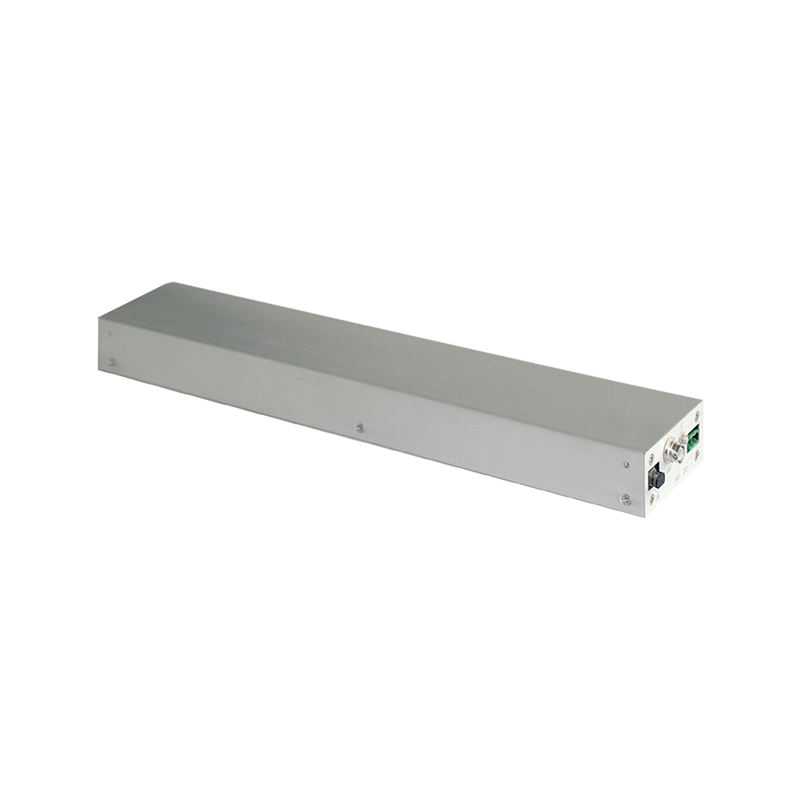
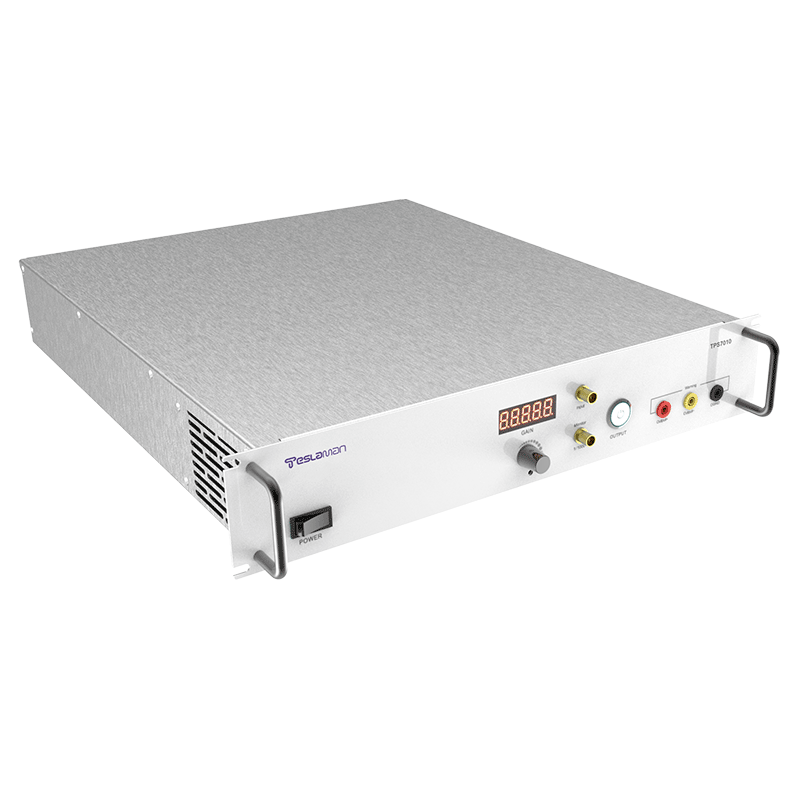
Electrostatic Flocking Patterning High-Voltage Programming Power Supply
Electrostatic flocking is an industrial process where short microfibers (the flock) are oriented and implanted perpendicularly into an adhesive-coated substrate, creating a velvet-like textured surface. For creating patterned flocked areas—such as logos, decorative designs, or functional zones with different tactile properties—a method called "selective field" or "programmed" flocking is used. This technique replaces a large, uniform electrode with a programmable electrode array, often a series of conductive bars or pins, positioned behind the substrate. A specialized high-voltage programming power supply independently controls the voltage on each element of this array, creating a dynamic electrostatic pattern that directs the flock only to specific areas where the adhesive is to be loaded.
The core technical challenge lies in independently switching multiple high-voltage channels (typically 10-100 kV) at a speed synchronized with the mechanical movement of the substrate, which passes continuously under the flocking head. Each channel corresponds to a "pixel" or "stripe" of the final pattern. The power supply system is, in essence, a high-voltage digital printhead controller. It must generate a stable high-voltage DC base potential, then switch this potential on and off to each electrode element with precise timing, while managing significant capacitive loads and preventing electrical cross-talk.
The system architecture is modular. A central high-voltage DC power supply generates the main flocking voltage, which can range from 50 to 100 kV for industrial applications. This main supply must have excellent stability and low ripple, as it defines the field strength that polarizes and accelerates the flock fibers. Its output is distributed to a rack of high-voltage switching modules. Each module is responsible for one or a few electrode channels. The switch is the critical component; it must block the full high voltage when off, and conduct the necessary current (typically microamps to a few milliamps per channel) when on. Modern systems use solid-state switches based on Power MOSFETs or IGBTs connected in series to withstand the voltage. These switches are optically isolated and driven by fast gate drive circuits.
The control logic is defined by a pattern file, similar to a digital bitmap. A master controller, often a programmable logic controller (PLC) or industrial PC, reads this pattern. As an encoder tracks the linear position of the moving substrate, the controller calculates which electrode channels must be energized or de-energized to "stamp" the pattern onto the adhesive. The switching commands are sent to the modules via high-speed, noise-immune communication links like fiber optics or isolated CAN bus. The timing resolution must be high enough that the edges of the pattern are sharp; a timing error of a few milliseconds can blur a pattern edge by several millimeters at typical line speeds.
Electrical design must address several parasitic effects. The electrode array elements are in close proximity. When one channel switches its high voltage on or off, the rapidly changing electric field can capacitively couple into adjacent channels, inducing transient voltages that might cause false triggering or arcing. To mitigate this, the switching modules incorporate snubber circuits to slow the voltage transition edges just enough to reduce coupling while maintaining overall pattern fidelity. Furthermore, the entire array must be carefully shielded, and the switching waveforms are often slightly staggered to minimize the total instantaneous change in electric field.
The system also includes comprehensive monitoring and safety. Each channel's output voltage and current are monitored. A fault, such as an arc caused by a fiber bridging an electrode gap, is detected by a sudden current increase. The affected channel can be shut down independently while others continue, minimizing production waste. The programming supply interfaces with the rest of the flocking machine—controlling the timing of the adhesive application, the flow of flock from the vibrating hopper, and the substrate drive—to create a seamless, automated production line. By transforming a digital design into a spatially controlled high-voltage field, this programming power supply enables the high-volume, customized production of patterned flocked products for automotive interiors, textiles, packaging, and consumer goods, adding both functional and aesthetic value through precise electrostatic manipulation.