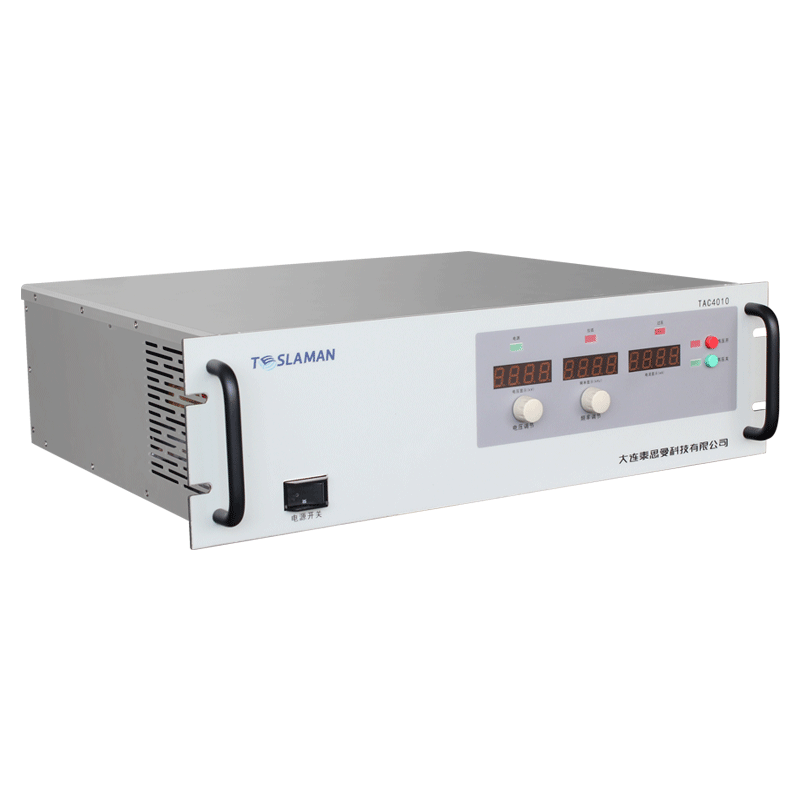
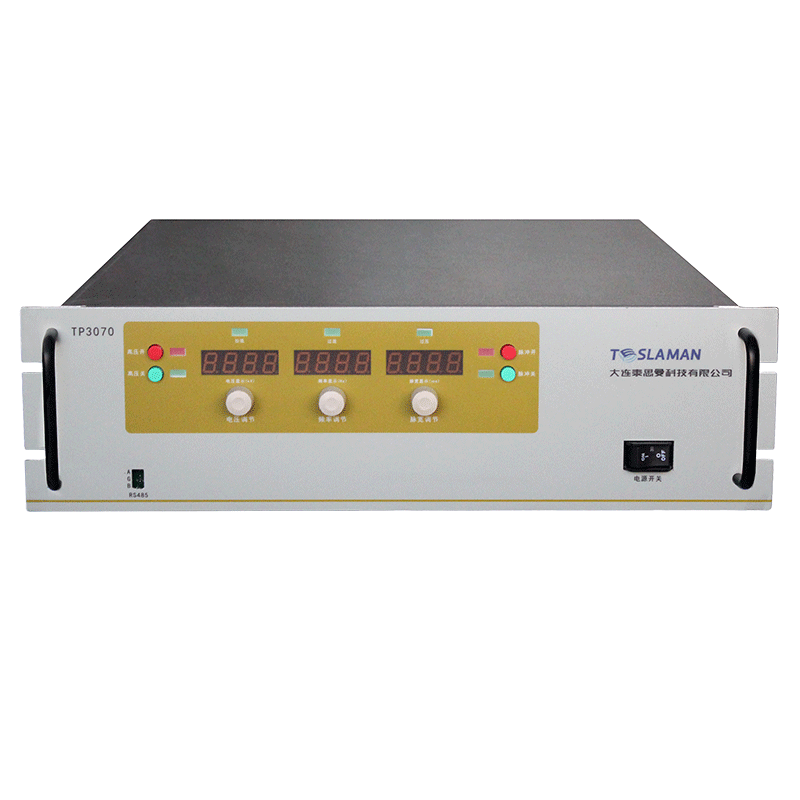
Irradiation Sterilization Dose Mapping High Voltage Control System
Industrial irradiation sterilization, utilizing gamma rays, electron beams, or X-rays, is a critical process for ensuring the sterility of medical devices, pharmaceuticals, and packaging. Regulatory compliance and process validation require rigorous proof that the minimum required dose is delivered to all points within a product load, while ensuring the maximum dose does not exceed levels that could damage the product. Dose mapping is the experimental procedure to characterize the three-dimensional dose distribution within a standardized load or process configuration. For electron beam (E-beam) and X-ray systems, which are powered by high-energy accelerators, the high-voltage control system plays a pivotal role not only in generating the radiation but also in executing the precise, automated sequences necessary for accurate and efficient dose mapping. This system must provide stable beam parameters while coordinating complex mechanical movements and data acquisition.
The core objective of dose mapping is to create a detailed profile of absorbed dose throughout a phantom load that simulates the actual product. This involves placing an array of dosimeters (e.g., radiochromic films, alanine pellets) at strategic points within a standardized container. For E-beam systems, the dose distribution is influenced by beam energy (determined by acceleration voltage), beam current, scan width, scan uniformity, conveyor speed, and product density. The high-voltage control system is the master regulator of the two most fundamental parameters: acceleration voltage (kV) and beam current (mA). During dose mapping, these parameters must be held with extreme stability. Any drift in acceleration voltage changes the penetration depth (Rmax) of the electrons, altering the depth-dose curve. Fluctuations in beam current directly vary the dose rate. Therefore, the high-voltage power supply and the beam current regulator must exhibit long-term stability and low ripple, often specified at fractions of a percent, over the duration of a mapping run which may last for hours.
However, dose mapping is not merely a static measurement. To characterize the process window, mapping is performed across a range of operating conditions. This requires the high-voltage control system to be fully programmable. A validation protocol may involve automated sequences where the acceleration voltage is stepped through a series of values (e.g., 5 MeV, 7.5 MeV, 10 MeV) to map the depth-dose relationship for different product thicknesses. At each voltage step, the system must stabilize, verify parameters, and then trigger the conveyor and data acquisition system. This necessitates a control system that can manage complex, multi-step recipes, synchronizing high-voltage setpoints with mechanical motion and dosimeter readout systems. The interface must allow for the input of such recipes and provide detailed logs of all actual operating parameters (voltage, current, scan magnet settings) correlated with time and conveyor position for each dosimeter location.
For X-ray systems, which generate radiation by impinging a high-power electron beam onto a converter target, the control is further layered. The X-ray output is a function of both the electron beam parameters (voltage, current) and the characteristics of the target. Dose mapping for X-ray systems must account for the broader, more penetrating beam. The high-voltage control system must maintain the stability of the electron beam that produces the X-rays, but the mapping process itself may involve moving detectors through a larger radiation field. The control system may need to interface with robotic or articulated arms that position dosimeters in a 3D grid within the irradiation chamber, synchronizing beam-on periods with the robotic positioning to efficiently collect data without manual intervention.
A critical aspect of automated dose mapping is the verification of beam scan uniformity. In E-beam systems, electromagnets scan the beam across the product width. Non-uniformity in the scan creates "hot" and "cold" spots. The dose mapping procedure inherently measures this, but the control system can use this data proactively. Advanced systems may incorporate closed-loop scan correction. A preliminary mapping run with a linear array of dosimeters across the scan width can generate a profile. The control system's software can then calculate correction factors and adjust the scan magnet power supply's waveform (its amplitude or frequency modulation) to flatten the profile, after which a full 3D dose map is performed. This requires the scan magnet power supplies to be under the same programmable control as the main high voltage, accepting dynamic correction inputs.
Safety and reproducibility are paramount. The control system must have built-in interlocks that prevent beam activation unless all mapping setup parameters (conveyor speed, scan width, high-voltage setpoint) match the validated recipe. It must also include redundant dose monitoring using independent transmission ionization chambers. If the measured dose rate deviates from the expected value based on the configured beam parameters, the system must alarm and suspend operation. This integrated monitoring is part of the control loop, where the high-voltage or beam current could be slightly adjusted in real-time to compensate for slow drift, ensuring each point in the mapping run receives the exact intended dose.
Finally, data integration is a key function. The modern dose mapping high-voltage control system is not an isolated unit; it is the nucleus of a data acquisition network. It must timestamp and record every parameter change, beam pulse, and conveyor encoder tick. This data stream is then merged with the subsequent dosimeter readout (often performed in a separate reader), allowing each dosimeter's measured dose to be linked unequivocally to the precise machine parameters and position at which it was irradiated. This traceability is non-negotiable for regulatory audits. In essence, the high-voltage control system for irradiation sterilization dose mapping evolves from a simple power generator into an automated validation engine. It provides the parameter stability required for measurement accuracy, the programmability for comprehensive characterization, the integration for beam tuning, and the data traceability for regulatory compliance, forming the cornerstone of a validated and reliable sterilization process.