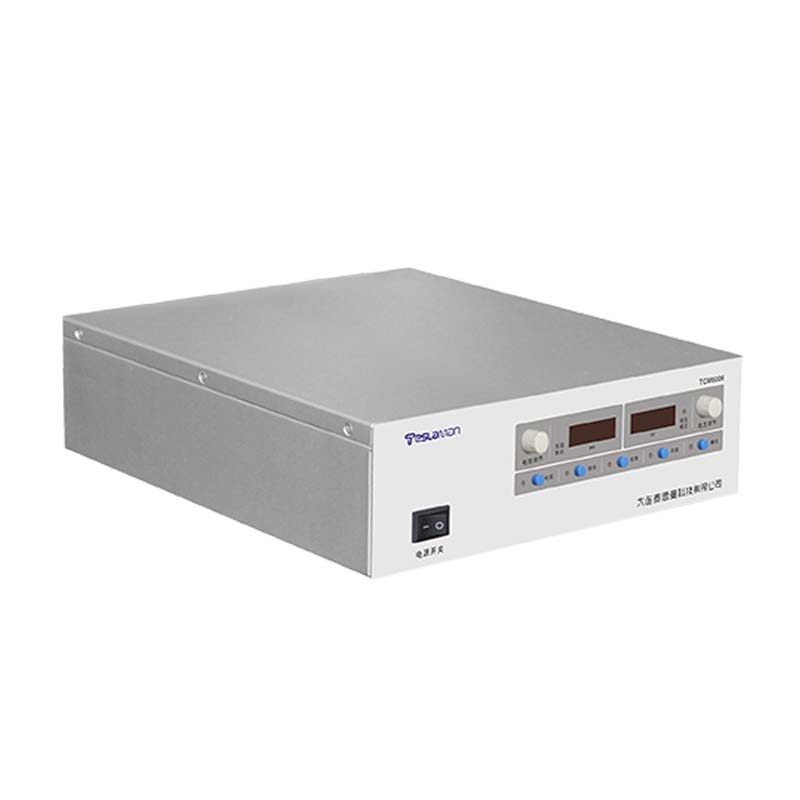
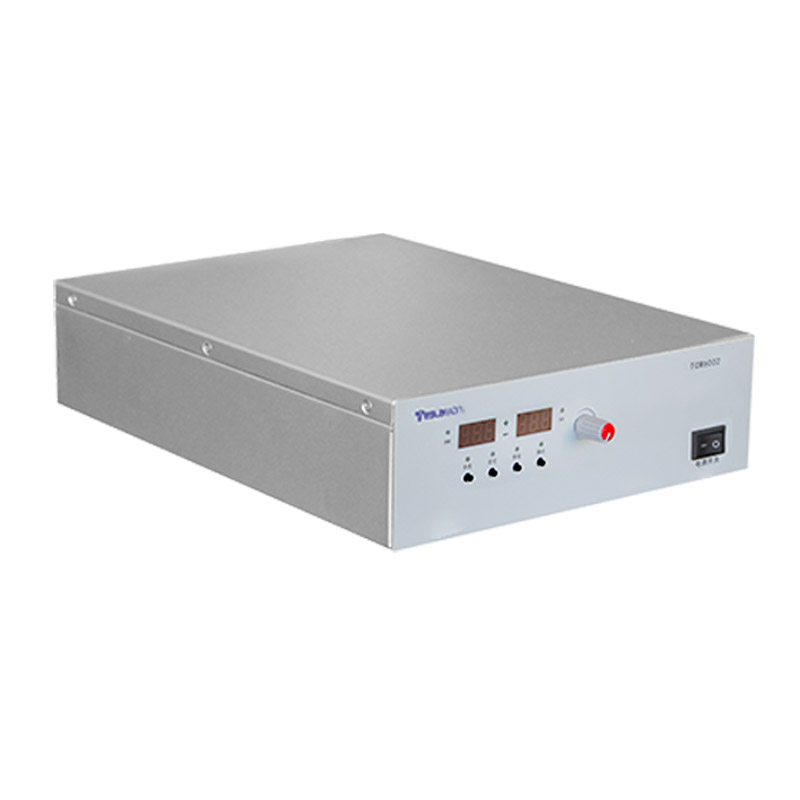
Capillary Electrophoresis Electroosmotic Flow Modulation High Voltage Power Supply
Capillary Electrophoresis (CE) is a powerful analytical separation technique based on the differential migration of charged analytes in a narrow capillary under the influence of a high electric field. The electroosmotic flow (EOF), the bulk fluid motion induced by the applied field due to the charged capillary wall, is a dominant transport mechanism. While often beneficial as a pump, uncontrolled EOF can compromise separations, especially when analyzing species with similar charge-to-mass ratios or when using coated capillaries designed to suppress EOF. Actively modulating the EOF during a separation presents a powerful tool for enhancing resolution and selectivity. This modulation is achieved through precise, dynamic control of the high-voltage power supply applied across the capillary, moving its function beyond a simple DC source to a programmable waveform generator.
The EOF velocity is directly proportional to the applied electric field (V/L, where V is the voltage and L the capillary length) and the zeta potential at the capillary wall. For a given capillary and buffer, modulating the field is the most direct way to modulate EOF. A standard CE high-voltage supply (typically 0-30 kV) provides a stable DC field. For EOF modulation, this supply must be capable of generating complex time-varying voltage profiles. One basic approach is field-strength gradient programming, analogous to gradient elution in chromatography. Here, the voltage is ramped or stepped during the run. A descending ramp, for instance, decreases the EOF over time, which can help elute strongly retained analytes. This requires a supply with programmable ramping capability, smooth output transitions to avoid current spikes, and compliance with safety standards for handling high voltage during dynamic changes.
More sophisticated modulation techniques involve the application of alternating or pulsed fields. Applying an AC voltage superimposed on a DC bias can manipulate the net flow. The high-frequency AC component may not have time to reverse the EOF fully within each cycle, but it creates a time-averaged flow that is different from the DC-alone case. Implementing this requires a power supply that can either generate such a composite waveform directly or be combined with an external high-voltage amplifier. The bandwidth of the supply becomes critical; it must faithfully reproduce the AC frequency without distortion or phase lag. For frequencies above a few hundred Hertz, the capacitive coupling of the capillary and the finite output impedance of the supply can significantly attenuate the AC component, necessitating a supply designed to drive capacitive loads.
A powerful method is to use asymmetric or bipolar pulsed fields. By applying alternating pulses of positive and negative high voltage with unequal magnitude or duration, a net EOF in one direction can be maintained while periodically stopping or even reversing it momentarily. This can disentangle the electrophoretic migration of anions and cations or help in focusing analytes. The power supply for such pulsed-field CE must be a bipolar high-voltage amplifier, capable of rapidly switching between positive and negative outputs (e.g., +15 kV to -15 kV). The slew rate and switching speed are paramount. The transition between polarities must be fast to minimize periods of zero field where diffusion degrades peaks, yet controlled to prevent arcing. The supply must also maintain stability at each voltage level during the pulse, as any droop or ripple modulates the separation force.
The control of such modulation is intimately tied to separation science goals. The modulation waveform (sinusoidal, square, pulsed) and its parameters (frequency, duty cycle, amplitude) become additional optimization variables. Therefore, the ideal power supply features arbitrary waveform generation capability, allowing the user to define any voltage-versus-time profile within its voltage and current limits. This programmability, combined with digital control, enables the implementation of advanced techniques like dynamic field gradient focusing or electronic fraction collection.
However, modulating the high voltage directly modulates the current through the capillary (Ohm's law), which generates Joule heating. Rapid changes in voltage can cause transient temperature gradients, leading to viscosity changes and flow instabilities. A smart high-voltage modulation system must either incorporate current monitoring and limit excessive power dissipation or be paired with active capillary temperature control that can compensate for the changing heat load. The supply's current compliance and monitoring features are thus crucial for safe and effective modulation.
Integration with the CE instrument's data system is essential. The applied voltage waveform must be precisely timestamped and recorded alongside the detector signal. This allows for deconvolution of the separation data, as the effective migration time of an analyte is now a function of a time-varying field. Some advanced systems attempt real-time feedback control, where the detector signal (e.g., UV absorbance) is used to adjust the modulation parameters on-the-fly to optimize a separation as it occurs, requiring a fast control loop between the detector, a processor, and the programmable high-voltage supply.
In essence, a CE electroosmotic flow modulation power supply is a high-voltage function generator for chemical analysis. It transforms the electric field from a static driving force into a dynamic, tunable parameter of the separation process. Its capabilities in waveform generation, switching speed, stability under dynamic conditions, and system integration directly enable advanced separation strategies that enhance resolution, control selectivity, and expand the applicability of capillary electrophoresis to complex mixtures that defy conventional DC-field separation.