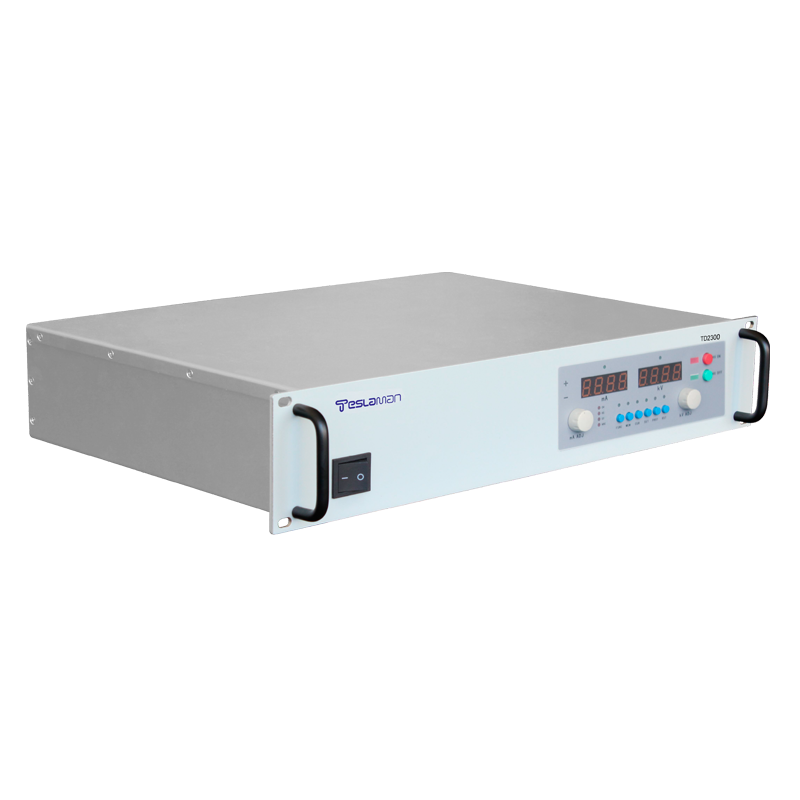
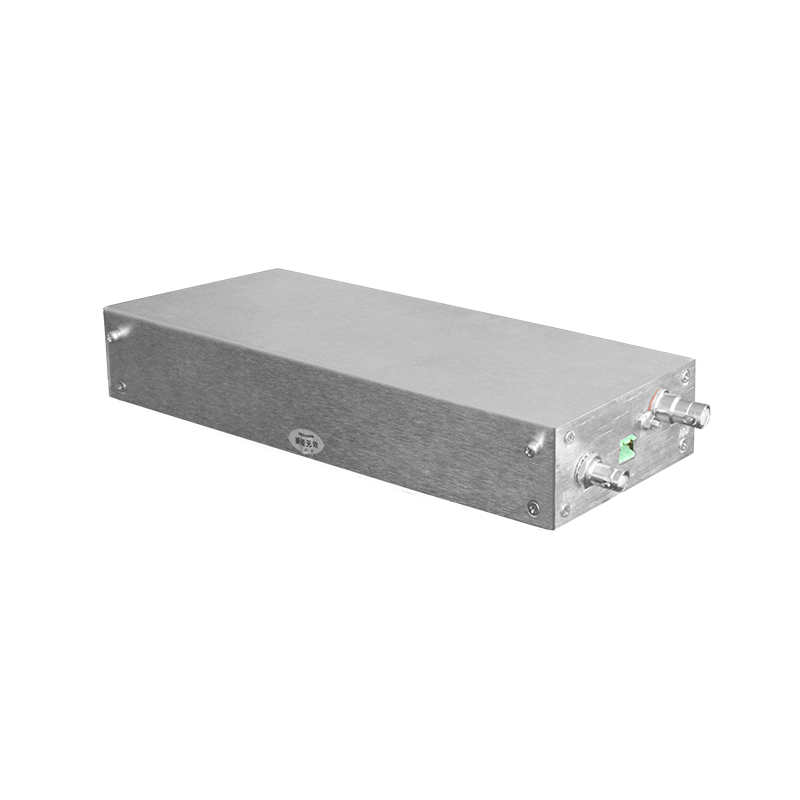
Plastic X-ray Sorting High Voltage Pulse Source
The recycling of complex plastic waste streams, particularly those containing black plastics which are opaque to traditional near-infrared (NIR) sorting systems, has driven the adoption of X-ray transmission (XRT) sorting technology. This method relies on the differential attenuation of low-energy X-rays by materials of varying atomic number (Z). The heart of the X-ray generation subsystem is a specialized high-voltage pulse source that powers the X-ray tube. Unlike medical or fixed industrial X-ray systems, sorting applications impose unique constraints of high throughput, compactness, robustness in dirty industrial environments, and the need for precise, pulsed X-ray emission synchronized with fast-moving objects. The design of this pulsed high-voltage source is therefore tailored to produce stable, short-duration X-ray bursts with consistent spectral characteristics to enable accurate material discrimination at conveyor belt speeds exceeding 3 meters per second.
An X-ray tube operates by accelerating electrons from a heated cathode to a high-Z target anode (typically tungsten or molybdenum). The kinetic energy of the electrons is converted upon impact into X-ray photons (bremsstrahlung) and characteristic radiation. The energy spectrum and intensity of the output X-ray beam are direct functions of the applied high voltage (kV) and the tube current (mA). In a sorting system, the objects (plastic fragments) pass rapidly between the X-ray source and a line-scan detector. To "freeze" the motion and obtain a clear transmission image for analysis, the X-ray emission must be pulsed. A continuous beam would result in motion blur. Furthermore, pulsing minimizes the total X-ray dose, reduces heat loading on the tube anode, and improves the system's electrical efficiency. The high-voltage pulse source must therefore generate pulses with amplitudes typically ranging from 80 kV to 160 kV, with pulse widths from tens to a few hundred microseconds, at repetition rates matching the line-scan frequency of the detector (often several kHz).
The primary technical challenge is generating these high-voltage pulses with exceptional stability in both amplitude and width. Variations in pulse voltage alter the X-ray spectrum's endpoint energy, changing the effective attenuation coefficient of the plastics being measured. This introduces noise into the material identification algorithm, leading to mis-sorting. The pulse source must maintain kV stability within 0.1% to 0.5% despite fluctuations in mains voltage, temperature, and load. This is often achieved using a robust DC high-voltage power supply as a primary energy reservoir, combined with a high-speed switching system at the tube head. A common topology employs a solid-state Marx generator or a pulse transformer driven by a fast IGBT or MOSFET switch at the low-voltage side. The Marx bank, comprised of capacitors and switches stacked in series, is charged in parallel to a moderate voltage (e.g., 1kV) by the main DC supply and then switched to discharge in series, generating the high-voltage pulse. This architecture localizes the final pulse-forming network close to the X-ray tube, minimizing high-voltage cable length and the associated parasitic capacitance that would limit rise time.
Pulse shape control is critical. The rise time of the pulse must be fast (microseconds) to ensure a sharp onset of X-ray emission, defining the leading edge of the "line-scan" exposure. The flatness of the pulse top is equally important; any droop or ripple modulates the X-ray intensity during the exposure, causing non-uniform illumination across the detector line. Active feedback circuits monitor the pulse waveform via a high-voltage divider and adjust the switch gate drive or use additional regulation stages to maintain a flat pulse top. Synchronization is another key function. The pulse source receives a trigger signal from the system's master clock, which is synchronized with the conveyor encoder and the detector's readout. The jitter between the trigger command and the actual X-ray pulse must be sub-microsecond to ensure the illuminated slice of the conveyor belt aligns perfectly with the detector's integration period.
The system must also be designed for harsh industrial reality. The source is packaged in a rugged, often oil-insulated housing to withstand vibration, dust, and humidity. Thermal management is vital, as even pulsed operation generates average power that must be dissipated. The power supply design incorporates comprehensive protection: over-voltage, over-current, and most importantly, over-temperature for the X-ray tube anode. Arc detection and suppression are mandatory, as any internal discharge in the tube or cables could destabilize the pulse. Modern systems often feature digital interfaces for remote monitoring of key parameters like pulse count, average current, and tube housing temperature, enabling predictive maintenance. In summary, the plastic X-ray sorting high-voltage pulse source is a precision instrument masquerading as industrial hardware. Its ability to deliver millions of identical, stable high-voltage pulses per day underpins the reliable atomic-number-based discrimination that allows for the accurate separation of PVC from PET, or polycarbonate from ABS, turning mixed plastic waste into high-purity, valuable feedstock.