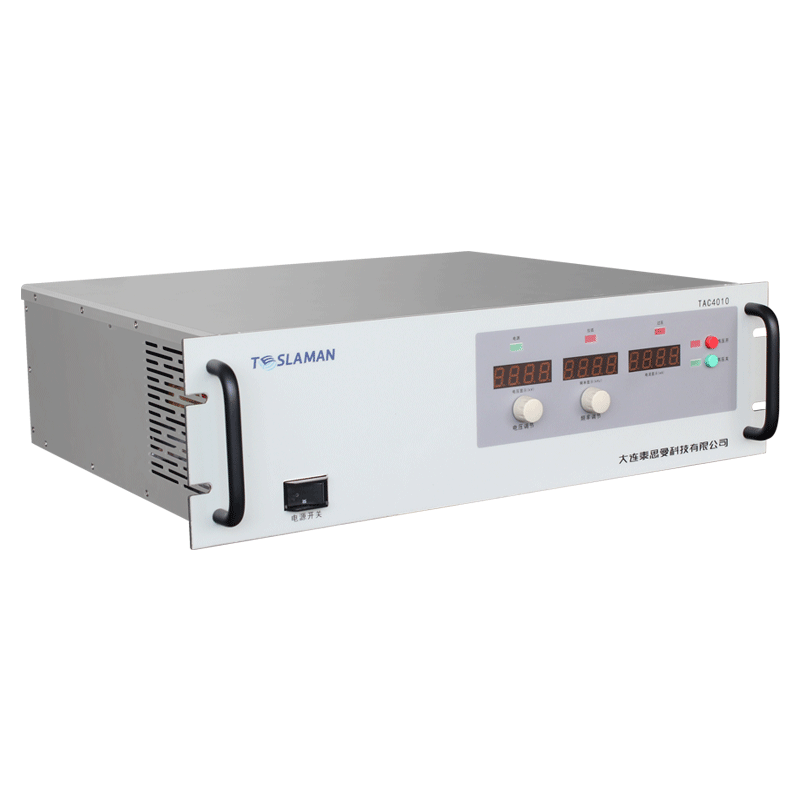
Electron Beam Welding Keyhole Stability Control Power Supply
Electron beam welding (EBW) is a high-energy density fusion process capable of producing deep, narrow welds with minimal heat-affected zones. The process operates by focusing a high-power electron beam onto the workpiece, instantly vaporizing metal and forming a deep, vapor-filled cavity called a "keyhole." The stability of this keyhole is the single most important factor determining weld quality. An unstable keyhole leads to porosity, spatter, and inconsistent penetration. The electron beam's power supply, far from being a simple energy source, is the primary actuator for keyhole stability control, requiring dynamic modulation of beam power with millisecond response to feedback signals.
The challenge stems from the complex fluid dynamics and plasma interactions within the keyhole. The keyhole is sustained by a balance between the vapor pressure from boiling metal (pushing the molten walls outward) and the surface tension of the surrounding liquid metal (pushing inward to collapse it). This balance is precarious. Fluctuations in material composition, joint fit-up, beam alignment, or the presence of volatile elements can cause the keyhole to oscillate, momentarily collapse, or become excessively wide. The goal of the control power supply is to detect these instabilities and apply corrective modulation to the beam power (or other parameters) to dampen the oscillations and maintain a steady state.
Traditional EBW power supplies operate in a constant voltage or constant current mode, with the beam current controlled by a bias grid. For stability control, this analog control loop is augmented by a high-speed digital controller that implements closed-loop feedback. Sensors provide real-time data on the keyhole state. The most direct method is to monitor secondary signals generated by the process itself. One key signal is the backscattered electron emission from the weld zone. When the keyhole is stable, the emission has a characteristic pattern. If the keyhole begins to collapse, the beam interacts more with solid or liquid metal at the keyhole wall, changing the backscatter yield. A sensitive electron detector, often integrated into the gun column, picks up this change.
Another crucial signal is the emission of X-rays from the keyhole plasma or from bremsstrahlung radiation. The intensity and spatial distribution of this soft X-ray emission are correlated with keyhole depth and stability. A photodiode or scintillator detector placed beneath the workpiece (for transmission) or to the side can provide this signal. The control system's algorithm, often a proportional-integral-derivative (PID) or a more advanced model-predictive controller, analyzes these sensor signals at a high sampling rate (kHz). It calculates an error value based on the deviation from a stable reference signal and outputs a corrective command.
This command is sent to the beam power supply, which must act as a high-bandwidth amplifier. The supply modulates the beam current by adjusting the grid bias voltage. To effectively dampen keyhole oscillations, which can have frequencies from tens to hundreds of Hertz, the power supply's control loop for beam current must have a bandwidth in the kilohertz range. This requires a low-inductance grid circuit, a fast high-voltage amplifier for the grid bias, and a current sensor with a correspondingly fast response. The modulation depth is typically small—perhaps ±5-10% of the set beam current—but its precise and timely application is critical.
More advanced systems may modulate not just beam current, but also focus coil current (to slightly defocus and widen the beam to plug a collapsing keyhole) or employ high-frequency beam wobble at a controlled amplitude and frequency to mechanically stabilize the keyhole's walls. This requires the power supply and deflection systems to operate in a tightly coordinated manner, receiving multi-axis modulation commands from the stability controller.
The integration is comprehensive. The stability control system is calibrated for each material and joint configuration. Weld trials are used to establish the "signature" of a stable keyhole for that setup. This signature is then used as the reference for the feedback loop during production. The system logs all sensor data and control actions, providing a detailed process record for quality assurance. By transforming the power supply from a static power source into a dynamic process stabilizer, this technology pushes electron beam welding into realms of reliability and quality previously unattainable, enabling its use for critical applications in aerospace, nuclear, and medical device manufacturing where a single weld defect is unacceptable.