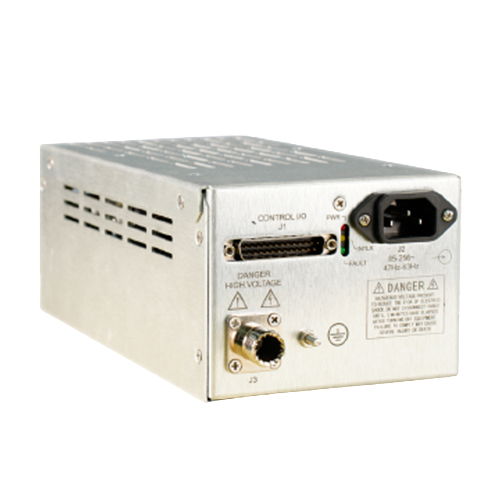
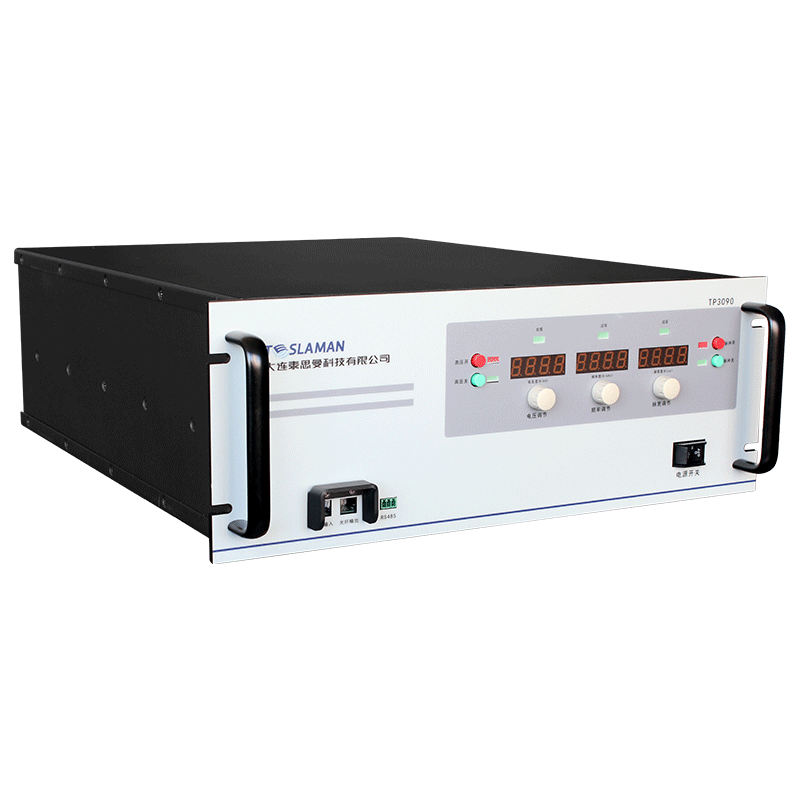
Electrospinning Multi-Axis Motion Platform Synchronized Power Supply
Electrospinning is a versatile technique for generating polymer nanofibers by applying a high electric field to a polymer solution or melt. For fabricating advanced scaffolds, aligned fiber bundles, or complex gradient structures, precise control over the deposition pattern is required. This is achieved by moving either the spinneret (needle) or the collection substrate along multiple axes using a motion platform—typically a combination of X-Y gantries and a rotating mandrel. The synchronization between the high-voltage power supply (HVPS) that creates the electrospinning field and the motion control system is critical. This synchronization determines fiber placement, orientation, density, and ultimately, the functional properties of the fabricated non-woven mat or patterned structure.
The primary high-voltage supply, providing potentials typically from 5 kV to 30 kV, establishes the electric field between the spinneret and the grounded or biased collector. Its stability directly influences the Taylor cone formation and jet initiation, affecting fiber diameter consistency. However, when integrated with a moving platform, the HVPS must become an active, synchronized component of a larger control loop. The key variables that require synchronization are the voltage output and the motion parameters (speed, position, acceleration).
One fundamental synchronization need is for patterned or "direct-write" electrospinning. Here, the collector or spinneret moves along a programmed path to deposit fibers in a specific non-random pattern, such as a grid or a serpentine line. The high voltage must be applied precisely when the moving component is in the correct position to initiate the jet, and it may need to be turned off or modulated during rapid traverse moves to prevent stray fiber deposition. This requires the HVPS to accept a digital or analog enable/disable signal from the motion controller with negligible latency. A delay of even a few milliseconds can result in the jet starting or stopping at the wrong location, blurring the pattern edges.
For fabricating aligned fiber collections on a rotating drum, synchronization governs fiber orientation. The drum's surface speed must match the jet deposition speed to achieve perfect alignment. If the drum rotates too slowly, fibers will be randomly deposited; too fast, and they may break. The stability of the high voltage influences the jet speed and stability. While the primary synchronization is between the drum motor controller and the polymer feed pump, the HVPS's stability is a foundational assumption. Any ripple or noise on the high voltage can cause subtle variations in the electrostatic drawing force, leading to variations in jet acceleration and final fiber alignment. Therefore, the HVPS must have exceptionally low output noise, especially in the low-frequency range where it could interact with the rotational period of the drum.
More advanced synchronization involves dynamic voltage modulation coordinated with motion. For creating fiber mats with controlled gradients in thickness or fiber density, the motion platform may move at a variable speed. To maintain a consistent deposition rate per unit area, the high voltage (which influences the mass flow rate from the Taylor cone) might need to be modulated in real-time as a function of the platform's instantaneous velocity. This demands a HVPS with a fast, linear analog programming input. The motion controller calculates the required voltage based on its instantaneous speed and sends a corresponding analog signal to the HVPS, which must adjust its output without lag or overshoot.
The integration also poses significant electrical design challenges. The motion platform uses servo motors and drives that are potent sources of electromagnetic interference (EMI). This noise can easily couple into the sensitive high-voltage feedback loop or the voltage programming line, causing instability in the output. Conversely, the HVPS, especially if it is a switching supply, can emit EMI that disrupts the motion controller's encoders or communication buses. Rigorous separation is required: independent power lines, shielded cables for all control signals, and often, optical isolation for synchronization signals. The mechanical design must also prevent any possibility of a high-voltage arc to the moving metallic parts of the platform.
In essence, the synchronized power system for multi-axis electrospinning elevates the technique from a process for making random mats to a form of additive manufacturing at the micro/nanoscale. The HVPS ceases to be a standalone unit and becomes a precisely timed actuator within a mechatronic system. Its ability to faithfully follow motion commands while maintaining intrinsic stability allows for the rational fabrication of complex fibrous architectures with tailored anisotropy, porosity, and chemical composition for applications in tissue engineering, filtration, and smart textiles.