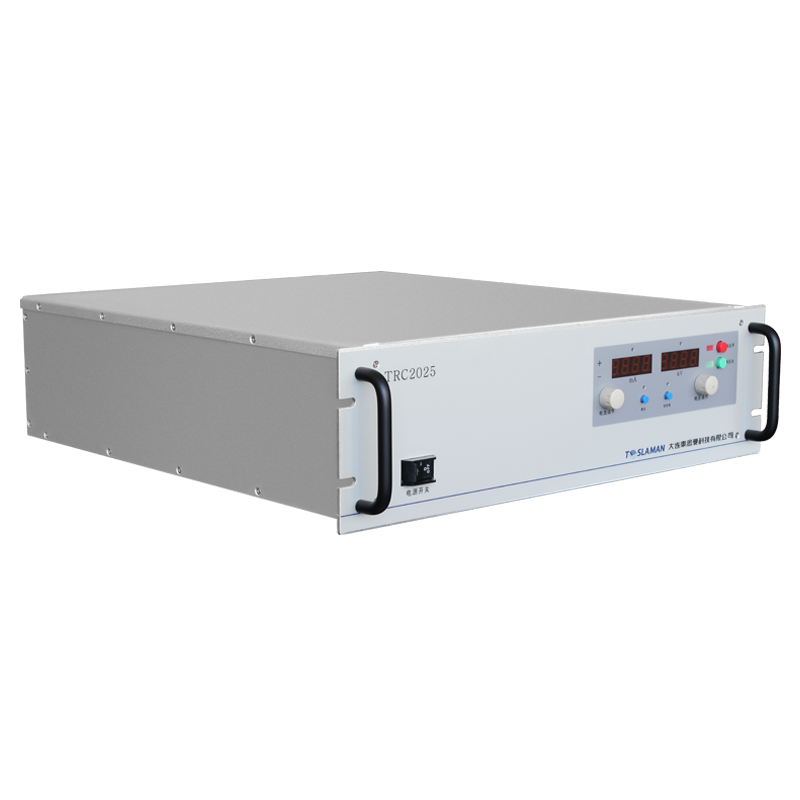
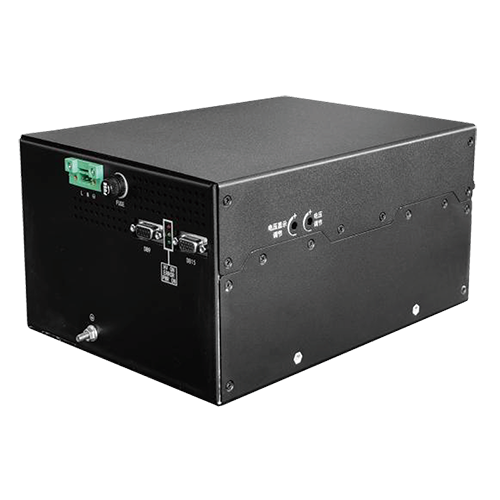
Vacuum Coating Substrate Heating Bias Composite Power Supply
In physical vapor deposition processes, controlling the substrate's thermal and electrical state is paramount for determining film properties such as adhesion, stress, crystallinity, and microstructure. Traditionally, substrate heating and the application of a DC bias (for ion bombardment) are handled by separate, independent systems. However, this decoupled approach can lead to suboptimal process control and integration challenges. A composite power supply that integrates substrate resistive heating with a controlled DC bias into a single, coordinated system offers significant advantages in terms of process stability, efficiency, and the ability to execute complex thermal-electrical recipes essential for advanced coatings.
The core innovation lies in the electrical architecture that safely combines a high-current, low-voltage AC or DC output for heating with a high-voltage, low-current DC output for biasing, all connected to the same substrate holder (the chuck). The primary technical hurdle is isolation and interference. The heating element, typically a resistive wire or foil embedded in the chuck, requires substantial power—often several kilowatts—at voltages below 100 VAC or VDC. The bias function requires a precisely controlled voltage of -50 V to -1000 V DC (or pulsed-DC) relative to chamber ground to attract ions from the plasma. Connecting both to the same metal chuck body without creating a short circuit or dangerous ground loops is non-trivial.
The architecture of the composite supply is based on a floating, isolated design for the heating circuit. The entire low-voltage, high-current heating supply—including its transformer, rectifiers, and regulators—is built onto a module that is electrically isolated from earth ground. The output of this heating supply is connected directly across the chuck's heating element. The negative terminal of this heating output is then designated as the "bias reference point." The high-voltage bias supply's positive output is connected to chamber ground, and its negative output is connected to this same bias reference point on the chuck. In this configuration, the chuck (and the substrate) sits at a potential that is the sum of the heating circuit's floating voltage (which is near zero relative to its own isolated reference) and the negative bias voltage. The net effect is that the substrate is heated and biased simultaneously, with the bias supply "riding on top" of the isolated heating potential.
Control and synchronization are the system's intelligence. A master digital controller manages both outputs according to a pre-programmed recipe. For instance, during the initial pump-down and bake-out phase, only heating is active to outgas the chamber and substrate. As the deposition process begins, the controller ramps the bias voltage to a specific value. Crucially, the controller can implement interdependent control loops. A common strategy is temperature-compensated bias. The resistivity of the chuck's heating element changes with temperature. The controller can use the measured heating current and voltage to accurately calculate the chuck's real-time temperature and adjust the heating power in a closed loop. Simultaneously, it can modulate the bias voltage based on this temperature reading, as the optimal bias for film stress control often depends on substrate temperature.
For processes like pulsed-DC bias for sputtering systems, the composite supply adds another layer of complexity. The bias output must switch between negative high voltage and zero (or a small positive voltage) at frequencies of tens to hundreds of kHz. This pulsed high voltage must be perfectly superimposed on the steady or slowly varying heating potential. This requires the bias supply to have a very low output capacitance to allow for fast switching and to prevent the pulsed energy from coupling into and disrupting the sensitive heating control circuitry. Extensive filtering and shielding are employed within the composite unit.
Safety and diagnostics are paramount. The system incorporates ground fault detection for both the floating heating circuit and the biased chuck. It monitors for arcs from the substrate to the plasma; when detected, the bias voltage can be momentarily shut down while the heating remains unaffected, preventing thermal shock to the substrate. By integrating heating and bias, this composite power supply simplifies chamber wiring, improves process repeatability by ensuring perfect synchronization of thermal and electrical conditions, and enables advanced deposition strategies such as temperature-ramped bias grading or in-situ annealing during growth. This leads to more robust, high-performance coatings for applications ranging from wear-resistant tool coatings to complex optical filters.