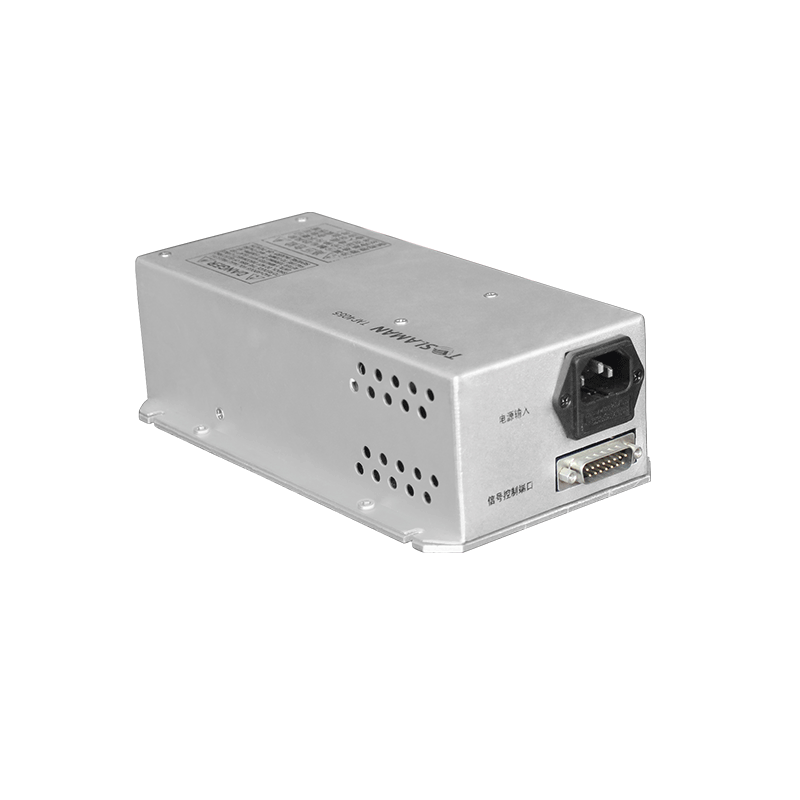
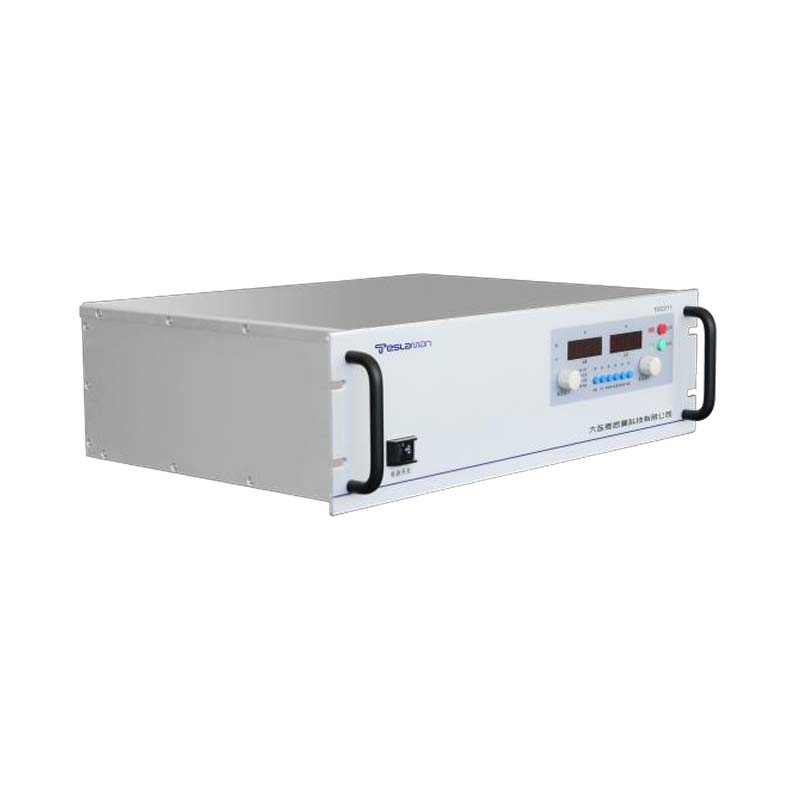
Capacitor Charging Power Supply Matrix Parallel Module
Capacitor charging power supplies represent a critical class of specialized high-voltage equipment designed to rapidly store energy in capacitive loads. The matrix-style parallel modular architecture represents a significant engineering advancement, addressing the escalating demands of pulsed power systems found in applications such as laser excitation, electromagnetic launcher research, pulsed plasma generation, and industrial material processing. This architectural approach departs from traditional monolithic high-power units, instead employing a configuration where multiple, identical, lower-power capacitor charging modules operate in concert, their outputs combined to deliver the required high peak power to the load. The core principle involves sophisticated synchronization and current-sharing control algorithms that ensure all modules in the matrix charge the target capacitor bank in a precisely coordinated manner. This necessitates a master controller, often utilizing high-speed digital signal processors, which issues phase-synchronized gate drive signals to the inverter stages of each module. Current feedback from each unit is continuously monitored, and adaptive control loops adjust the switching parameters to maintain equal current contribution, thereby preventing any single module from operating outside its optimal range. The primary topology employed within each module is typically a series-resonant converter, such as a zero-voltage switching or zero-current switching full-bridge configuration. This choice is paramount for achieving high-frequency operation, which reduces the size of magnetic components, and for attaining high efficiency by minimizing switching losses during the repetitive charge cycles. The resonant nature of the circuit also provides inherent protection against output short-circuits, a common hazard when charging capacitors. The matrix parallel configuration offers profound system-level benefits. It dramatically enhances system reliability through inherent redundancy. Should one module fail, the system can often continue operation at a slightly reduced power level, allowing for maintenance without complete system shutdown, a feature crucial for industrial processes. Scalability is another cornerstone advantage; increasing the total output power is achieved simply by adding more standard modules to the matrix, simplifying design and reducing development time for new systems. Furthermore, maintenance and servicing are streamlined, as technicians can hot-swap a faulty module with a spare, minimizing downtime. Thermal management is also improved, as the heat generation is distributed across a larger surface area of multiple, smaller units, facilitating more effective cooling compared to a single, high-density power block. The design of such a system presents distinct engineering challenges. Ensuring ultra-precise synchronization is non-trivial, as even nanosecond-level timing discrepancies between modules can lead to circulating currents, reduced efficiency, and potential instability. The control system must also manage inrush currents effectively, especially when initiating a charge cycle into a fully discharged capacitor, which presents a near short-circuit condition. Electromagnetic interference is a pronounced concern due to the high di/dt and dv/dt inherent in pulsed power systems, requiring comprehensive shielding, filtering, and careful layout of the power bus bars connecting the modules to the capacitor bank. Applications driving the adoption of this technology are diverse. In high-energy pulsed lasers, such as those used for inertial confinement fusion research or industrial machining, the capacitor bank stores the energy that is subsequently discharged through flashlamps or laser diodes to create the optical pulse. The matrix parallel supply enables faster repetition rates and more stable pulse energy. For physical vapor deposition processes, particularly pulsed-DC magnetron sputtering, these power supplies provide the high peak power needed to establish and maintain stable plasmas on insulating target materials, leading to superior film quality. The flexibility and robustness of the modular design make it an indispensable solution for modern high-power, high-repetition-rate pulsed energy systems, pushing the boundaries of what is achievable in both research and industrial environments.