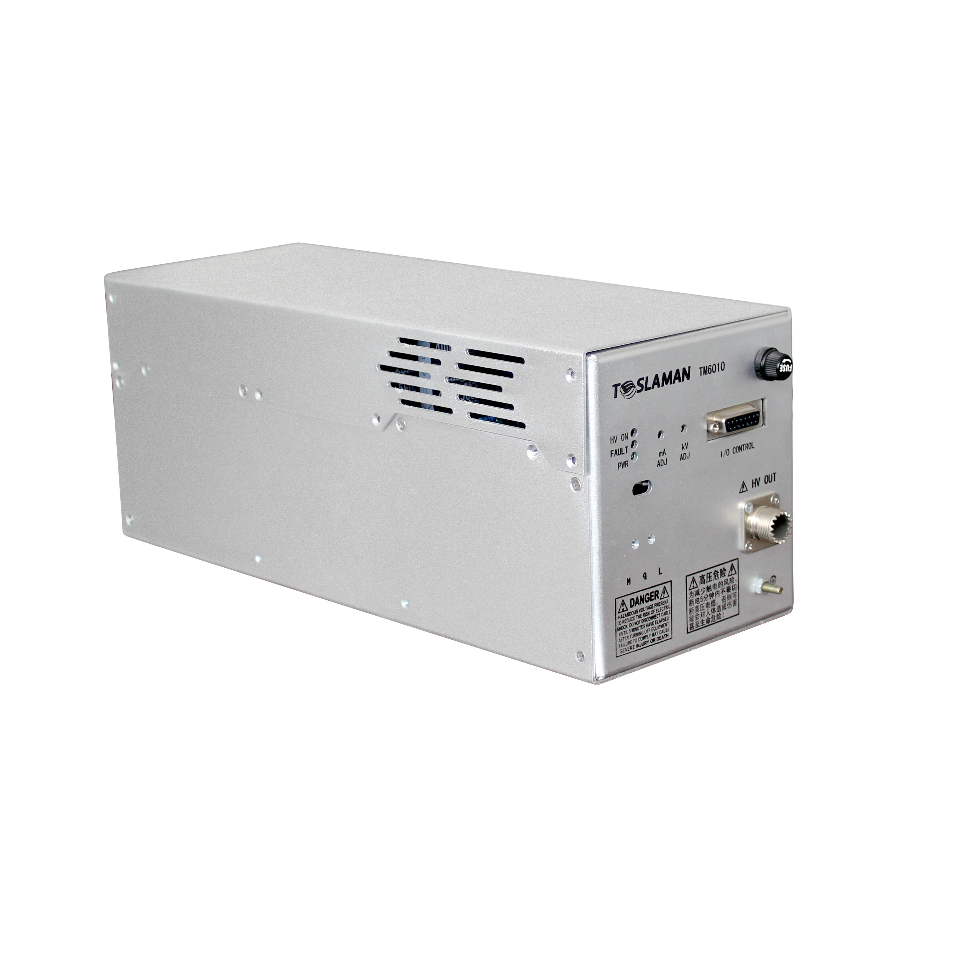
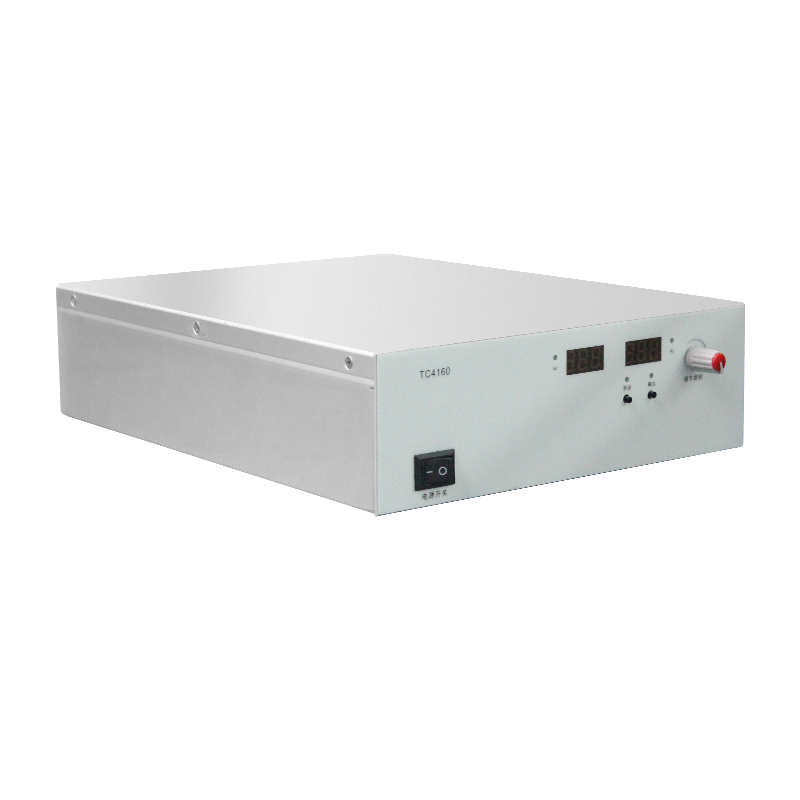
Dual-Bias Composite Power Supply System for Substrates in Vacuum Deposition
In advanced vacuum deposition processes, the substrate is no longer a passive recipient of coating material. Active control of the substrate's electrical potential, or biasing, is a powerful tool for engineering film properties. A dual-bias composite power supply system represents a sophisticated approach, employing two distinct but coordinated bias sources to exert precise control over the energy and flux of particles arriving at the substrate surface throughout the deposition cycle. This system is fundamental to achieving coatings with exceptional adhesion, density, and tailored microstructure.
The core concept involves the superposition of two biasing signals. The first is typically a DC or pulsed-DC bias, which establishes a steady-state electric field between the plasma and the substrate. This field accelerates positively charged ions from the plasma towards the substrate. The kinetic energy of these bombarding ions is crucial for processes like ion plating or ion-assisted deposition. It promotes surface cleaning, enhances atomic-scale mixing at the film-substrate interface for improved adhesion, and can densify the growing film by transferring momentum to adatoms, collapsing voids and suppressing columnar growth common in low-temperature physical vapor deposition. The magnitude of this DC bias is carefully controlled, as excessive energy can cause undesirable effects such as resputtering of the deposited film, implantation of gas atoms, or the generation of intrinsic stress.
The second component is an RF bias, usually operating at standard plasma frequencies such as 13.56 MHz. The primary role of RF biasing is to control the sheath dynamics at the substrate surface. In an RF field, electrons, being much lighter than ions, can follow the oscillating field, while ions respond essentially to the time-averaged potential. This allows for the creation of a stable, controllable plasma sheath in contact with the substrate, even on insulating or semi-insulating films where a DC bias would be impossible to maintain due to surface charging. The RF bias provides independent control over the ion flux independent of the ion energy to a significant degree. By adjusting the RF power, one can modify the plasma density locally at the substrate, thereby changing the ion current arriving at the surface.
The true power of a composite system lies in the independent yet synchronized control of these two sources. The power supplies are not operated in isolation; they are integrated under a master process controller. For example, during the initial phase of deposition, a high DC bias might be applied to ensure intense ion bombardment for interface cleaning and mixing. Subsequently, the DC bias may be ramped down while the RF bias is adjusted to maintain a specific ion-to-neutral flux ratio optimal for building a dense, smooth bulk coating. In more advanced schemes, the two signals can be modulated in tandem—synchronizing pulses from a pulsed-DC magnetron target with pulses in the substrate bias to time the arrival of neutral metal flux with periods of intense ion bombardment.
The design of such a system presents significant engineering challenges. The two power supplies must be impeccably isolated from each other and from the deposition chamber ground to prevent interference and ground loops that could destabilize the plasma. Their output must be extremely stable and free of noise, as any coupling or instability can lead to process drift or film defects. Furthermore, the control system must manage the complex impedance matching required, especially for the RF supply, as the substrate impedance changes dynamically during film growth. A sophisticated feedback system, often incorporating voltage, current, and phase sensors, continuously adjusts matching networks to ensure maximum power transfer and stable plasma conditions. This dual-bias composite approach, therefore, elevates substrate biasing from a simple energetic parameter to a multidimensional process control variable, enabling the synthesis of advanced functional coatings with precisely architected properties that would be unattainable with a single-bias methodology.