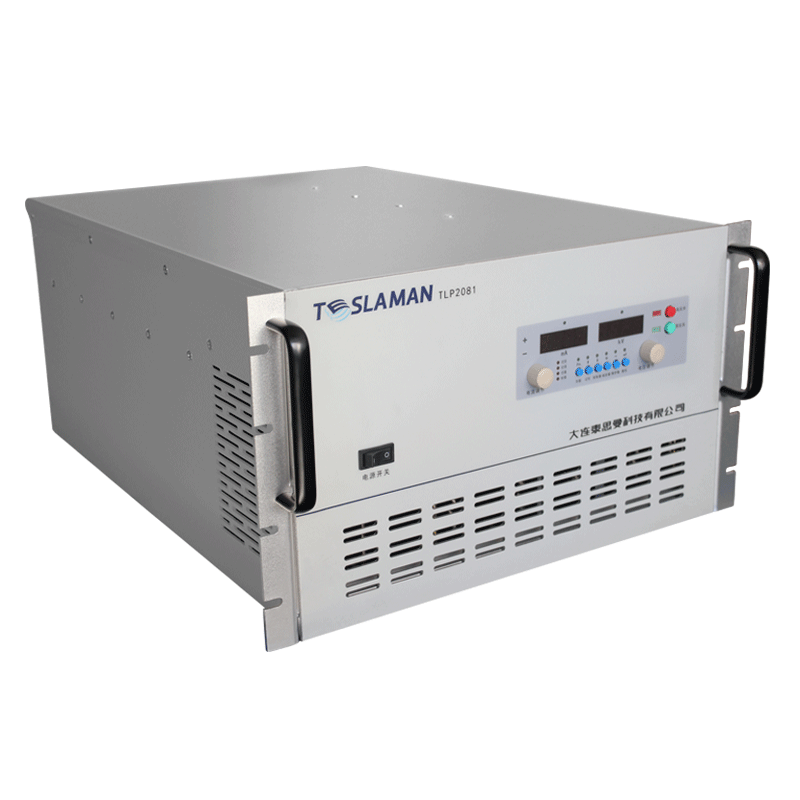
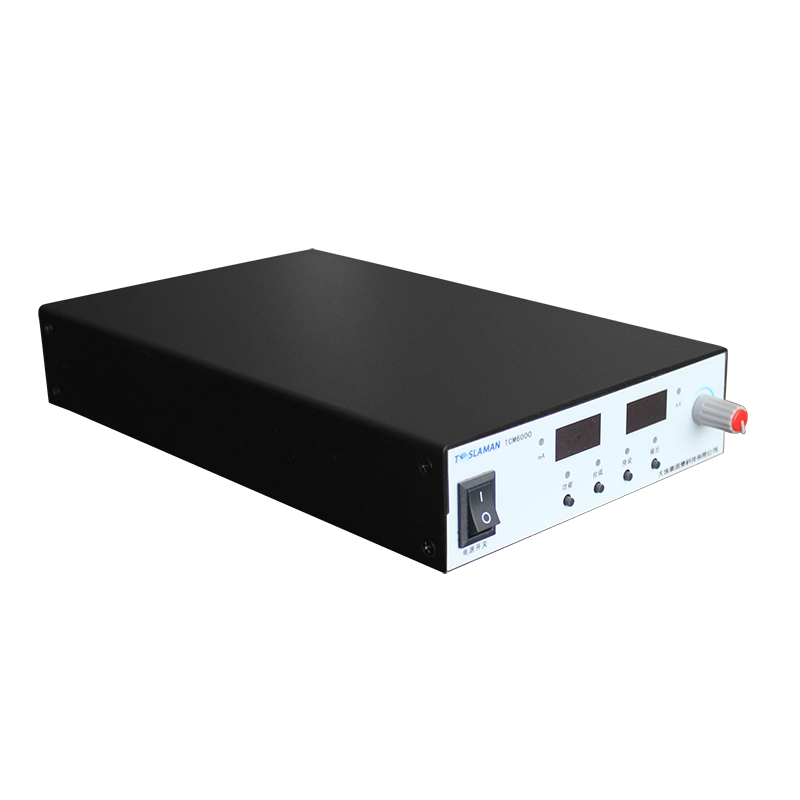
High-Voltage Precision Trimming Supplies for Accelerator Beam Collimator Systems
In particle accelerators, beam collimators are essential devices for controlling beam halo, protecting sensitive equipment from missteered particles, and defining the final beam profile. These collimators often consist of robust, movable jaws made from materials with high atomic number. For certain advanced applications, particularly where ultimate beam cleaning or precision scraping is required, these jaws may be electrically biased. This necessitates a specialized class of high-voltage power supply designed not for raw power, but for ultra-fine control and stability at modest output levels—a high-voltage micro-trimming supply.
The primary function of a bias voltage on a collimator jaw is to influence the trajectory of charged particles in the beam halo. A positively biased jaw will repel positively charged ions, potentially steering them away from the jaw surface to be absorbed elsewhere in a controlled fashion, thereby reducing secondary emission and localized heating. Conversely, a negative bias can attract and collect specific charged contaminants. The required voltages are often in the range of a few hundred volts to several kilovolts, but the precision demanded is extraordinary. Adjustment resolution may need to be on the order of single volts, or even millivolts, out of a total of ten kilovolts. This represents a stability and setpoint resolution requirement of 0.01% or better.
Designing a supply to meet this need involves overcoming several distinct challenges. First, the output must be exceptionally clean. Any ripple or noise on the bias voltage superimposes an alternating field on the intended DC field, causing minute, rapid deflections of particles. This can effectively blur the intended cut point of the collimator, reducing its sharpness and efficacy. Therefore, such supplies employ sophisticated filtering techniques, often using low-noise linear post-regulation stages following a switched-mode primary regulator, even at the cost of some efficiency. The output impedance across a wide frequency spectrum must be kept very low.
Second, the interface for control and monitoring is critical. In an accelerator control room, the collimator bias is a fine-tuning parameter that operators or automated beam optimization algorithms will adjust. The supply must therefore offer both a precise analog programming input and a high-resolution digital interface, such as Ethernet or a fieldbus protocol. Each micro-adjustment in the digital setpoint must translate to a perfectly corresponding, jitter-free change in the analog output voltage. This requires high-resolution digital-to-analog converters and careful attention to the grounding and shielding of the control signals to prevent noise ingress.
Remote sensing is almost always mandatory. Due to the potentially high currents involved in collecting particles (microamperes to milliamperes), even a small resistance in the high-voltage cable can cause a significant voltage drop at the collimator jaw. A remote sense feedback loop, using dedicated sense wires connected directly at the load, allows the power supply to compensate for this drop and ensure the precise voltage is present at the jaw itself. This loop must be designed for stability, as the long cables can introduce phase lag and potentially cause oscillation.
Integration with machine protection systems is non-negotiable. The collimator is a protective device, and its bias supply must be fail-safe. It must include features like over-voltage and over-current protection with very fast response times. More importantly, it must have a configured fallback state—often a commanded ramp to zero volts—in case it loses its control signal or receives a machine interlock trip. The interlock input is typically optically isolated to maintain ground separation between the accelerator's safety system and the power supply's internal electronics.
Furthermore, these supplies are often installed in radiation areas. While not necessarily in the direct beam path, they are exposed to mixed radiation fields over years of operation. This necessitates careful selection of components, favoring those with known radiation tolerance, or implementing shielding strategies for the most sensitive parts like control microprocessors. Thermal management is also designed with long-term reliability in mind, using conduction cooling or fans with redundant bearings.
In practice, a well-designed collimator trimming supply operates as a silent, ultra-precise instrument. It provides beam physicists with a subtle yet powerful knob to tune the interaction between the beam halo and the collimator, enabling tighter control over beam losses, improved background conditions for experiments, and enhanced protection of downstream superconducting elements. Its value lies not in its power rating, but in its unwavering precision and reliability within the complex accelerator ecosystem.