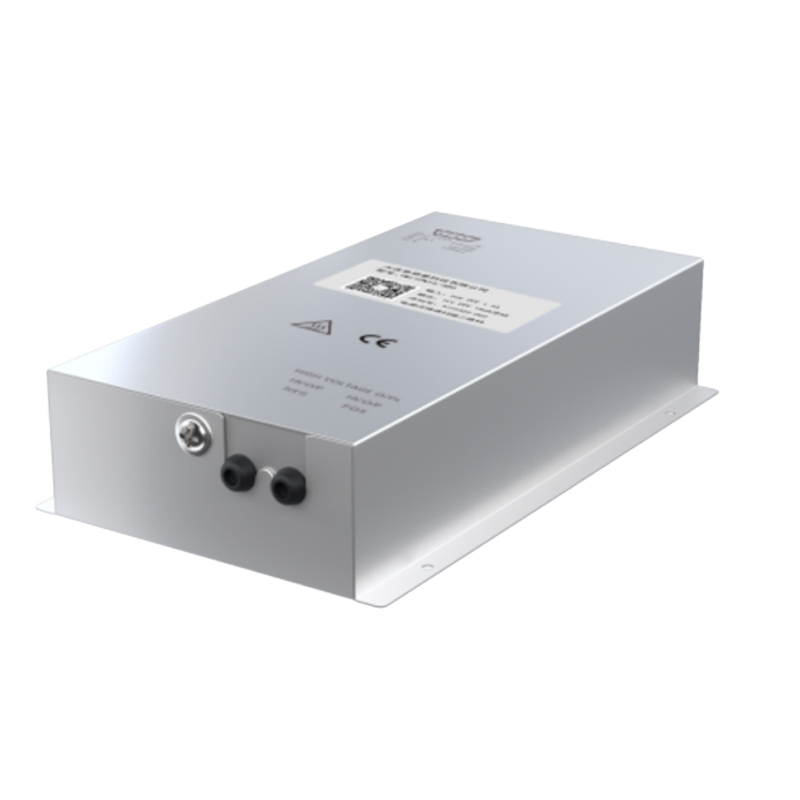
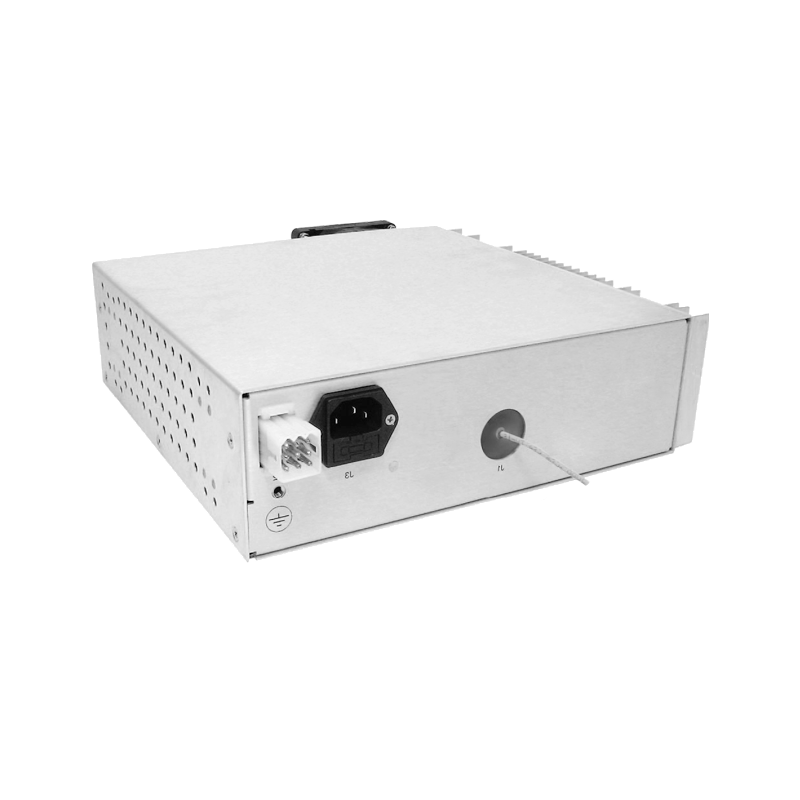
Integrated High-Voltage Power Supply for Capillary Electrophoresis Chips
The miniaturization of capillary electrophoresis (CE) onto microfluidic lab-on-a-chip platforms promises portable, low-consumption analytical devices for point-of-care diagnostics and environmental monitoring. A significant barrier to full integration and miniaturization has been the high-voltage power supply required to drive the electrophoretic separation. Conventional benchtop CE instruments use bulky, line-powered supplies delivering up to 30 kV. For a chip-based system, the power supply must be miniaturized, efficient, low-cost, and safe for handheld or portable operation, while still providing the precise, stable high fields necessary for high-resolution separations.
The design philosophy for an integrated CE chip power supply departs radically from traditional approaches. The key is to recognize that the separation channel on a chip is extremely short, typically a few centimeters, compared to tens of centimeters for a conventional capillary. Therefore, to achieve the same high field strengths (several hundred V/cm), the required total voltage is much lower, often in the range of 500 V to 3 kV. This voltage range is accessible with compact, monolithic high-voltage generation circuits. The primary architecture is often a DC-DC converter, but with specialized considerations. Given the portable nature of the target devices, power efficiency is critical. Switched-mode converters using resonant or flyback topologies are employed to generate the high voltage from a low-voltage battery source (e.g., 3.3V or 5V). The switching frequency is pushed into the megahertz range to allow the use of tiny transformers and capacitors.
Precision and stability cannot be sacrificed for size. The output voltage must be programmable and regulated to within millivolts to ensure reproducible migration times. This is challenging in a small, thermally variable package. Solutions involve using precision, low-drift voltage references and feedback networks with components rated for the full output voltage. The feedback loop itself must be carefully compensated to remain stable despite the variable load presented by the electrophoresis buffer, whose conductivity can change with temperature and ion depletion during a run. Some designs incorporate digital control, where a microcontroller with a high-resolution digital-to-analog converter (DAC) sets the reference and uses an analog-to-digital converter (ADC) to monitor the output via a high-resistance divider, closing the loop in software for flexibility.
Safety and user protection are paramount in an integrated device. The high-voltage output must be current-limited to a safe level, typically below 100 microamperes, to prevent any risk of electrical shock. This is often implemented with a fast electronic current limit in the converter's control IC. Furthermore, the entire high-voltage section must be physically and electrically isolated from the user-accessible parts of the device, such as the sample inlet and the display. This is achieved through layout isolation on the printed circuit board and sometimes by potting the high-voltage section in a dielectric epoxy.
True integration goes beyond just providing a voltage. The ideal power supply for a CE chip is a multi-channel system. A complete CE separation requires at least two high-voltage electrodes: one at the injection end and one at the detection end. More advanced chips may have multiple reservoirs for complex workflows. An integrated power supply should provide multiple independent, programmable outputs to control injection, separation, and waste gating voltages. This can be done with multiple converter channels or with a single high-voltage rail and a network of solid-state high-voltage switches to route the potential to different chip reservoirs under digital control.
Finally, the power supply must be seamlessly coupled with the detection system, which is often an integrated photodiode or conductivity sensor. The timing of voltage application (for injection and separation) must be precisely coordinated with the start of data acquisition. In sophisticated systems, the power supply controller can also manage the data acquisition, creating a fully self-contained analytical engine. By solving the challenges of miniaturization, efficiency, precision, and safety, the integrated high-voltage power supply ceases to be an external module and becomes the enabling heart of a truly portable, high-performance microfluidic chemical analysis system, opening new frontiers in decentralized testing.