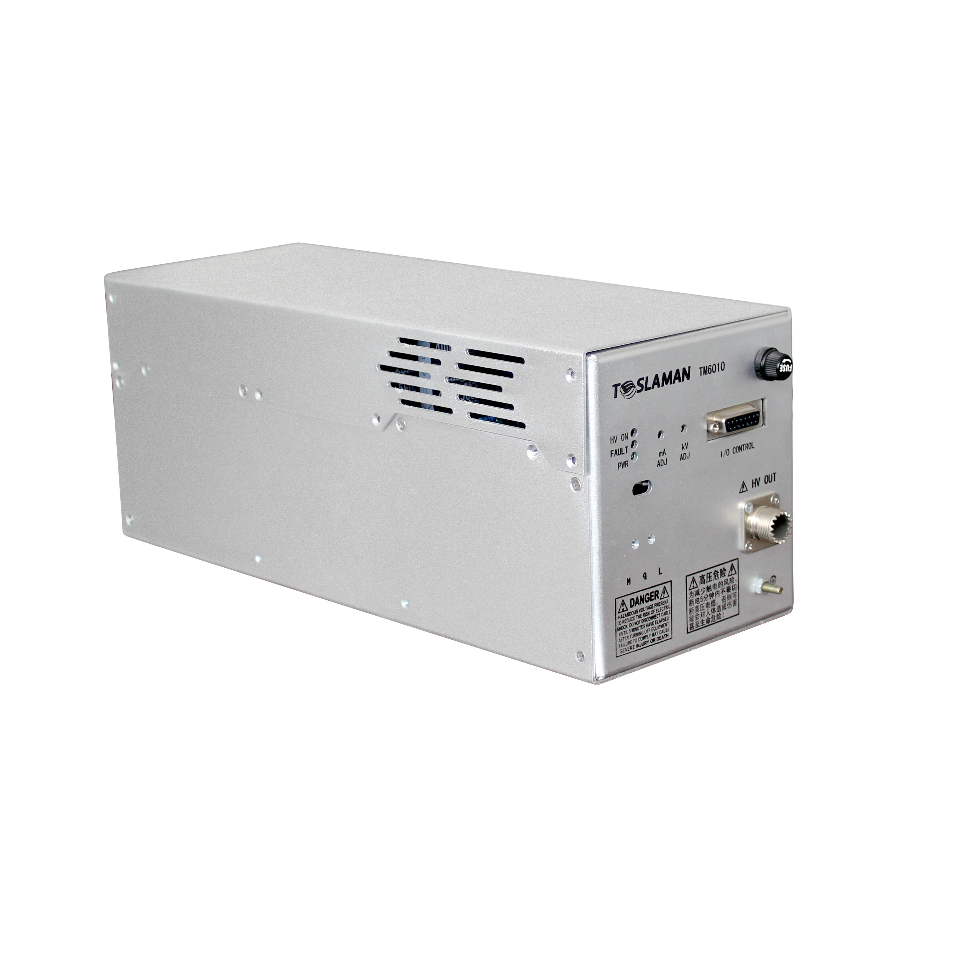
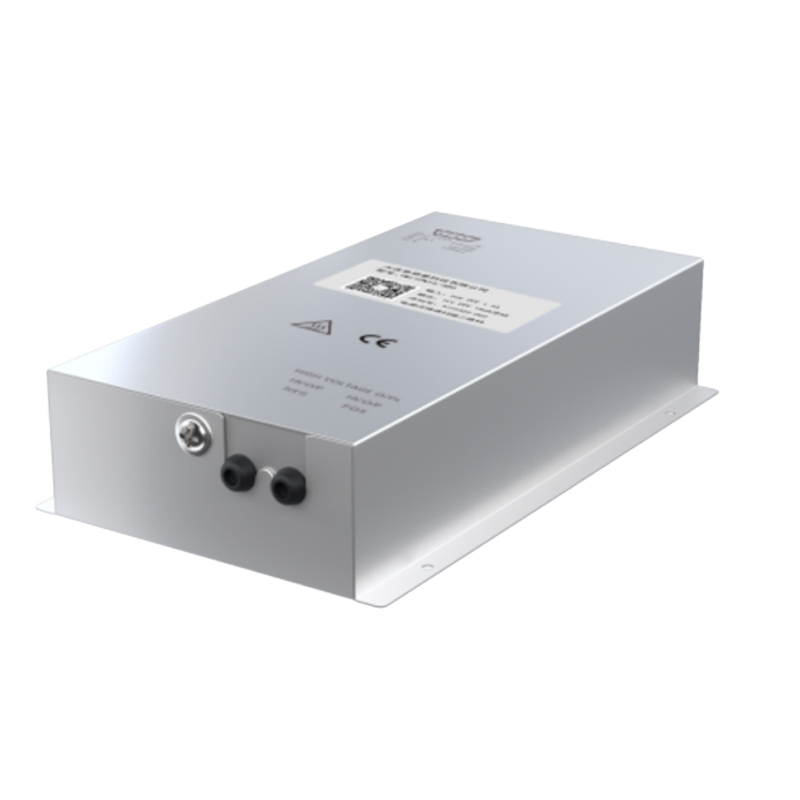
High-Voltage Excitation Sources for Plastic Sorting via Terahertz Spectroscopy
The recycling of plastic waste presents a significant technological challenge, particularly in the efficient and accurate sorting of various polymer types. Terahertz spectroscopy has emerged as a promising non-destructive, non-contact method for identifying plastics based on their unique spectral fingerprints in the far-infrared region. A critical component in generating these analytical terahertz waves, especially for pulsed time-domain systems, is a specialized high-voltage excitation source. This source does not power the spectrometer's detector, but rather drives the emitter that creates the initial terahertz pulse, and its performance directly dictates the system's sorting speed, accuracy, and reliability in an industrial setting.
Many advanced terahertz emitters for this application are photoconductive antennas. These devices consist of a semiconductor substrate with a metallic antenna pattern deposited on it. When a femtosecond laser pulse strikes the gap in the antenna, it generates charge carriers. The application of a high-voltage bias across the antenna electrodes then accelerates these carriers, resulting in the emission of a broadband terahertz pulse. The high-voltage source for this purpose is not a standard DC supply; it is a modulated or pulsed system designed for optimal terahertz generation efficiency and minimal noise.
The voltage requirements are typically in the range of tens to a few hundred volts, which is modest by high-voltage standards. However, the constraints are extraordinary. First, the voltage must be exceptionally stable and low-noise. Any electronic noise on the bias voltage is directly imprinted onto the terahertz pulse, degrading the signal-to-noise ratio of the measured spectrum. This is particularly detrimental when trying to distinguish subtle spectral features between similar polymers like PET and PEN, or identifying additives within a matrix. Therefore, these supplies employ linear regulation, low-noise voltage references, and are often battery-powered to isolate them from mains-borne interference.
Second, and more critically for high-speed sorting, the bias voltage may need to be modulated at a high frequency. In a typical setup, the terahertz emitter is driven by a laser pulsed at a repetition rate of, for example, 100 MHz. Applying a constant bias can lead to space-charge accumulation and heating in the photoconductive gap, reducing efficiency and potentially damaging the emitter over time. A common solution is to apply a sinusoidal or square-wave alternating current bias at a frequency slightly offset from the laser repetition rate. This requires the high-voltage source to be a high-frequency amplifier capable of outputting tens of volts at frequencies from a few kilohertz to several megahertz, with a clean waveform and precise control over amplitude and frequency.
The design of such an amplifier is non-trivial. It must have a wide bandwidth to support the chosen modulation frequency without phase distortion, and it must drive the capacitive load of the photoconductive antenna without ringing or instability. The output stage often uses fast, high-voltage operational amplifiers or discrete transistor arrays in a push-pull configuration. Thermal management is crucial, as the amplifier may operate continuously on a sorting line, necessitating efficient heat sinks or even liquid cooling for the most powerful units.
Integration with the optical system is paramount. The modulation signal for the high-voltage amplifier is typically derived from the same master clock that synchronizes the femtosecond laser and the terahertz detector. This ensures phase coherence across the entire system, which is essential for the sensitive lock-in detection techniques used to recover the tiny terahertz signal from noise. Any jitter in the high-voltage modulation relative to the optical pulse train will smear the measured terahertz waveform, reducing spectral resolution.
For industrial sorting, robustness is a key driver. The high-voltage excitation module must operate reliably in environments that may have dust, vibration, and wide temperature variations. This demands conformal coating of circuit boards, ruggedized connectors, and components rated for industrial temperature ranges. The system must also be safe, with interlocked enclosures to prevent operator exposure to both optical and electrical hazards.
Furthermore, to adapt to different plastics or to optimize the signal for varying thicknesses, the bias voltage amplitude might need to be tunable. An automated sorting system could adjust this parameter on-the-fly based on a preliminary scan, making the high-voltage source a programmable component within a larger feedback loop. This programmability allows the system to maintain optimal terahertz generation efficiency across a wide range of target materials and conditions.
In essence, the high-voltage excitation source in a plastic sorting terahertz spectrometer is a precision instrument in its own right. Its ability to deliver a clean, stable, and precisely modulated bias voltage directly enables the generation of high-fidelity terahertz pulses. These pulses, after interacting with a moving stream of plastic flakes, carry the spectral information that allows for real-time, accurate material identification. The reliability and performance of this source are therefore foundational to achieving the high throughput and purity rates required for economically viable plastic recycling.