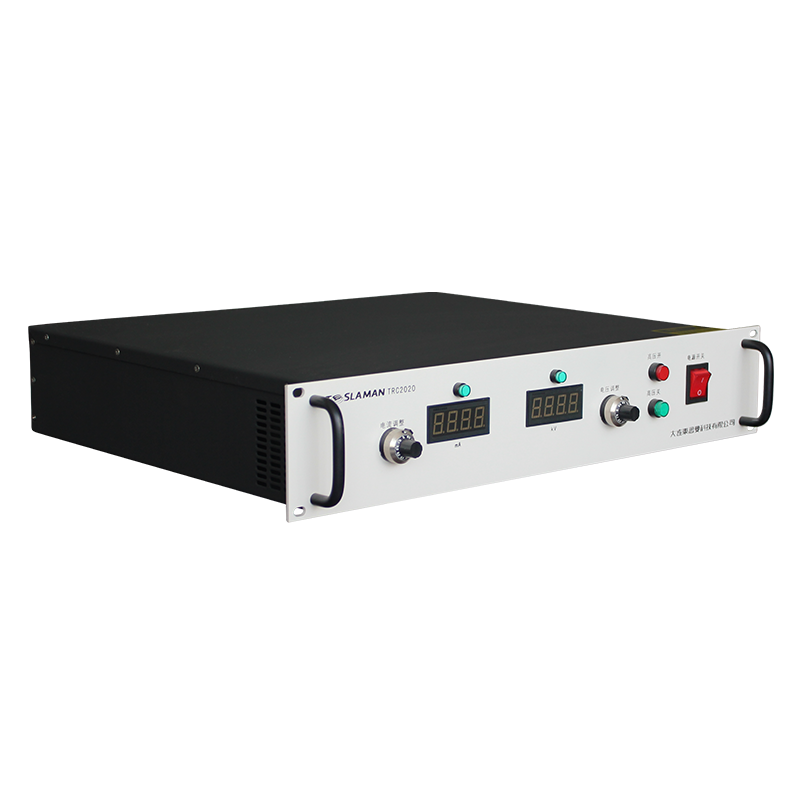
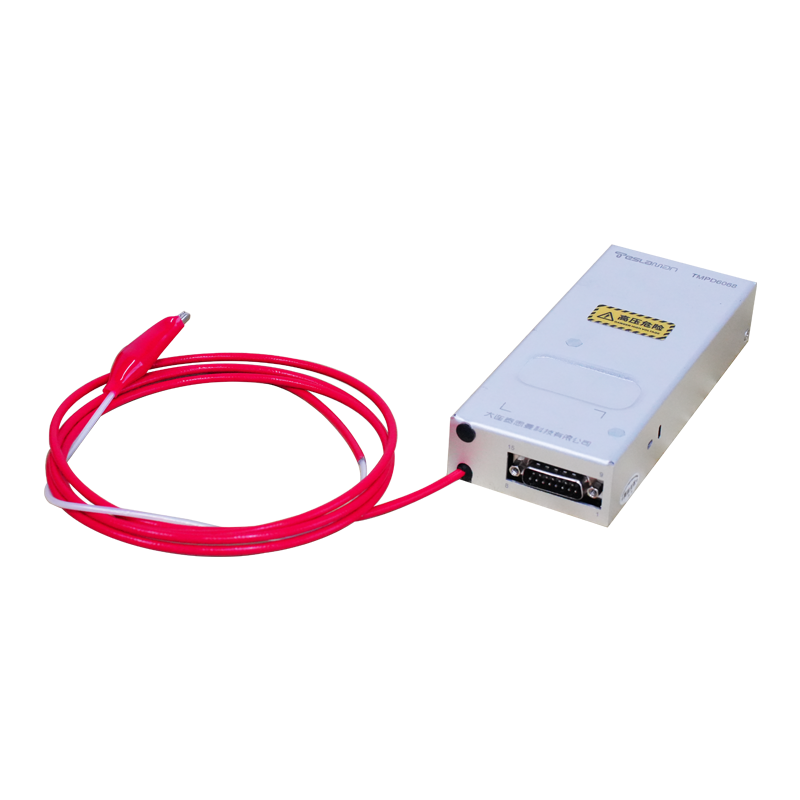
High-Voltage Safety Dump for Accelerator Beam Abort Sections
Particle accelerators, whether for research, medical therapy, or industrial processing, operate by storing and manipulating enormous amounts of energy in the form of charged particle beams. During normal operation, this energy is delivered to a target or experiment. However, in the event of a fault, unsafe beam condition, or the need for rapid shutdown, the beam must be safely and instantly diverted from its primary path and its energy dissipated. This is the function of the beam abort system, and its most critical component is the high-voltage, fast-acting kicker magnet and its associated energy dissipation network, collectively forming the high-voltage safety dump.
The abort section typically consists of one or more fast-pulsed dipole magnets (kickers) located upstream of a massive, shielded beam dump block. In a storage ring, these kickers are used for injection and extraction, but in an abort scenario, they are triggered to deflect the entire circulating beam into the dump. For linear accelerators, a similar system deflects the beam into a side-line dump. The key requirement is speed. From the detection of a fault condition—such as a beam position instability, loss of vacuum, or safety interlock trip—to the complete deflection of the beam, the total latency must be within microseconds. The majority of this latency is in the rise time of the magnetic field, which is determined by the high-voltage pulse applied to the kicker magnet.
The kicker magnet is essentially a low-inductance, low-resistance coil. To generate the required magnetic field strength (often several hundred Gauss) in a short time (sub-microsecond to a few microseconds), a very high voltage pulse is required. This pulse, often in the range of 10 to 50 kilovolts, is generated by a specialized pulsed power modulator. The modulator is essentially a large capacitor bank charged to the high voltage, which is then discharged into the magnet via a fast high-current switch, such as a thyratron, a spark gap, or increasingly, a solid-state switch using stacked semiconductor devices like MOSFETs or IGBTs.
The design of this high-voltage dump system revolves around reliability and energy handling. The capacitor bank must store enough energy to generate the required pulse, and the switching element must be rated for the peak current, which can exceed 10,000 amperes. The system must be fail-safe; a fault in the abort system itself must not prevent a safe shutdown. This often leads to redundant designs, with multiple independent kickers or multiple switches in parallel. The triggering of the system is governed by a dedicated, hardwired safety interlock system (often separate from the main accelerator control system) that prioritizes speed and certainty over complexity.
Once the beam is deflected into the dump block, its kinetic energy is converted to heat. The dump is a massive, water-cooled block of graphite, copper, or other high-Z materials designed to absorb the beam's energy and contain secondary radiation. However, the high-voltage system's job is not complete. After the initial pulse, the kicker magnet's magnetic field must collapse quickly to avoid affecting subsequent operations or causing oscillations. This requires careful design of the pulse shape, often incorporating a damping resistor or a free-wheeling diode network to control the current decay and prevent damaging voltage spikes across the switch.
Integration with the overall machine protection system (MPS) is absolute. The high-voltage abort pulse generator receives its trigger from the MPS, which continuously monitors hundreds of parameters. The design must ensure that electromagnetic interference (EMI) from the massive current pulse does not corrupt the very sensors and interlock circuits that protect the machine. This involves extensive shielding, grounding strategies using single-point or mesh grounds, and the use of fiber-optic links for critical trigger signals.
The high-voltage safety dump is the accelerator's emergency brake. Its successful operation protects millions of dollars worth of delicate equipment (like superconducting cavities or beamline components) from damage due to uncontrolled beam loss, and it is a fundamental safety system that protects personnel by ensuring the beam can be instantly terminated. Its design encapsulates the extreme demands of pulsed power engineering: ultra-fast switching, high peak power, absolute reliability, and seamless integration into a larger, ultra-precise technological ecosystem.