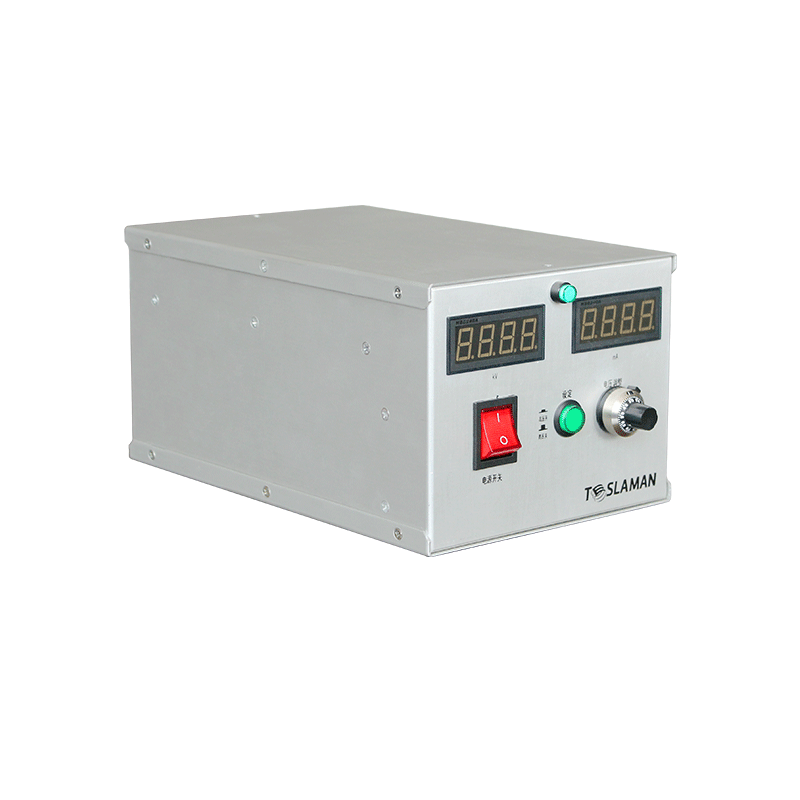
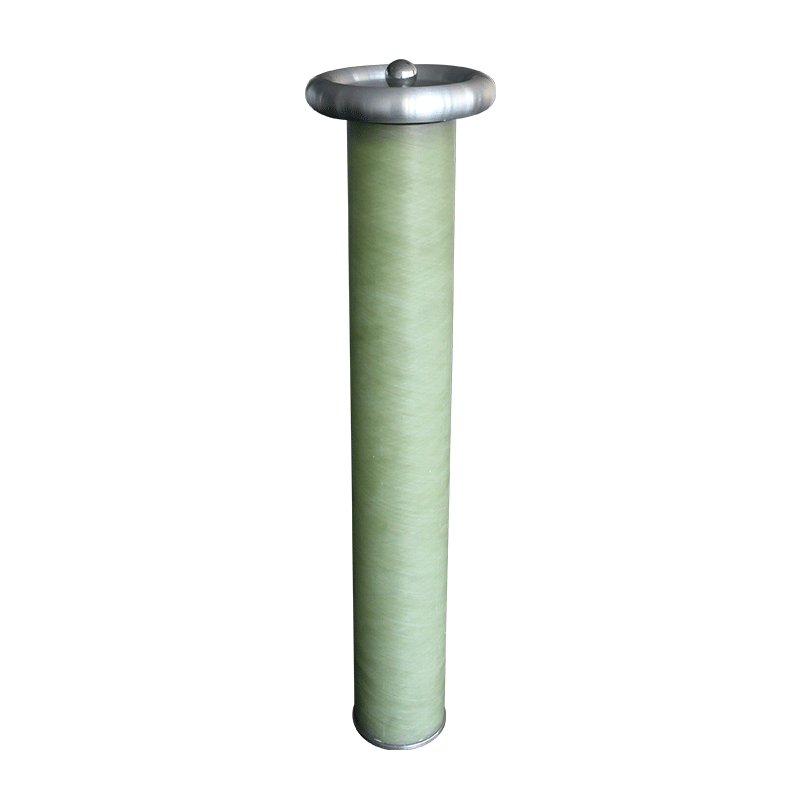
RF-DC Composite High-Voltage Power Supply for Electrostatic Chucks
In modern semiconductor plasma processing equipment, such as etchers and deposition tools, the electrostatic chuck (ESC) is a critical component. Its primary function is to securely clamp the silicon wafer to a temperature-controlled substrate holder during processing. However, the ESC plays a far more active role. It also provides a means to control the radio frequency (RF) bias that accelerates ions towards the wafer, thereby governing the etch profile or deposition density. This dual function requires a composite high-voltage power system that seamlessly integrates a very stable DC clamping voltage with a high-power RF bias, all while ensuring absolute safety and preventing cross-interference.
The fundamental principle of an ESC is Johnsen-Rahbek or Coulombic attraction. A high DC voltage, typically 1-5 kV, is applied to electrodes embedded within a dielectric layer just beneath the wafer clamping surface. This voltage induces opposite charges in the wafer, creating a strong electrostatic force that holds the wafer firmly in place against the helium backside cooling gas pressure. The power supply for this clamping function must be exceptionally clean and stable. Any ripple or fluctuation on the DC clamping voltage can cause a variation in the clamping force, leading to unstable wafer temperature or even wafer slippage, which can destroy the wafer and the process chamber.
Simultaneously, an RF power supply, typically at 13.56 MHz or lower frequencies like 2 MHz or 400 kHz, is applied to the same ESC electrode or to the chuck pedestal. This RF bias generates a DC self-bias voltage on the wafer surface, which accelerates ions from the plasma to the wafer. The energy of these ions is a primary knob for controlling the etch directionality and selectivity. The challenge lies in the co-existence of these two high-power, high-voltage sources on the same electrode. The DC supply must be protected from the high-power RF, and the RF supply must not be perturbed by the DC bias.
This is achieved through a carefully designed filtering and isolation network. A low-pass filter, typically a large inductor (RF choke) and a capacitor to ground, is placed between the DC power supply and the ESC electrode. This filter presents a high impedance to the RF frequencies, preventing the RF power from flowing back into and damaging the DC supply. Conversely, the RF path from the generator to the electrode is designed to block the DC voltage, often using a DC blocking capacitor in series. This capacitor allows the AC RF signal to pass while preventing the DC clamping voltage from being shorted to ground through the RF generator.
The design of these filters is critical. The RF choke must handle the full DC voltage without saturating its magnetic core, and its self-resonant frequency must be far from the operating RF frequency to avoid creating an unwanted impedance that could distort the RF waveform. The blocking capacitor must have low loss at RF frequencies and withstand the sum of the DC voltage and the peak RF voltage.
Beyond simple filtering, advanced systems incorporate active control to manage the interaction. The application of RF power can, through rectification effects at the plasma sheath, create a DC offset on the ESC electrode itself. This induced DC can either add to or subtract from the applied clamping voltage, potentially affecting the clamping force. Therefore, the DC power supply must be designed with a wide control bandwidth and fast transient response to counteract this plasma-induced voltage shift, maintaining a constant net clamping voltage.
Furthermore, safety is paramount. The ESC electrode is in close proximity to the wafer and the process chamber, which is often at ground potential. A failure in the dielectric layer could lead to a high-voltage short, arcing, and wafer destruction. The composite power system must include fast arc detection and suppression circuits that can distinguish between a normal plasma discharge and a destructive arc. Upon detecting an arc, the system must simultaneously shut down both the DC clamping supply and the RF bias supply in a coordinated sequence to minimize damage.
The RF-DC composite high-voltage power supply is therefore a sophisticated subsystem, representing a convergence of high-voltage DC engineering, high-power RF design, and advanced control algorithms. Its flawless operation is fundamental to the yield and reliability of every wafer processed in a modern plasma etcher or deposition tool. The stability of its DC output ensures thermal control, while the purity of its RF output defines the etch profile. Together, they enable the nanoscale precision required for today's advanced integrated circuits.