High-Voltage Scanning Strategies for Ion Beam Surface Texturing: Precision Through Potential Control
The ability to modify a materials surface at the microscopic level through ion bombardment has opened up vast possibilities in tribology, optics, and biomedicine. Ion beam surface texturing, whether for creating specific roughness patterns, etching nanostructures, or inducing periodic ripple formations, relies on the precise delivery of ions to the target. While much attention is paid to the ion source and the beam optics, the high-voltage system that scans the beam across the surface is, in my professional opinion, the true arbiter of pattern fidelity and process control. For over fifty years, I have watched the evolution from simple, mechanically scanned stages to the sophisticated, all-electrostatic scanning strategies we employ today, where the high voltage itself becomes the tool for painting the surface with ions.
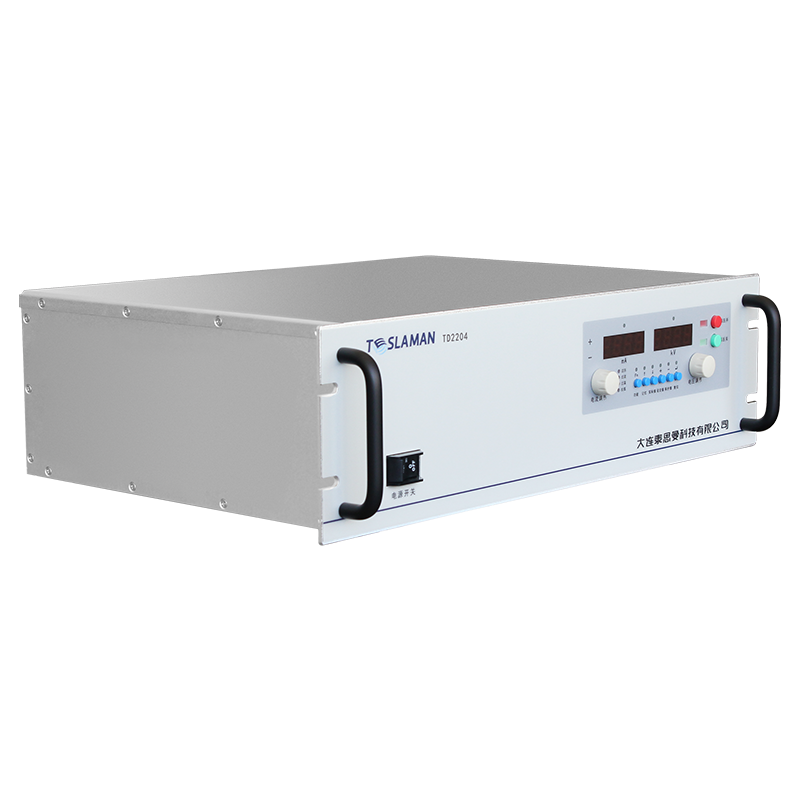
The core concept of electrostatic scanning is elegantly simple: by applying time-varying voltages to a set of deflection plates placed after the final accelerating lens, we can create a transverse electric field that bends the ion beam, causing it to land at different positions on the target. However, the implementation of this concept for precise surface texturing is anything but simple. The scanning high-voltage amplifiers must produce clean, programmable waveforms with amplitudes ranging from a few hundred volts to several kilovolts, depending on the beam energy and the desired scan width. The fidelity of these waveforms directly translates to the positional accuracy of the beam on target. A non-linearity in the ramp voltage that is supposed to produce a linear scan will result in a distorted pattern, with the ion dose being non-uniform across the textured area.
The challenges multiply when we consider the dynamics of the beam itself. The ions, having been accelerated through a high potential, possess significant momentum. When the deflection voltage is applied, it takes a finite time for the beam to settle into its new trajectory. This is not just an electronic time constant but a function of the ions time-of-flight through the deflection field. For high-frequency scanning, where we might want to rapidly raster the beam to create a uniform dose or a complex pattern, this dynamic response becomes critical. The scanning system must be designed with a full understanding of the beam optics. The deflection plates act as a capacitor, and the high-voltage amplifier must drive this capacitive load without introducing phase shifts or amplitude errors that would blur the beam position. We often employ specially designed, high-bandwidth high-voltage amplifiers that can deliver the necessary peak currents to charge and discharge the plate capacitance rapidly, all while maintaining exceptional linearity and low noise.
A particularly advanced application is the creation of gradient patterns or even two-dimensional structures through what is essentially high-voltage lithography. By modulating the dwell time of the beam at each pixel, or by varying the intensity of the beam in coordination with the scanning voltages, we can control the depth of etching or the density of surface features. This requires a high-voltage scanning system that is fully synchronized with the beam blanker and the data acquisition system. Imagine wanting to create a surface with a sinusoidal roughness profile. The scan in the X-direction would be a linear ramp, but the Y-deflection would be modulated with a sinusoidal voltage synchronized with the X position. The precision required is immense, as a 1% error in the deflection voltage can lead to a similar percentage error in the feature position. This demands high-voltage sources with stability and resolution that rival the best low-voltage laboratory instruments, but which must operate in the kilovolt range.
Furthermore, the interaction of the scanning fields with the final accelerating field and the ground planes in the vacuum chamber must be carefully managed. Stray fields can cause defocusing or astigmatism in the beam, especially for large scan angles. The geometry of the deflection plates, the shielding around the beamline, and even the material of the target holder all influence the effective electric field seen by the ions. In my years of consulting, I have seen many systems where the high-voltage scanning electronics were top-notch, but the mechanical design of the chamber introduced distortions that ruined the texturing. The solution often involves sophisticated shimming of the deflection fields or the use of more complex multi-element deflectors that can be driven with a combination of voltages to correct for these aberrations. Ultimately, a successful ion beam texturing process is a triumph of holistic engineering, where the high-voltage scanning strategy is conceived not in isolation, but as an integral component of the entire beamline and vacuum system, all working in concert to sculpt the surface with atomic-scale precision.