High-Voltage Focusing for Field-Amplified Sample Stacking in Capillary Electrophoresis
Capillary electrophoresis has established itself as a powerful separation technique for a wide range of analytes, from small inorganic ions to large biomolecules like proteins and DNA. Its advantages include high separation efficiency, minimal sample and reagent consumption, and relatively simple instrumentation. However, one of its historical limitations has been concentration sensitivity, particularly when compared to chromatographic methods. The optical path length for absorbance detection in a capillary is very short, making it difficult to detect trace-level components. Over my five decades in the laboratory, I have seen numerous on-line preconcentration techniques emerge to address this, and among the most elegant and effective is field-amplified sample stacking. This technique relies entirely on the precise and controlled application of high voltage to create a local enhancement of the electric field, which in turn focuses a large sample volume into a narrow zone prior to separation.
The principle of field-amplified stacking is rooted in the physics of electrophoresis. The velocity of an ion in an electric field is the product of its electrophoretic mobility and the local electric field strength. If a sample is dissolved in a low-conductivity buffer and injected into a capillary that is filled with a high-conductivity separation buffer, the application of a high voltage will cause a non-uniform electric field to develop. The electric field strength is inversely proportional to the conductivity. Therefore, the field will be much higher in the low-conductivity sample zone than in the high-conductivity background electrolyte. When ions in the sample zone experience this high field, they migrate rapidly until they reach the boundary with the high-conductivity buffer. At this boundary, the field drops dramatically, and the ions slow down, effectively stacking or concentrating into a thin zone. This can result in concentration enhancement factors of several hundred-fold.
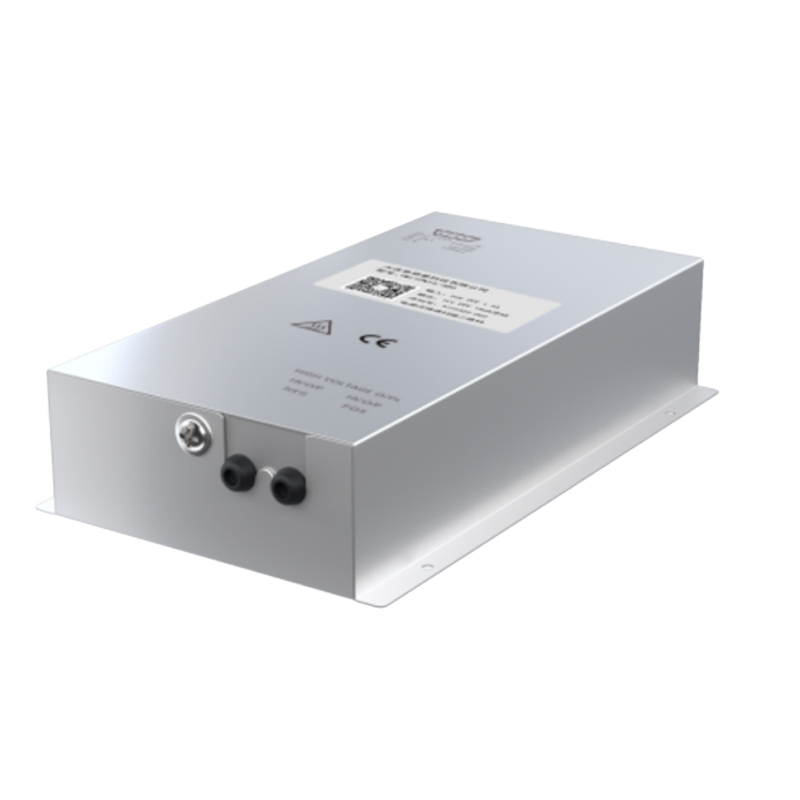
The execution of this simple principle demands a high-voltage power supply with very specific characteristics. The first requirement is a high and stable voltage, typically in the range of 10 to 30 kV, to drive the electrophoretic process. However, the stacking phenomenon itself is transient. It occurs in the initial moments after the voltage is applied. The power supply must be capable of delivering this high voltage with a very fast rise time, establishing the non-uniform field almost instantaneously. Any delay or slow ramping of the voltage would allow diffusion to begin dispersing the sample before the stacking field is fully established, reducing the efficiency of the concentration.
The duration of the stacking phase is also critical. If the voltage is applied for too long, the entire sample zone will be pushed into the capillary and the stacked zone will begin to undergo normal electrophoretic separation, which may be desirable, or it may be pushed past the detector if the stacking is intended as a separate preconcentration step. For techniques like large-volume sample stacking, where the sample plug may fill a significant portion of the capillary, the polarity of the voltage may even need to be reversed during the stacking process to remove the large volume of low-conductivity matrix from the capillary while leaving the stacked analytes behind. This requires a power supply capable of rapid and precise polarity switching, a feature that adds considerable complexity to the high-voltage design.
Furthermore, the stacking process is highly sensitive to the exact ratio of conductivities between the sample and the background electrolyte, and to the applied voltage. A voltage that is too low will not create a sufficient field enhancement for effective stacking. A voltage that is too high can lead to excessive Joule heating in the high-conductivity buffer, which can cause temperature gradients, band broadening, and even the formation of bubbles that disrupt the electrical circuit. The power supply must therefore be able to maintain a constant voltage in the face of changing resistance in the capillary. As the sample stacks and the low-conductivity zone shrinks, the overall resistance of the capillary changes. The power supply must compensate for this to maintain a constant field strength, often by operating in a constant-voltage mode with a fast feedback loop.
In my research group, we have explored variations on this theme, such as field-amplified sample injection. In this mode, a short plug of low-conductivity buffer is injected, followed by electrokinetic injection of the sample from a vial. The sample ions experience a high field in the low-conductivity plug and stack at its boundary with the separation buffer. This technique can provide even greater enhancement factors but requires even more precise control over the injection voltage and timing. The high-voltage supply must be able to execute a complex sequence: first, apply a voltage to inject the low-conductivity plug; second, switch the voltage or the vial positions to perform the electrokinetic sample injection; and third, apply the separation voltage. All of these steps must be precisely timed and synchronized, often under computer control, to achieve reproducible results.
The stability of the high voltage during the subsequent separation is also paramount for maintaining the efficiency of the stacking. Any fluctuation in voltage during the separation will cause a corresponding fluctuation in the velocity of the analyte zones, leading to peak broadening and a loss of the resolution gained from the stacking step. The power supply must therefore exhibit extremely low ripple and drift over the entire duration of the separation, which can range from a few minutes to nearly an hour for complex mixtures.
Modern capillary electrophoresis instruments have integrated these requirements into sophisticated, multi-functional high-voltage power supplies. These supplies are often capable of delivering both positive and negative voltages, switching between them rapidly, and providing programmable voltage ramps and steps. They also incorporate extensive safety features, such as current monitoring and arc detection, to protect the delicate capillary and the operator. The humble high-voltage supply, often tucked away in the corner of the instrument, is in fact the maestro of the stacking and separation process, conducting the intricate dance of ions that allows us to see and measure the smallest of samples with remarkable clarity.