Dual-Bias High-Voltage Systems for Rotating Substrates in Vacuum Coating
In the world of vacuum coating, achieving uniform film thickness and consistent properties on complex, three-dimensional parts is a perpetual challenge. Components such as cutting tools, turbine blades, and automotive parts often require coatings on all their surfaces, from the tips of their features to the depths of their recesses. The solution, adopted decades ago, is to mount these parts on a rotating or planetary fixture within the coating chamber. This rotation exposes all sides of the part to the flux of depositing material, promoting uniformity. However, when the coating process involves plasma or ion bombardment, as it does in sputtering and arc evaporation, the rotation introduces a new variable: the changing electrical bias on the part as it moves through the plasma. To maintain a uniform ion energy and flux, and hence a uniform coating structure, we must control the electrical potential of these rotating parts. This has led to the development of sophisticated dual-bias high-voltage systems, a technology that I have had the privilege of helping to refine over many years. These systems apply a bias voltage to the rotating substrate, but they do so in a way that compensates for the parts motion and the plasma non-uniformities, ensuring a consistent and predictable coating result.
The simplest bias system for a rotating fixture is a single, continuous electrical connection through a slip ring. A high-voltage power supply is connected to the rotating shaft, and the bias is applied to all parts on the fixture simultaneously. While this is functional, it has a significant drawback. As the parts rotate, they move through regions of the chamber with different plasma densities. In the area closest to the sputtering source, the ion flux is high. On the opposite side of the rotation, facing away from the source, the ion flux is much lower. With a constant bias voltage, the ion energy is the same, but the ion current, and hence the bombardment intensity, varies dramatically. This can lead to a coating that is dense and well-structured on the side facing the source, but porous and columnar on the shadowed side. The dual-bias approach addresses this by using two independent bias supplies connected to different parts of the fixture, or by dynamically switching the bias voltage in synchrony with the rotation.
One implementation of a dual-bias system uses a split fixture. The parts are mounted on two or more independent, electrically isolated carousels. Each carousel has its own slip ring and its own dedicated high-voltage bias supply. By adjusting the voltage on each carousel independently, we can compensate for the different plasma environments they experience. For example, the carousel that is currently facing the source might be run at a lower voltage to reduce the ion energy, while the carousel on the shadowed side is run at a higher voltage to increase the ion energy and promote densification. This requires a detailed understanding of the plasma distribution in the chamber and a control system that can coordinate the two supplies. A more advanced and elegant solution involves a single, fast high-voltage supply and a synchronized switching system. In this approach, the fixture rotation is equipped with an encoder that provides a real-time position signal. The bias supply is programmed to output a voltage that varies as a function of this position. As a part rotates past the source, the bias voltage might be lowered to prevent overheating or excessive resputtering. As it moves away, the voltage might be increased to maintain a constant ion bombardment energy. This technique, known as rotational bias voltage modulation, can produce remarkably uniform coatings on complex shapes.
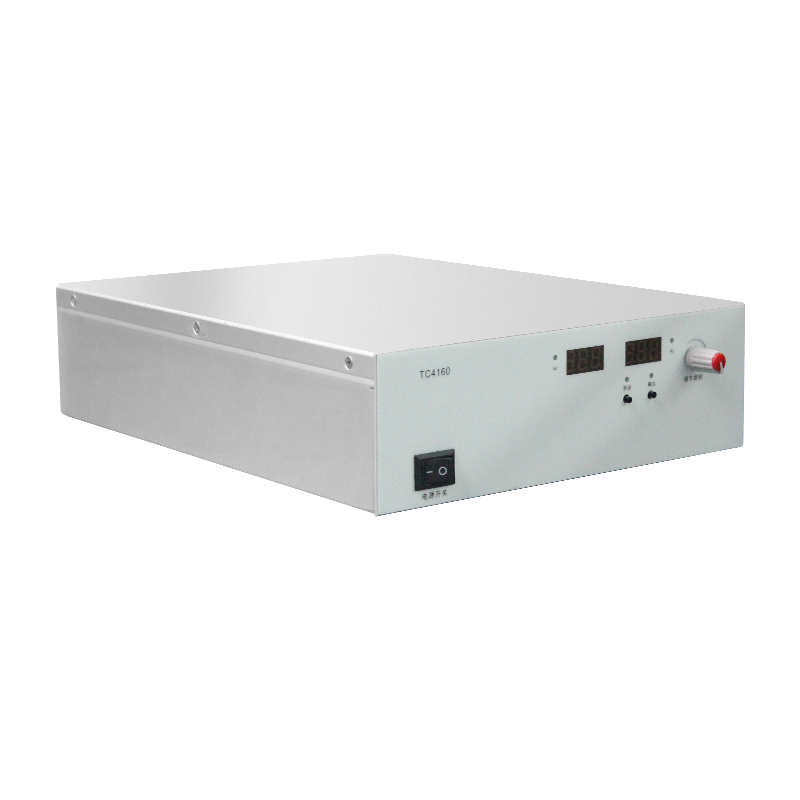
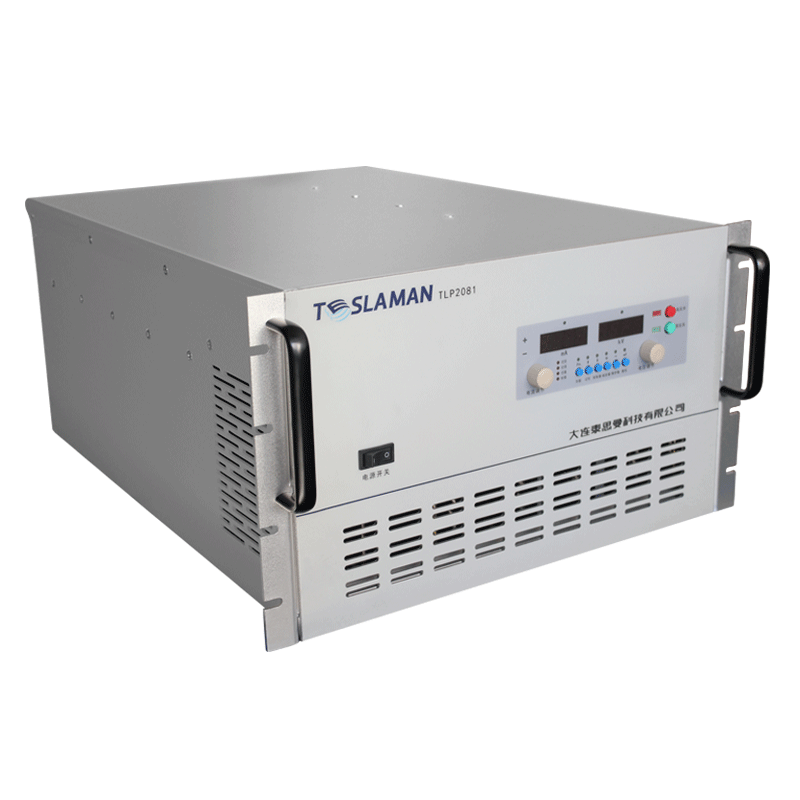
The high-voltage power supplies for these applications must be capable of more than just delivering a constant DC voltage. They must be programmable, with the ability to accept an external analog or digital signal that dictates the output voltage in real-time. The bandwidth of the supply must be sufficient to track the rotation speed without lag. For a fast-rotating fixture, this might require a response time of milliseconds or less. The supply must also be able to handle the highly dynamic load presented by the plasma. As the parts move, the effective surface area presented to the plasma changes, causing the ion current to fluctuate. The bias supply must have a fast control loop to maintain its programmed voltage despite these current swings. If the supply is too slow, the voltage will droop when the current spikes, leading to a loss of control. The slip rings themselves are critical components. They must be designed to carry the full bias voltage and current without arcing or introducing noise. They must also be reliable over millions of rotations. In my long career, I have seen the bias supply evolve from a simple, static accessory to a dynamic, programmable tool that is central to the uniformity and quality of the coating process. The dual-bias and rotational modulation techniques are perfect examples of how we can use our understanding of plasma physics and high-voltage engineering to overcome the geometric challenges of coating real-world, three-dimensional objects, ensuring that every surface, no matter how hidden, receives the engineered treatment it requires.