High-Voltage Arrays for Dielectrophoretic Sorting of Plastics in Microfluidics
The sorting of microplastics and the separation of different polymer types at the microscale is a growing need in environmental monitoring and biomedical diagnostics. Dielectrophoresis offers a powerful, label-free method to manipulate particles based on their intrinsic dielectric properties. By applying non-uniform electric fields, particles can be moved, trapped, or sorted. At the heart of any DEP system is a high-voltage power supply capable of generating the strong, non-uniform fields required. After fifty years in this field, I have seen the evolution of DEP from a laboratory curiosity to a practical microfluidic tool, driven by advances in high-voltage engineering and electrode array design.
The principle of dielectrophoresis is that a polarizable particle in a non-uniform electric field experiences a net force. The direction and magnitude of this force depend on the particle's polarizability relative to the surrounding medium, a property captured by the Clausius-Mossotti factor. By choosing the frequency of the applied field, we can make the force positive (pushing the particle towards regions of high field strength) or negative (pushing it towards regions of low field strength). This allows for the selective manipulation of different particle types.
For plastic particles, which are typically less polarizable than an aqueous medium, the DEP force is often negative at low frequencies. This means they are pushed away from the electrodes, towards regions of low field strength. By creating microfluidic channels with embedded electrode arrays, we can generate field landscapes that guide particles along specific paths, effectively sorting them. For example, a mixture of polyethylene and polystyrene particles could be separated if their dielectric properties are sufficiently different at a given frequency.
The magnitude of the DEP force scales with the square of the electric field gradient. To achieve useful forces on micron-scale particles, field strengths on the order of hundreds of kilovolts per meter are required. With typical microelectrode gaps of tens of microns, this translates to applied voltages of tens to hundreds of volts. However, for larger particles or for faster sorting, higher voltages, sometimes exceeding a kilovolt, are necessary. This is the domain of high-voltage microfluidics.
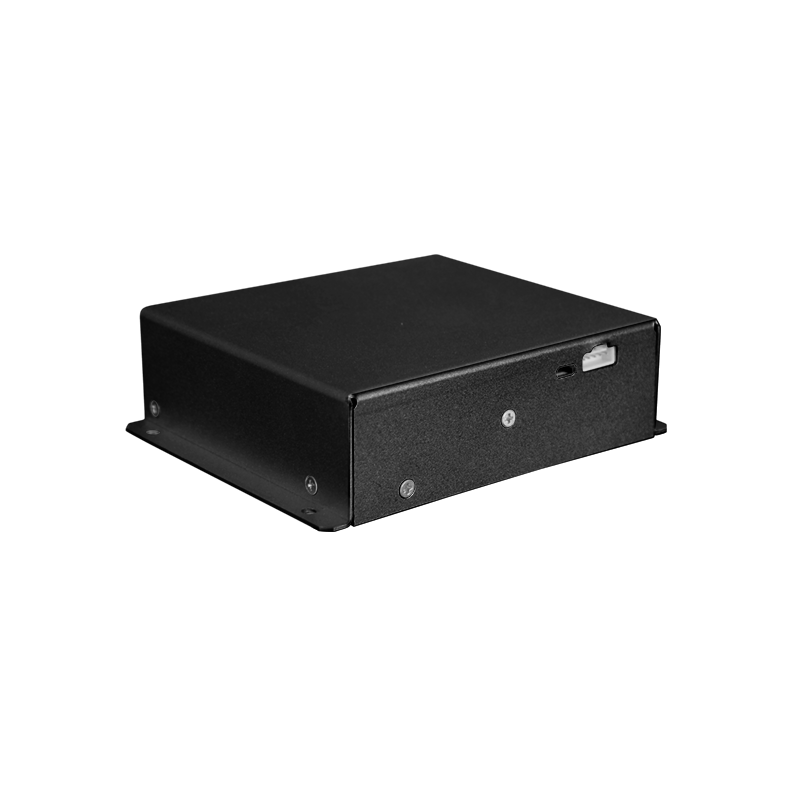
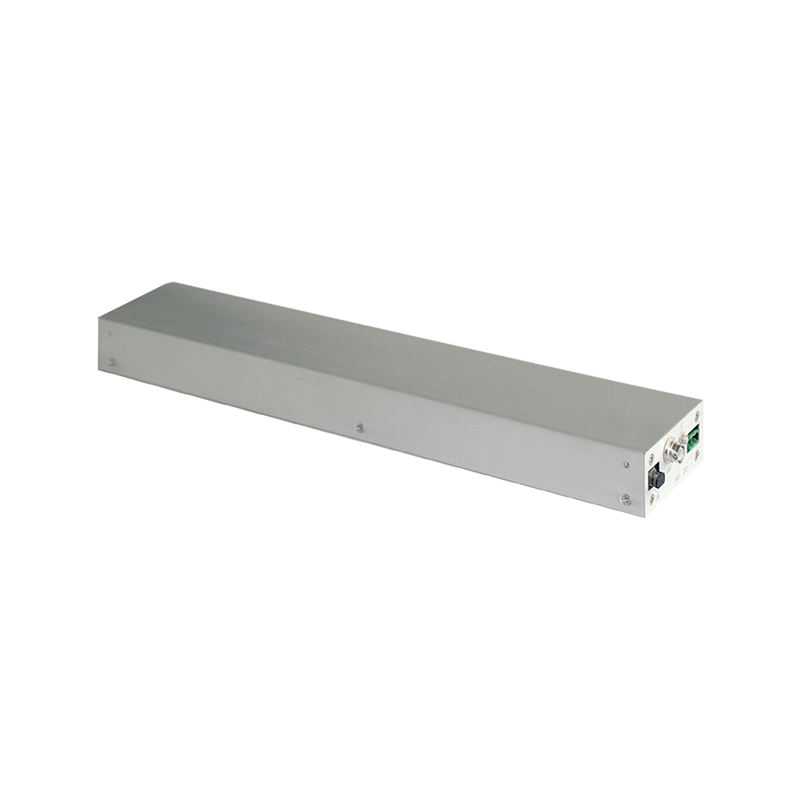
The power supply for a DEP array must therefore be capable of delivering a clean, high-voltage AC signal, typically in the range of 100 to 1000 volts peak-to-peak, at frequencies from DC to tens of megahertz. The waveform must be a pure sine wave, as harmonics can generate unwanted force components. The frequency must be precise and stable, as the crossover frequency where the DEP force changes sign can be very sharp for some particles. The output impedance of the supply must be low enough to drive the capacitive load of the microelectrode array without significant distortion.
For complex sorting tasks, a single pair of electrodes is insufficient. Modern DEP devices use arrays of dozens or hundreds of individually addressable electrodes. This allows for the creation of complex, dynamic field landscapes. For example, a traveling wave DEP device uses a series of electrodes with phase-shifted voltages to create a moving field that can propel particles along a channel. This requires a multi-channel high-voltage amplifier system, where each channel is driven by a separate, phase-locked sine wave.
The design of such a multi-channel system is a significant engineering challenge. The phase relationship between channels must be maintained with high precision. Any phase error will distort the traveling wave and reduce its efficiency. The amplitude of each channel must also be matched, as variations will create stationary field nulls that can trap particles. The high-voltage amplifiers must be placed as close to the microfluidic chip as possible to minimize cable capacitance, but they must also be electrically isolated from the sensitive measurement electronics.
Furthermore, the system must be safe. The high voltages, even at micro-scale currents, pose a shock hazard. The microfluidic chip and its connections must be enclosed in an interlocked housing. The power supplies must have fast-acting overcurrent protection to shut down in the event of a short circuit, which could occur if a bubble or a particle bridges the electrode gap.
Another important consideration is electrothermal heating. The high electric fields can cause Joule heating of the fluid, which can lead to convection and temperature gradients that disrupt the DEP forces. This is particularly problematic at high frequencies and high conductivities. The power supply's waveform can be designed to mitigate this, for example by using pulsed fields to allow for cooling between pulses. This requires a high-voltage pulser capable of generating bursts of high-frequency AC with precise duty cycles.
The detection and feedback for the sorting process is often optical. A camera or a photodetector monitors the particles as they move through the channel. This information can be used to adjust the voltages and frequencies in real-time, creating a closed-loop sorting system. For example, if a particle of interest is detected, the voltages on a downstream electrode array can be switched to divert it into a collection channel. This requires a high-speed control system that can process the image data and update the high-voltage outputs in milliseconds.
In conclusion, dielectrophoretic sorting in microfluidics is a technology that has been made practical by advances in high-voltage engineering. The ability to generate precise, high-voltage AC signals across multi-electrode arrays is the key to creating the field landscapes that can manipulate particles with exquisite selectivity. This is enabling new applications in environmental monitoring, where microplastics can be identified and sorted, and in diagnostics, where cells and biomolecules can be handled without labels. The high-voltage power supply, once a bulky and dangerous piece of equipment, is being miniaturized and integrated into sophisticated lab-on-a-chip systems, bringing the power of dielectrophoresis to the benchtop and beyond.