Arc Target Erosion Homogenization through High-Voltage Power Supply Control in Coating Applications
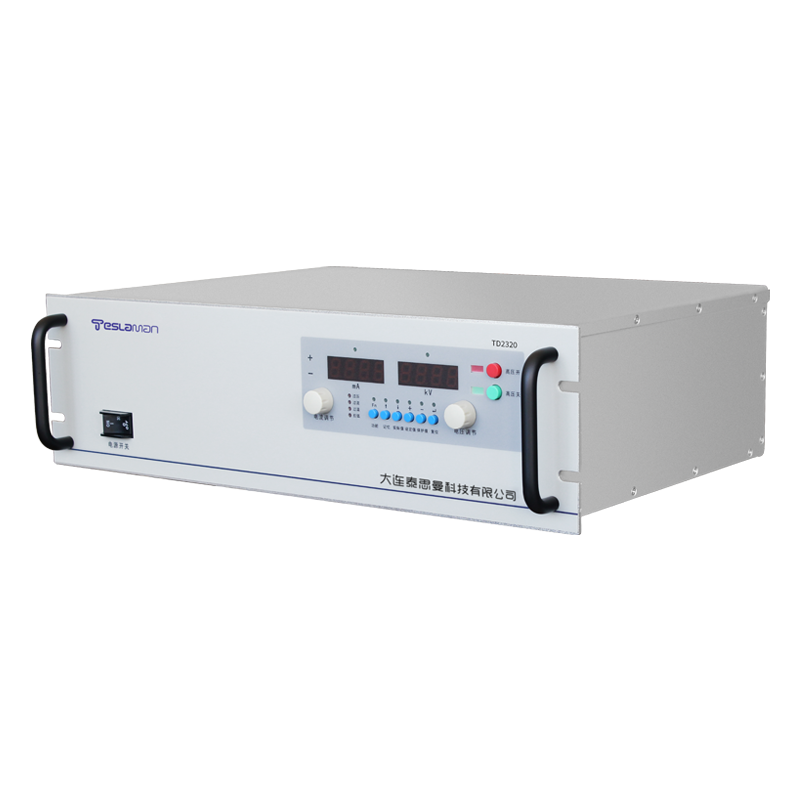
Cathodic arc evaporation is a powerful and widely used technique for depositing hard, wear-resistant coatings such as titanium nitride and chromium nitride. The process is characterized by its high ionization fraction and the energetic nature of the depositing species, which results in dense, well-adhered films. However, the very nature of the arc discharge presents a significant operational challenge: the non-uniform erosion of the cathode target. The arc spot, a minute, highly energetic region of intense current density, does not remain stationary. It moves rapidly across the target surface, but its motion is not random in a way that guarantees uniform erosion. It tends to favor certain areas, leading to the formation of deep erosion tracks and grooves. This non-uniform erosion drastically reduces target lifetime, degrades coating uniformity, and increases the generation of harmful macroparticles. In my five decades of working with arc deposition systems, I have learned that the high-voltage power supply is not merely a source of energy for the arc; it is the primary tool for controlling arc motion and, consequently, for homogenizing target erosion. The design of the power supply and its control algorithms are as critical to target utilization as the magnetic field steering often employed.
The physics of arc spot motion is complex and influenced by a multitude of factors, including the target material, the gas pressure, the magnetic field, and the electrical characteristics of the power supply. The arc spot tends to move in the direction opposite to the current flow due to the retrograde motion effect. It is also influenced by microscopic features on the target surface, such as craters from previous arcs, which can trap the spot and cause it to dwell in one location. This dwelling is the primary cause of localized erosion. The power supply's role in mitigating this is to provide an electrical environment that encourages the arc spot to move continuously and to visit all areas of the target with equal probability. One of the most effective techniques is the use of a pulsed or modulated arc current. Instead of a steady DC current, the power supply delivers a series of high-current pulses. Between pulses, the current drops to a low sustaining level or to zero. During this low-current interval, the plasma de-ionizes and the arc spot extinguishes. When the next pulse arrives, a new arc spot ignites, but it is statistically likely to ignite at a different location than the previous one. By carefully choosing the pulse frequency and the on-time, we can prevent any single spot from dwelling long enough to cause significant localized erosion. The result is a much more uniform wear pattern across the entire target surface.
The design of a power supply for pulsed arc operation is significantly more demanding than for a simple DC supply. It must be capable of delivering very high peak currents, often thousands of amperes, at a relatively low voltage of 20 to 40 volts, but with extremely fast rise times. The rise time of the current pulse is critical because it affects the ignition behavior of the arc. A fast-rising pulse promotes a clean, rapid ignition at a single spot, while a slow-rising pulse can lead to multiple, simultaneous arc spots or to a diffuse, unstable discharge. The supply must also include a sophisticated arc management system. Inevitably, some arcs will become unstable or will transition into a destructive, high-current mode. The power supply must be able to detect these events in microseconds and to interrupt the current quickly enough to prevent damage to the target or the formation of large macroparticles. This is typically achieved through a combination of fast current sensing and a series switch that can open the circuit in a few microseconds. The energy stored in the cable inductance between the supply and the chamber must also be managed, often through the use of a snubber circuit that provides a low-impedance path for the inductive kickback.
Beyond pulsed operation, the power supply can be used to implement more advanced erosion control strategies. For example, by superimposing a high-frequency AC component on the DC arc current, we can influence the arc spot motion through the skin effect or through other plasma interactions. The power supply can also be integrated with the magnetic field steering system. The magnetic field, generated by coils around the target, is used to guide the arc spot in a controlled pattern. By synchronizing the arc current pulses with the varying magnetic field, we can create a powerful synergy. The magnetic field can be swept across the target in a raster pattern, and the arc pulses can be timed to occur only when the field is in a region that needs more erosion. This closed-loop approach, where the power supply and the magnetic field controller work in tandem based on feedback from a target erosion model or from real-time sensors, represents the ultimate in target utilization. In my long career, I have seen target utilization improve from less than 30% in early, uncontrolled arc systems to over 80% in modern, intelligently controlled systems. This is not just an economic benefit; it also improves process stability and coating quality, as a worn, non-uniform target is a source of process drift and defects. The high-voltage power supply, once seen as a simple current source, has evolved into a sophisticated, programmable instrument for managing one of the most violent and chaotic processes in materials science, transforming it into a controlled and efficient manufacturing tool.