Bipolar Asymmetric High-Voltage Power Supply Design for High-Power Pulsed Magnetron Sputtering Processes
Magnetron sputtering has revolutionized thin film deposition processes across numerous industries,from semiconductor manufacturing to decorative coatings and optical films.The development of high-power pulsed magnetron sputtering represents a significant advancement,enabling improved film quality,enhanced deposition rates,and better target utilization compared to conventional direct current sputtering.Within this domain,the application of bipolar asymmetric high-voltage waveforms has emerged as a particularly effective approach for managing the complex plasma dynamics involved in high-power pulsed operations.
High-power pulsed magnetron sputtering operates by applying short,high-power pulses to magnetron cathodes typically with pulse durations ranging from ten microseconds to one hundred microseconds and pulse frequencies from tens of hertz to tens of kilohertz.This operation mode creates dense plasma conditions that significantly increase ion flux to the substrate surface while maintaining relatively low average power that prevents target overheating.The resulting films exhibit superior properties including dense microstructure,excellent adhesion,and improved compositional control.
The bipolar aspect of the power waveform refers to the application of both positive and negative voltage pulses to the target.A symmetric waveform would apply equal magnitude positive and negative pulses,while an asymmetric waveform applies pulses of unequal magnitude and typically unequal duration.This asymmetry provides crucial control over the plasma environment and ion bombardment dynamics during film growth.
The negative pulse portion of the waveform accelerates ions from the plasma toward the substrate,providing the bombardment energy necessary for film densification and stress relief.The magnitude and duration of these negative pulses directly control ion energy and flux.Properly tuned ion bombardment can eliminate columnar microstructure,reduce residual stress,and improve mechanical properties of deposited films.
The positive pulse portion,though not directly involved in film formation,plays an essential role in maintaining plasma stability and managing target surface conditions.During the negative pulse,electrons accumulate on the target surface,creating a negative potential that can lead to arcing and surface damage.The positive pulse removes this accumulated charge,neutralizing the surface and preparing it for the subsequent negative pulse.
The asymmetry ratio,defined as the ratio of positive to negative pulse magnitudes,significantly affects process performance.Higher asymmetry ratios provide more effective charge management but may reduce the effective duty cycle available for film deposition.Optimal asymmetry ratios typically range from fifteen percent to forty percent,depending on specific process requirements and target materials.
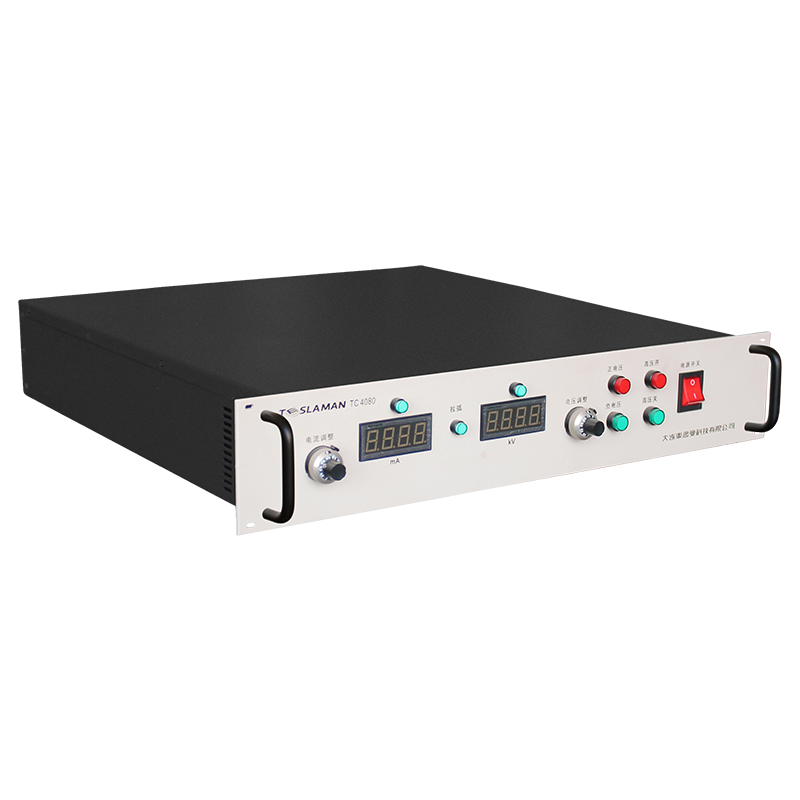
Power supply design for bipolar asymmetric operation presents unique engineering challenges.The supply must generate precise voltage waveforms with rapid transitions,maintain stable operation across varying load conditions,and provide comprehensive protection against abnormal events such as arcs or overloads.Modern power supplies employ sophisticated control algorithms that monitor plasma impedance and adjust pulse parameters in real-time to maintain optimal processing conditions.
The implementation of bipolar asymmetric power supplies requires careful consideration of system impedance and matching networks.The pulsed nature of the operation creates rapidly changing load conditions that can cause voltage overshoot and ringing if not properly managed.Input filter design must provide adequate energy storage while limiting circulating currents that reduce efficiency.
Process monitoring and control capabilities built into modern power supplies enable advanced process optimization.Optical emission spectroscopy,plasma impedance monitoring,and real-time film property estimation provide feedback for adaptive control algorithms that continuously optimize output parameters.
The benefits of bipolar asymmetric high-power pulsed magnetron sputtering extend across numerous applications.In semiconductor manufacturing,the technique enables deposition of barrier layers with superior coverage and conformality.For hard coating applications,dense,well-adherent coatings with excellent wear resistance are routinely produced.Optical coating applications benefit from the controlled ion bombardment that minimizes absorption and scattering losses.
Environmental considerations favor high-power pulsed magnetron sputtering as an alternative to traditional coating processes.The technique reduces raw material consumption through improved target utilization and eliminates certain hazardous chemicals used in conventional processes.Waste generation is minimized while product quality improves.
Economic analysis demonstrates attractive return on investment through reduced cycle times,improved yields,and decreased rework rates.Although the initial equipment investment exceeds conventional sputtering systems,the operational advantages typically provide payback within one to three years depending on production volumes and application requirements.
Research continues to advance bipolar asymmetric sputtering technology.Developments in pulse shaping,including multi-level and burst pulse patterns,provide additional degrees of process control.Integration with in-situ monitoring and control systems enables closed-loop optimization based on film properties measured during deposition.
In conclusion,bipolar asymmetric high-voltage power supplies represent a critical enabling technology for high-power pulsed magnetron sputtering.Their sophisticated control over plasma dynamics enables unprecedented control over thin film properties,making them indispensable for advanced coating applications.