Anti-Interference Capability Enhancement Design for High Voltage Power Supply in Environmental Monitoring Equipment
Environmental monitoring equipment plays a crucial role in assessing and maintaining environmental quality across various parameters including air quality, water quality, and radiation levels. These instruments often operate in challenging environments with significant electromagnetic interference from various sources. The high voltage power supplies used in environmental monitoring equipment must exhibit exceptional anti-interference capabilities to ensure accurate and reliable measurements. The enhancement of anti-interference capability requires comprehensive design approaches addressing multiple interference sources while maintaining power supply performance and efficiency.
The electrical requirements for environmental monitoring high voltage power supplies depend on the specific monitoring technology and application. Typical operating voltages range from several hundred volts to several kilovolts, with currents from microamperes to milliamps depending on the detector type and measurement requirements. The power supply must provide stable output across these operating ranges while operating in environments with significant electromagnetic interference. The load presented by monitoring sensors varies with environmental conditions and measurement parameters, requiring the power supply to adapt to these variations while maintaining precise voltage regulation and excellent anti-interference performance.
Electromagnetic interference sources in environmental monitoring environments encompass multiple mechanisms that can affect power supply performance. Radio frequency interference from communication systems and industrial equipment can couple into power supply circuits. Conducted interference travels through power lines and signal connections. Electromagnetic pulses from lightning or switching transients can create severe disturbances. Ground loops and common mode interference can introduce noise into sensitive measurement circuits. The cumulative effect of these interference sources can significantly degrade measurement accuracy if not properly addressed through comprehensive anti-interference design.
Input filtering and isolation represent fundamental approaches to enhancing anti-interference capability. Multi-stage input filtering attenuates conducted interference from the power line before it can affect power supply operation. Isolation transformers provide galvanic isolation that breaks ground loops and blocks common mode interference. Advanced filtering architectures employ both common mode and differential mode filtering to address different interference types. The filtering must be effective across a wide frequency range from tens of hertz to several megahertz to address the full spectrum of potential interference sources.
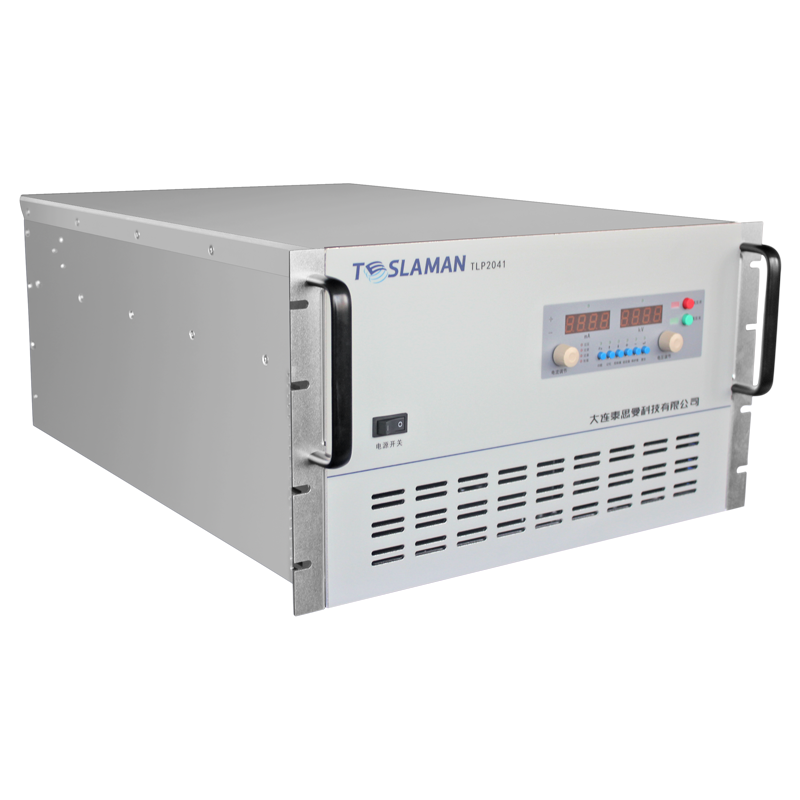
Shielding design represents another critical aspect of anti-interference enhancement. The power supply enclosure must provide effective shielding against both radiated and conducted interference. Multiple layers of shielding with different materials can provide broadband protection. Shielding effectiveness depends on proper design of seams, penetrations, and ventilation openings. The shielding must also accommodate cooling requirements while maintaining electromagnetic integrity. Advanced shielding techniques may incorporate active cancellation systems that generate opposing fields to neutralize interference.
Circuit layout and grounding architecture significantly affect anti-interference performance. Careful separation of high-current and sensitive circuits prevents coupling of interference. Star grounding with single point references eliminates ground loops. Guard traces and ground planes provide additional isolation. The physical layout must minimize loop areas in high-current paths to reduce electromagnetic emission. Advanced layout techniques may employ ground planes with carefully controlled impedance to provide optimal interference rejection.
Output filtering and regulation enhancement improve immunity to load-side interference. Multi-stage output filtering attenuates interference that couples through the load connection. Advanced regulation topologies provide better rejection of output disturbances. The use of linear post-regulation can achieve exceptional noise rejection while maintaining efficiency. The output filtering must be designed to maintain stability while providing the required interference attenuation across the measurement bandwidth.
Digital signal processing techniques can actively cancel interference. Digital control algorithms can measure interference characteristics and generate cancellation signals. Adaptive filtering adjusts parameters based on measured interference conditions. These active techniques can achieve interference rejection beyond what is possible with passive filtering alone. However, active cancellation adds complexity and must be carefully designed to avoid introducing additional interference sources.
Component selection and screening are essential for achieving excellent anti-interference performance. Not all components of a given type exhibit equal immunity to interference. Components with low electromagnetic emission and high immunity must be selected for critical applications. Screening processes identify components with superior interference characteristics. The use of components specifically designed for electromagnetic compatibility applications can significantly improve overall performance.
Thermal management design must consider electromagnetic compatibility. Cooling systems can be paths for interference coupling if not properly designed. Shielded cooling ducts prevent electromagnetic leakage while allowing adequate airflow. The thermal design must balance cooling requirements with electromagnetic isolation. Advanced thermal management may employ thermally conductive but electrically insulating materials to maintain both thermal performance and electromagnetic isolation.
Testing and validation are critical for verifying anti-interference capability. Comprehensive electromagnetic compatibility testing must be performed under conditions representative of actual operating environments. The testing should cover both emission and immunity aspects across the full frequency range of interest. Real-world testing in actual monitoring environments provides validation of design approaches. The testing results should guide any necessary design refinements to achieve the required anti-interference performance.
Recent advances in anti-interference technology have enabled significant improvements in environmental monitoring power supply performance. Advanced digital signal processing has enabled active cancellation of complex interference patterns. Improved shielding materials and techniques have provided better isolation with less weight and volume. Integrated electromagnetic compatibility design tools have enabled optimization of interference rejection across all design aspects. These advances have directly improved measurement accuracy and reliability in challenging electromagnetic environments.
Emerging environmental monitoring applications continue to drive innovation in anti-interference technology. The development of more sensitive monitoring instruments demands even better interference rejection. Increasingly complex electromagnetic environments with more interference sources create more challenging conditions. The trend toward wireless monitoring creates new interference challenges that must be addressed. These evolving requirements ensure continued development of anti-interference technology specifically tailored to the unique needs of environmental monitoring equipment high voltage power supplies.