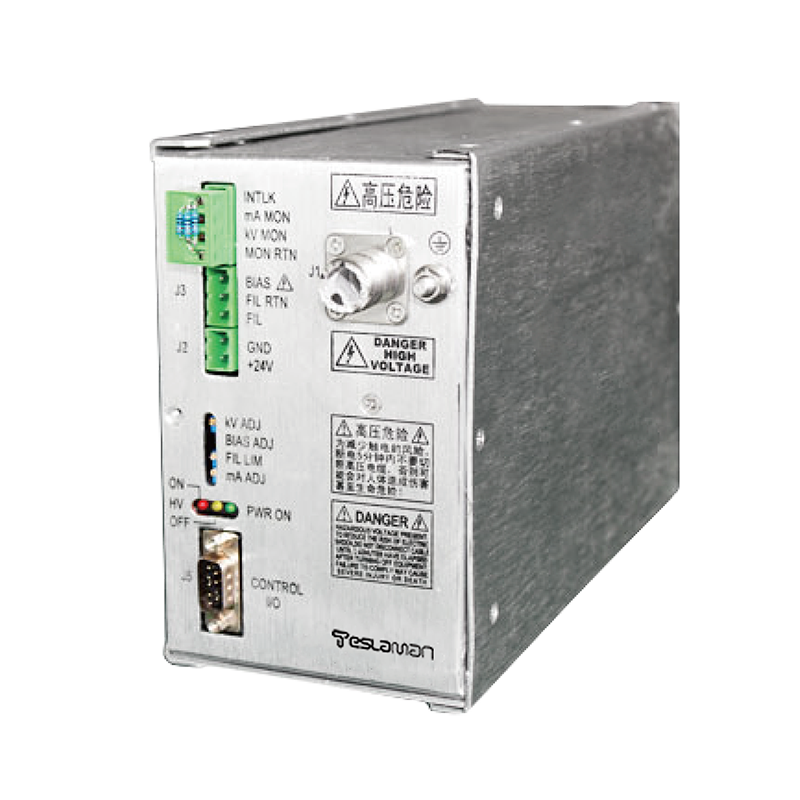
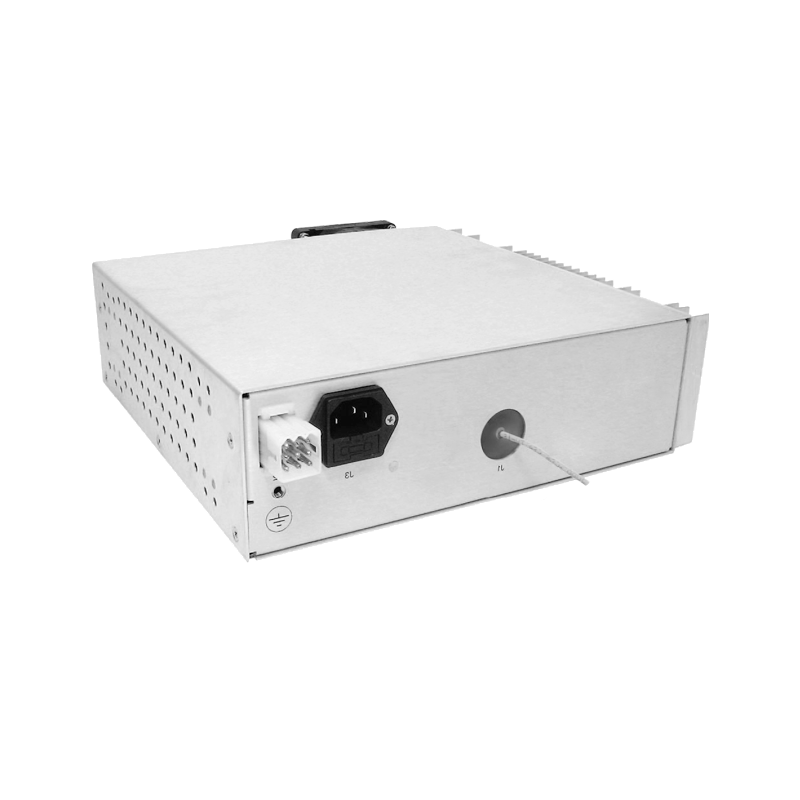
High Power Seabed Transmission High Voltage Power Supply for Marine Controlled Source Electromagnetic Exploration
Marine controlled source electromagnetic exploration has become an important technique for mapping subsurface resistivity structures in offshore hydrocarbon exploration and geothermal resource assessment. The method uses a towed electromagnetic source to generate signals that penetrate the seafloor, with the response recorded by receivers on the seabed. The high power high voltage power supply for the seabed transmitter must operate reliably in the extreme environment of the deep ocean while delivering the required power for effective subsurface imaging.
The controlled source electromagnetic method is based on the diffusion of electromagnetic fields through conductive media. The source generates an alternating current that creates an electromagnetic field. This field diffuses into the subsurface, with the propagation characteristics depending on the electrical resistivity of the formations. Resistive bodies such as hydrocarbon reservoirs perturb the field pattern, creating detectable anomalies at the receivers.
The electromagnetic source is typically a horizontal electric dipole towed near the seafloor. The dipole consists of two electrodes separated by a distance of several hundred meters, with current flowing between them through the conductive seawater. The current amplitude and frequency determine the depth of investigation and the resolution of the survey. Higher currents and lower frequencies enable deeper penetration but require more power.
The high voltage power supply provides the energy for the transmitter. The output voltage must overcome the resistance of the seawater path between the electrodes. Typical output voltages range from hundreds to thousands of volts, depending on the electrode spacing, the seawater conductivity, and the desired current. The power supply must deliver this voltage while providing the required current, which can reach hundreds of amperes.
The seabed environment presents extreme challenges for power supply design. The hydrostatic pressure at typical survey depths of one to three kilometers exceeds one hundred to three hundred atmospheres. The temperature is near freezing, typically around two to four degrees Celsius. The seawater is highly corrosive and can cause rapid degradation of exposed materials. The power supply must operate reliably under these harsh conditions.
Pressure-resistant design uses strong housings to resist the external pressure. The housing material must have high strength and corrosion resistance. Titanium alloys are commonly used for their excellent strength-to-weight ratio and corrosion resistance. The wall thickness must be sufficient to withstand the pressure with appropriate safety factors. The housing design must accommodate cable penetrations and connectors while maintaining pressure integrity.
Pressure-compensated design offers an alternative approach that reduces the housing requirements. In this approach, the housing is filled with dielectric fluid that transmits the external pressure throughout the internal volume. The fluid must have suitable dielectric properties for the high voltage components. The housing only needs to contain the fluid and prevent water ingress, without resisting the full hydrostatic pressure.
Thermal management in the seabed environment differs from surface applications. The cold seawater provides excellent heat sinking capability, but the heat must be conducted from the internal components to the housing. The thermal design must ensure that component temperatures remain within acceptable limits despite the heat generation from power conversion. The thermal expansion and contraction during deployment and recovery must be accommodated.
Power efficiency is critical for marine surveys where the energy supply is limited. The transmitter may be powered from batteries or from a surface vessel through an umbilical cable. Either approach has constraints on the available power. The power supply efficiency affects the transmitter output power and the survey duration. Losses in the power supply reduce the available output power and generate heat that must be dissipated.
The output waveform characteristics affect the exploration effectiveness. The transmitter typically generates square wave or other periodic waveforms at frequencies from a fraction of a hertz to several hertz. The waveform must have clean transitions and stable amplitude. The frequency spectrum of the output affects the depth of investigation and the signal-to-noise ratio at the receivers.
Reliability is paramount for seabed operations where equipment retrieval is difficult and expensive. The power supply must operate without failure for the duration of the survey, which may last days or weeks. Component selection must consider the reliability implications under the operating conditions. Redundancy may be incorporated to provide continued operation if individual components fail.
Deployment and recovery operations affect the mechanical design. The power supply must withstand the handling stresses during deployment and recovery. The connectors and cables must be designed for reliable operation after repeated deployment cycles. The maintenance procedures must enable inspection and repair between deployments.