Beam Current Spatial Distribution Optimization of High Voltage Power Supply for Ion Assisted Deposition in Optical Coating
Ion assisted deposition has revolutionized optical coating technology by enabling production of films with exceptional density, adhesion, and optical properties. The process combines thermal evaporation with ion bombardment that densifies the growing film. The high voltage power supply that drives the ion source must provide beam current with appropriate spatial distribution to achieve uniform film properties across the substrate. Optimizing the beam current distribution is essential for coating quality and yield.
Optical coatings consist of multiple thin film layers that control the reflection, transmission, and absorption of light. Traditional thermal evaporation produces porous films with columnar microstructure due to limited adatom mobility. The pores and columns scatter light and absorb moisture, degrading the optical performance and environmental stability. Ion assisted deposition addresses these limitations by bombarding the growing film with energetic ions.
The ion source for ion assisted deposition typically uses a Kaufman type ion gun or an end Hall ion source. These sources ionize an inert gas, typically argon, and accelerate the ions toward the substrate. The ion energy, typically tens to hundreds of electronvolts, determines the depth of ion penetration and the degree of densification. The ion flux determines the number of ions arriving per unit area and affects the densification rate.
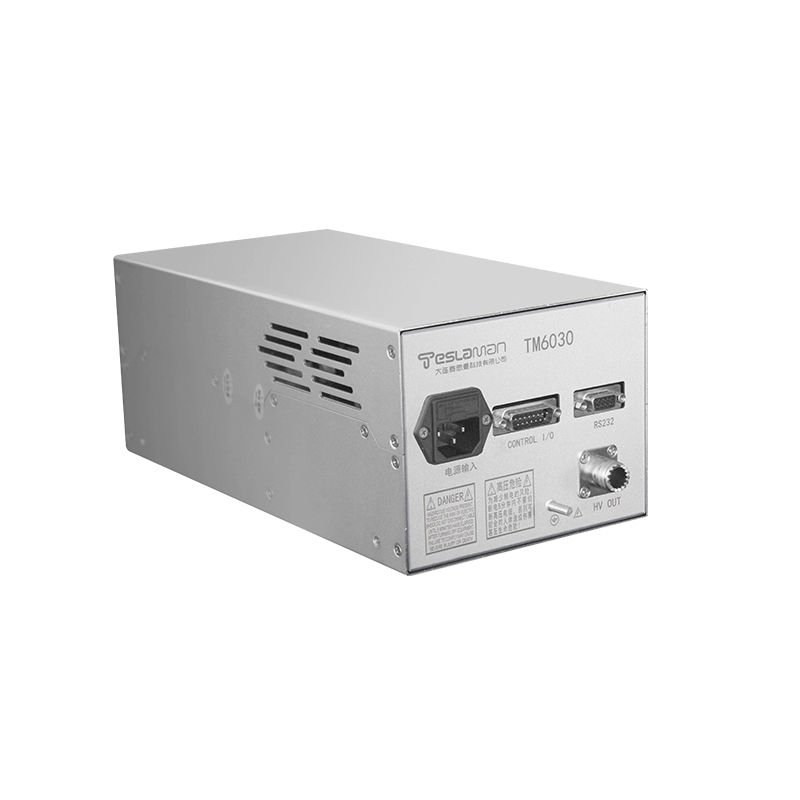
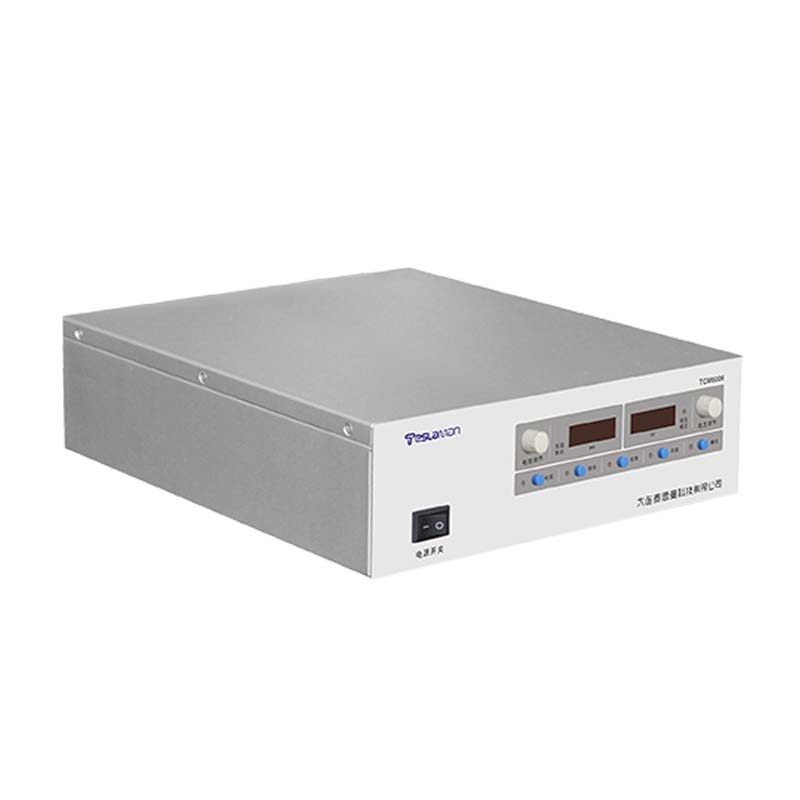
The high voltage power supply provides the discharge voltage for the ion source and the acceleration voltage for the ion beam. The discharge voltage affects the plasma density and the ion production rate. The acceleration voltage determines the ion energy. The power supply must provide stable, controllable output for consistent ion bombardment during the deposition process.
Beam current spatial distribution refers to the variation in ion current density across the substrate surface. Uniform distribution ensures that all areas of the substrate receive the same ion bombardment, producing uniform film properties. Non uniform distribution causes some areas to receive more bombardment than others, leading to variations in film density, stress, and optical properties.
The ion beam profile depends on the ion source design and the operating conditions. Kaufman ion sources produce relatively collimated beams with profiles determined by the grid geometry. End Hall sources produce divergent beams with profiles determined by the magnetic field and the anode geometry. The beam profile can be modified by additional electrodes or magnetic fields that shape the beam.
Substrate rotation is commonly used to average out beam non uniformities. The substrate rotates or planetary rotates during deposition, so each point on the substrate samples different parts of the beam profile. The time averaged ion current density depends on the beam profile and the rotation pattern. Proper rotation design can achieve good uniformity even with non uniform beam profiles.
Beam steering enables active control of the beam position and distribution. Electrostatic or magnetic deflection can steer the beam across the substrate during deposition. By programming the steering pattern, the beam can dwell longer on areas that need more bombardment and shorter on areas that need less. This active control can compensate for beam profile non uniformities and substrate geometry effects.
Multiple ion sources can provide more uniform coverage for large substrates. Each source covers a portion of the substrate, and the sources are positioned to overlap their coverage areas. The relative power to each source can be adjusted to optimize the combined uniformity. This approach scales to arbitrarily large substrates by adding more sources.
The relationship between ion bombardment and film properties depends on the ion to atom arrival ratio. This ratio compares the number of ions arriving to the number of evaporant atoms arriving at the substrate. Higher ratios produce more densification but can also introduce ion induced damage. The optimal ratio depends on the materials being deposited and the desired film properties. The beam current distribution affects the local ion to atom ratio across the substrate.
In situ monitoring enables real time measurement of the ion bombardment and film growth. Quartz crystal monitors measure the deposition rate and can be positioned at multiple locations to assess uniformity. Optical monitoring measures the film optical properties during deposition. Ion current probes measure the beam current at various positions. This monitoring data enables feedback control of the ion source power supply to maintain optimal conditions.
Process modeling predicts the film properties based on the deposition conditions, including the ion bombardment distribution. Models based on empirical data or physical principles relate the ion energy, flux, and distribution to the film density, stress, and optical properties. These models enable optimization of the beam distribution to achieve the desired film properties across the substrate.