System Construction of High Voltage Power Supply for Dielectric Material Charge Transport Characterization Testing
Dielectric materials are essential components in electrical insulation, capacitors, and various electronic devices. Understanding the charge transport characteristics of these materials is fundamental to predicting their behavior and reliability in applications. High voltage power supplies for charge transport testing must provide precise, controllable voltage with appropriate measurement capabilities to characterize the material response.
Charge transport in dielectrics encompasses several phenomena. Electronic conduction occurs through the movement of electrons or holes in the material. Ionic conduction involves the movement of charged ions. Space charge accumulation occurs when charges become trapped in the material, creating local electric field distortions. Each of these phenomena contributes to the overall electrical behavior.
The characterization tests measure the current voltage relationship, the time dependent current response, and the space charge distribution. The current voltage relationship reveals the conduction mechanism, whether ohmic, space charge limited, or injection limited. The time dependent response reveals the charging and discharging dynamics. Space charge measurements reveal the distribution of trapped charge within the material.
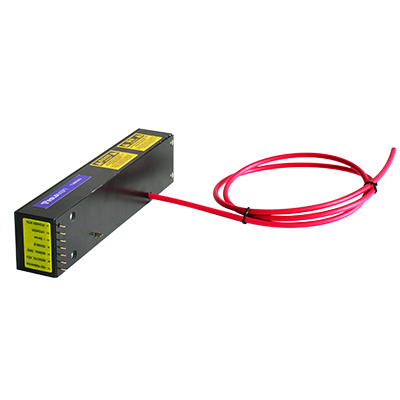
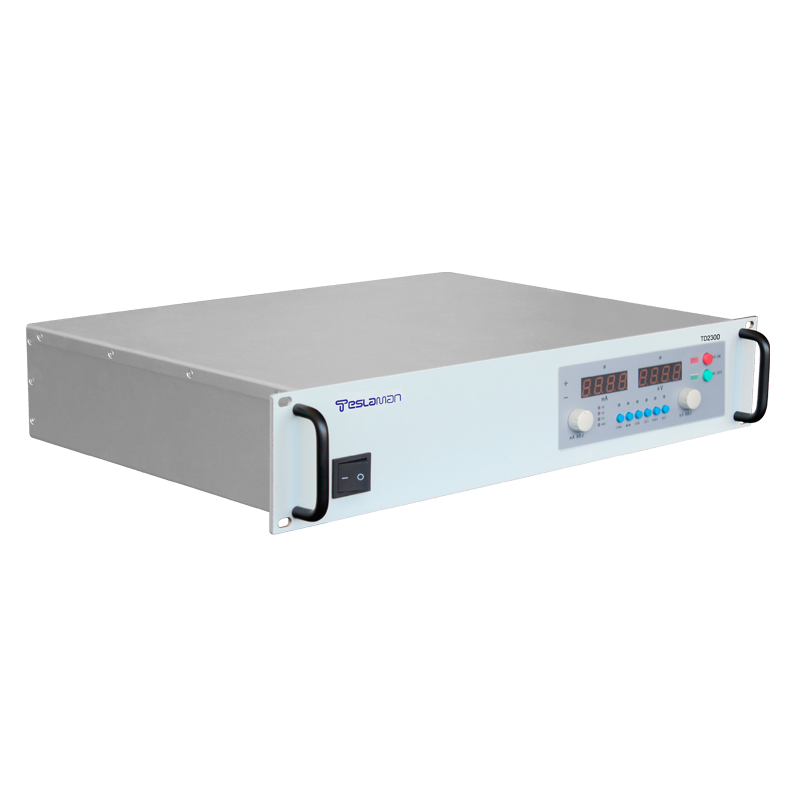
The high voltage power supply for these tests must provide stable, controllable DC voltage. The voltage range depends on the material thickness and the field strength of interest, typically from hundreds of volts to tens of kilovolts. The voltage must be adjustable in fine steps to map out the current voltage characteristic. The stability must be sufficient to measure the steady state current accurately.
Current measurement capability is essential for charge transport characterization. The currents in dielectric materials are typically very small, from picoamperes to microamperes. The measurement system must have the sensitivity and accuracy to measure these small currents. Electrometers or picoammeters provide the required sensitivity. The measurement must be isolated from the high voltage or must withstand the high voltage.
Voltage ramp control enables measurement of the current voltage characteristic. The voltage is increased in steps, and the current is measured at each step. The ramp rate must be slow enough to allow the material to reach steady state at each voltage. Too fast a ramp captures transient currents rather than steady state conduction.
Step voltage response testing measures the time dependent current following a voltage step. The current typically shows an initial spike followed by a decay toward a steady state value. The decay contains information about the charging dynamics and the trap characteristics. The power supply must provide fast, clean voltage steps for this measurement.
Thermally stimulated current measurements heat the sample while measuring the current. Trapped charges are released as the temperature increases, producing current peaks that reveal the trap energy levels. The power supply must maintain constant voltage during the temperature ramp. The temperature control must be coordinated with the electrical measurements.
Space charge measurement techniques include the pulsed electroacoustic method and the laser induced pressure pulse method. These techniques use acoustic waves to probe the space charge distribution. The high voltage supply must provide the DC bias for the sample, and the measurement system must be synchronized with the acoustic probing.
Sample holder design is critical for accurate measurements. The electrodes must make good contact with the sample without causing edge effects or field enhancements. Guard electrodes can be used to define the measurement area and eliminate surface leakage effects. The holder must accommodate samples of various thicknesses and geometries.
Environmental control may be necessary for some materials or measurements. Temperature control enables measurement of the temperature dependence of the conduction. Humidity control may be needed for materials sensitive to moisture. Vacuum or controlled atmosphere may be needed to eliminate surface conduction from adsorbed gases.
Data acquisition and analysis software integrates the measurements and extracts the material parameters. The software controls the voltage ramp, acquires the current measurements, and analyzes the data to determine the conduction mechanism and parameters. The software should provide visualization of the results and export of the characterized parameters.