Electric Field Distribution Simulation and Fiber Diameter Control of Multi Needle Electrospinning High Voltage Power Supply
Multi needle electrospinning scales up the production of nanofibers by using multiple spinnerets operating simultaneously, addressing the throughput limitation of single needle systems. The arrangement of multiple needles creates complex electric field interactions between adjacent needles that affect the jet initiation, trajectory, and ultimately the fiber diameter and morphology. Understanding and controlling the electric field distribution through simulation and power supply optimization enables production of consistent nanofibers at commercially relevant scales.
The electrospinning process uses high voltage to create an electric field between a polymer solution at the needle tip and a grounded collector. When the field exceeds a threshold, electrostatic forces overcome surface tension and a jet erupts from the Taylor cone formed at the needle tip. The jet undergoes whipping instability, stretching and thinning as it travels to the collector, where it deposits as a solid fiber. The fiber diameter depends on the solution properties, the processing parameters, and the electric field characteristics.
Multi needle configurations introduce electric field interactions that are absent in single needle systems. Each needle creates its own electric field, and the fields from adjacent needles superimpose. The field at any needle tip is the sum of the field from that needle and the contributions from neighboring needles. This interaction can either enhance or reduce the effective field at each needle tip, depending on the needle spacing, arrangement, and applied voltages. Nonuniform fields across the needle array can cause variations in jet initiation and fiber properties between needles.
Electric field simulation using finite element methods enables prediction of the field distribution for given needle arrangements and applied voltages. The simulation solves Laplace equation for the electric potential in the domain defined by the needle geometry, the collector, and any intermediate electrodes. The electric field is calculated as the gradient of the potential. The simulation can predict the field intensity at each needle tip, the field direction that determines the initial jet trajectory, and the field variation across the array.
Needle arrangement patterns affect the field distribution and the fiber collection uniformity. Linear arrays arrange needles in a line, creating fields that vary between the end needles and the interior needles due to edge effects. Circular arrays place needles around a circumference, providing more symmetric field distribution. Two dimensional arrays with rectangular or hexagonal packing maximize the number of needles in a given area but require careful design to maintain field uniformity. The optimal arrangement depends on the desired throughput, the fiber properties, and the collection requirements.
Needle spacing is a critical parameter that balances field interaction against coverage area. Close spacing increases the field interaction between needles, potentially causing nonuniform jet behavior or interference that destabilizes jets. Wide spacing reduces interaction but may leave gaps in the fiber mat coverage. The optimal spacing depends on the needle diameter, the working distance to the collector, and the solution properties. Simulation guides the spacing selection to achieve acceptable field uniformity.
Individual needle voltage control can compensate for field variations across the array. By adjusting the voltage applied to each needle independently, the effective field at each needle tip can be equalized despite geometric asymmetries. This requires a multi output high voltage power supply or multiple independent supplies synchronized to a common controller. The voltage adjustments are determined from field simulation or from empirical optimization based on measured fiber properties.
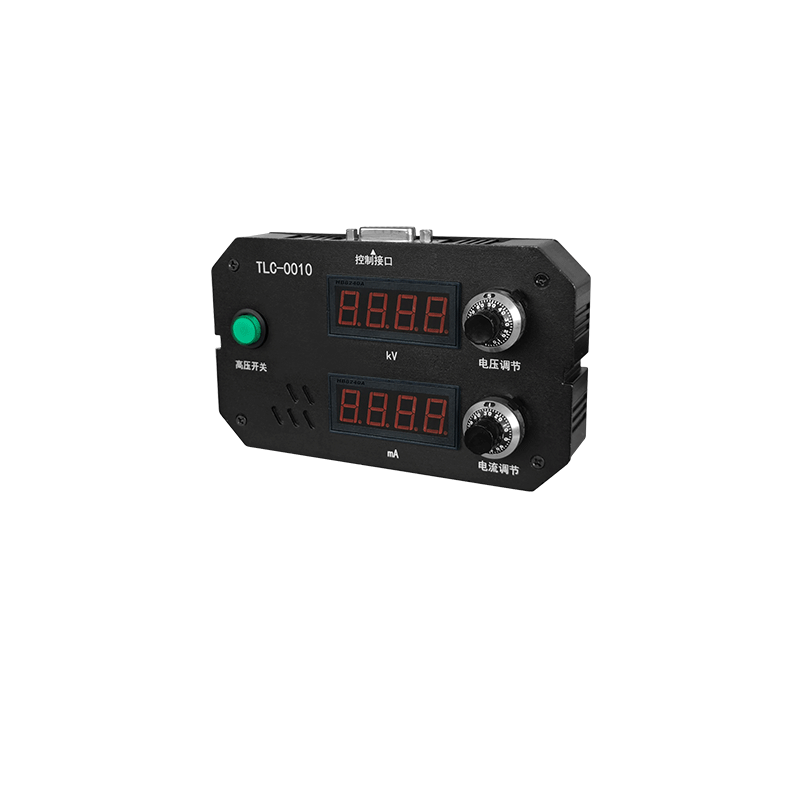
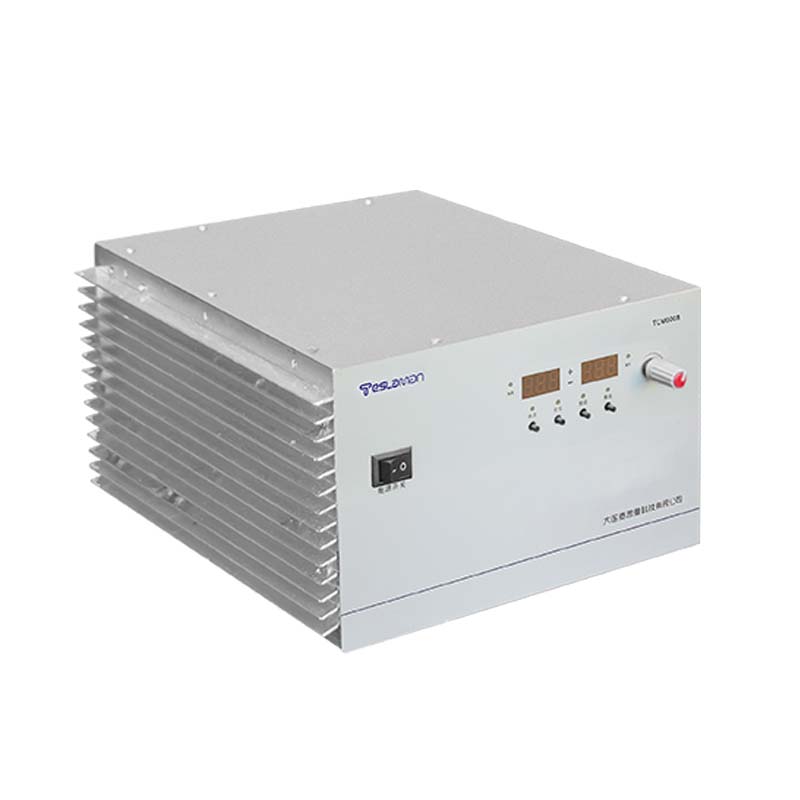
The high voltage power supply characteristics affect the electrospinning stability and the fiber quality. The output voltage must be stable with low ripple to maintain consistent field intensity. Voltage fluctuations cause variations in jet acceleration and fiber stretching, leading to diameter variations. The power supply must have adequate current capability to supply the multiple jets, with the total current being the sum of currents from individual needles. Current limiting protects against excessive current if a short circuit occurs between needles and collector.
Fiber diameter measurement and statistical analysis quantify the consistency across the multi needle array. Scanning electron microscopy provides images for diameter measurement at multiple locations across the deposited mat. The diameter distribution, characterized by mean and standard deviation, indicates the uniformity of the spinning process. Comparison of diameter distributions from different needles or different regions of the mat reveals any systematic variations that might indicate field nonuniformity.
Process control strategies for multi needle electrospinning include feedback control based on measured fiber properties and feedforward control based on simulation predictions. Feedback control measures fiber diameter during or after deposition and adjusts needle voltages to maintain target diameters. Feedforward control uses simulation to predict the voltage settings needed for desired field distribution, updating the settings when needle configuration or process parameters change. Combined approaches leverage both predictive capability and measurement feedback for robust control.