Dielectric Material Thermal Stability of High Temperature Process Electrostatic Chuck High Voltage Power Supply
Electrostatic chucks for high temperature semiconductor processes must maintain reliable wafer clamping while exposed to temperatures that can exceed several hundred degrees Celsius. The dielectric material that insulates the chuck electrodes from the wafer is critical to the clamping performance and the reliability. At elevated temperatures, the dielectric properties can change, affecting the clamping force and the electrical leakage. The high voltage power supply that biases the chuck must operate reliably with the changing load characteristics presented by the heated dielectric.
The electrostatic chuck dielectric serves multiple functions in the clamping system. It insulates the electrode from the wafer, preventing electrical discharge and controlling the electric field distribution. It provides the mechanical surface that contacts the wafer, requiring appropriate roughness and flatness. It conducts heat from the wafer to the chuck body, requiring adequate thermal conductivity. The dielectric constant affects the clamping force, with higher permittivity providing stronger clamping for a given voltage.
Common dielectric materials for electrostatic chucks include aluminum nitride, alumina, and polyimide. Aluminum nitride offers high thermal conductivity and good electrical properties, making it suitable for high temperature applications. Alumina provides good electrical properties at lower cost but with lower thermal conductivity. Polyimide offers flexibility and good electrical properties but has temperature limitations. The material selection depends on the process temperature, the thermal requirements, and the cost considerations.
Thermal stability of the dielectric properties encompasses the dielectric constant, the loss tangent, the resistivity, and the breakdown strength. The dielectric constant typically decreases with temperature, reducing the clamping force at elevated temperature. The loss tangent increases with temperature, increasing the dielectric heating under the applied electric field. The resistivity decreases with temperature, increasing the leakage current through the dielectric. The breakdown strength may decrease with temperature, reducing the maximum operating voltage.
Leakage current through the heated dielectric affects the power supply operation. The leakage creates a resistive load in parallel with the capacitive load of the chuck electrode. The leakage current increases with temperature and with the applied voltage. At high temperatures, the leakage current can become significant, requiring the power supply to deliver substantial current to maintain the voltage. The power supply must have adequate current capability and must maintain regulation despite the resistive load.
Dielectric heating from the alternating electric field contributes to the thermal load in processes using radio frequency bias. The power dissipated in the dielectric equals the product of the applied voltage squared, the frequency, the dielectric constant, and the loss tangent. Higher loss tangent materials dissipate more power, increasing the temperature and potentially creating thermal runaway if the loss increases with temperature. The dielectric material must have low loss at the operating frequency and temperature.
Thermal expansion of the dielectric material affects the mechanical stability of the chuck. The dielectric expands with temperature, changing the chuck surface profile and the gap to the wafer. Nonuniform expansion can cause warping that affects the wafer contact. The thermal expansion coefficient must be matched to the chuck body material to minimize stress and distortion. The expansion also affects the electrode spacing and the electric field distribution.
Aging and degradation of the dielectric at high temperature affect the long term reliability. Prolonged exposure to high temperature can cause changes in the material structure, including crystallization, oxidation, or decomposition. These changes alter the electrical and mechanical properties. Plasma exposure in process tools can cause additional degradation through sputtering, chemical attack, or ultraviolet damage. The dielectric material must withstand the cumulative exposure over the chuck lifetime.
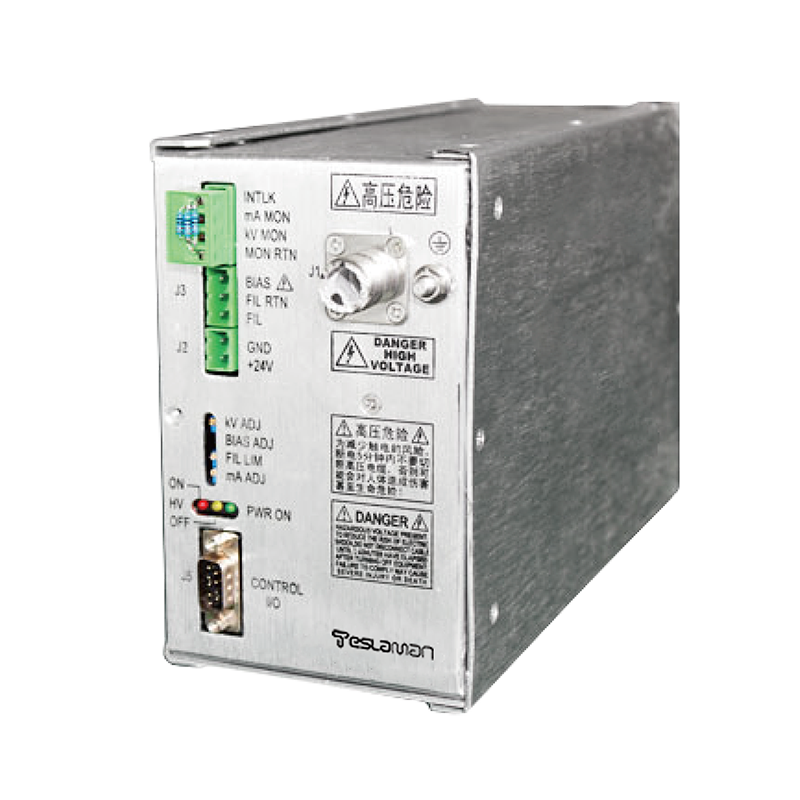
The high voltage power supply must accommodate the changing load characteristics as the dielectric heats. The chuck capacitance may change with temperature due to the temperature coefficient of the dielectric constant. The leakage resistance decreases with temperature, increasing the DC load current. The power supply regulation must maintain the set voltage despite these load changes. Current limiting protects against excessive current if the leakage becomes high.
Temperature monitoring of the chuck enables prediction of the dielectric condition and the expected load characteristics. Thermocouples embedded in the chuck measure the temperature at the dielectric. The power supply can adjust its operation based on the temperature, such as reducing the voltage at high temperature to limit the leakage current. Temperature trending can indicate developing problems with the chuck cooling or the dielectric condition.
Reliability testing of the dielectric material under simulated process conditions validates the design for the intended application. Accelerated life testing at elevated temperature estimates the lifetime under normal conditions. Thermal cycling tests the mechanical integrity through repeated expansion and contraction. Electrical testing at temperature verifies the dielectric strength and the leakage characteristics. These tests provide the data needed to specify the operating conditions and the maintenance intervals for the electrostatic chuck.