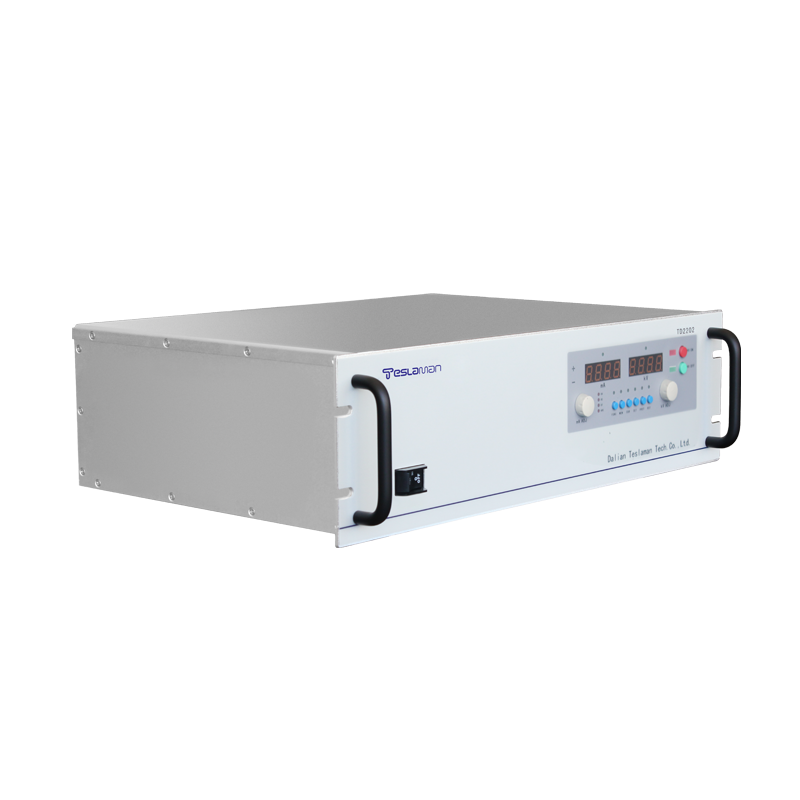
Multi Channel Synchronous Triggering Technology of High Voltage Power Supply for Particle Image Velocimetry System
Particle image velocimetry measures fluid velocity fields by imaging tracer particles in the flow at two closely spaced times, then analyzing the particle displacement between images to determine the velocity. The illumination for imaging is provided by pulsed laser sheets, with the timing of the laser pulses precisely controlled relative to the camera exposure. Multi channel high voltage power supplies for the lasers and camera shutters must provide synchronous triggering with precise timing relationships for accurate velocity measurement.
The particle image velocimetry technique seeds the flow with small tracer particles that follow the fluid motion. A laser sheet illuminates a plane within the flow, and a camera records the particle positions in that plane. By pulsing the laser twice with a known time separation, two images of the same particles at different times are recorded. Cross correlation analysis of the image pairs determines the particle displacement, which divided by the time separation gives the velocity.
The laser pulses must be precisely timed relative to the camera exposure. The first laser pulse illuminates the particles during the first camera exposure, and the second pulse illuminates during the second exposure. The timing accuracy directly affects the velocity measurement accuracy. Timing errors translate to velocity errors proportional to the velocity magnitude divided by the pulse separation.
Double pulse Nd:YAG lasers are commonly used for particle image velocimetry, with two laser heads fired in sequence to provide the two pulses. Each laser head has its own flashlamp and Q-switch, requiring separate trigger signals. The flashlamp pumps the laser rod, and after a delay for energy buildup, the Q-switch fires to release the laser pulse. The timing between flashlamp and Q-switch is critical for pulse energy and quality.
The high voltage power supplies for the flashlamps charge the energy storage capacitors between pulses. The charging must complete before the next flashlamp trigger, setting the maximum pulse repetition rate. For double pulse operation, the charging must accommodate two closely spaced pulses followed by a longer recovery period before the next pulse pair.
Multi channel triggering coordinates multiple lasers and cameras for advanced velocimetry configurations. Stereo particle image velocimetry uses two cameras viewing the same illumination plane from different angles to resolve all three velocity components. Tomographic particle image velocimetry uses multiple cameras to reconstruct the three dimensional particle distribution in a volume. Each camera and laser requires appropriately timed trigger signals.
The trigger generator produces the timing signals for all channels with programmable delays and relationships. The master clock establishes the timing reference, typically synchronized to the camera frame rate or an external reference. Delay generators produce the individual trigger signals with programmable delays from the master clock. The timing resolution and jitter determine the achievable timing accuracy.
Trigger distribution delivers the timing signals to the lasers and cameras with minimal delay and jitter. Electrical cables introduce propagation delay proportional to the cable length. Different cable lengths to different devices cause relative timing errors that must be calibrated or compensated. Optical trigger distribution can provide lower jitter and better isolation than electrical distribution.
Synchronization with the flow facility may be required for periodic flows or for phase locked measurements in rotating machinery. External synchronization inputs allow the trigger timing to be referenced to an external signal such as a shaft encoder or a function generator. The trigger generator must phase lock to the external reference while maintaining the internal timing relationships.
Timing calibration verifies the actual timing relationships between channels. Photodiodes measure the actual laser pulse timing, and electrical probes measure the trigger signal timing. The measured timing differences are compared with the programmed values, and any discrepancies are corrected through delay adjustments. Regular calibration maintains timing accuracy as components age or conditions change.
Timing jitter from the trigger electronics and the laser Q-switches affects the velocity measurement precision. Jitter causes the actual pulse timing to vary randomly from shot to shot, introducing uncertainty in the time separation. Low jitter trigger electronics and stable laser operation minimize this uncertainty. The jitter specification should be small compared to the acceptable timing error for the velocity measurement.