Adhesion Mechanism Research of 450kV DC High Voltage Power Supply for Electrostatic Spraying of Marine Anticorrosion Coating
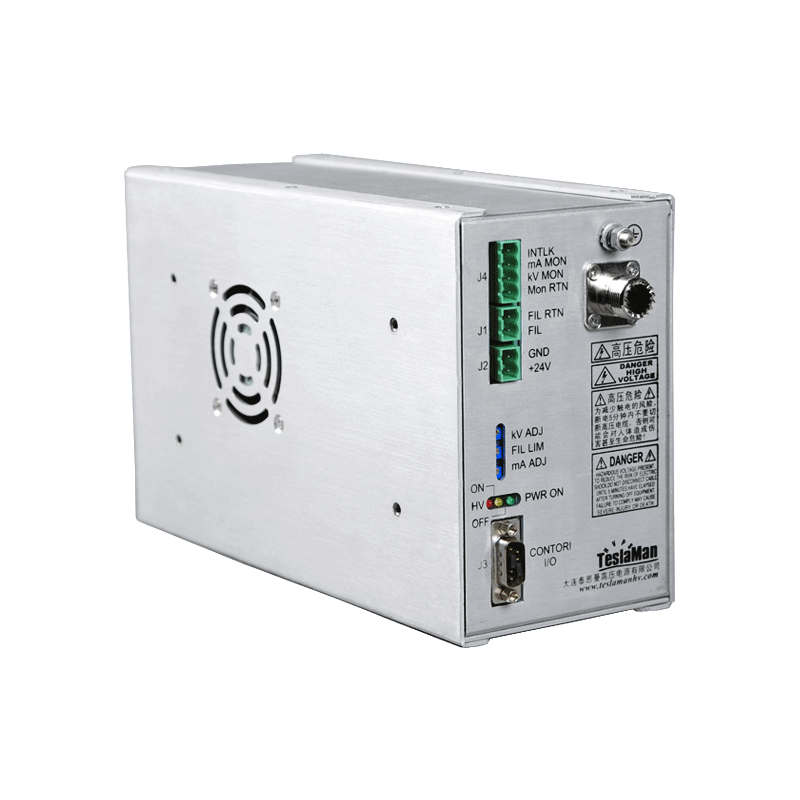
Electrostatic spraying applies coatings using electric fields to charge and direct the coating particles toward the target surface. Marine anticorrosion coatings protect ship hulls and marine structures from corrosion in the harsh marine environment. The 450kV DC high voltage power supply provides the charging voltage for electrostatic spraying. Adhesion mechanism research investigates how the electrostatic process affects the coating adhesion to the substrate.
Marine corrosion causes significant damage to ships, offshore structures, and port facilities. The seawater environment is highly corrosive due to salt content, oxygen availability, and biological activity. Anticorrosion coatings provide barrier protection that prevents seawater contact with the metal surface. The coating adhesion determines the coating durability and the protection effectiveness.
Electrostatic spraying charges the coating particles as they are atomized and sprayed. The charging occurs through contact with charged electrodes or through ion bombardment in a corona field. The charged particles are attracted to the grounded or oppositely charged target surface. The electrostatic attraction improves the coating transfer efficiency and the coverage uniformity.
The 450kV DC high voltage power supply provides the voltage for particle charging. The high voltage creates strong electric fields that efficiently charge the particles. The voltage level determines the field strength and the charging efficiency. The DC voltage provides continuous field for consistent charging.
Particle charging mechanisms include contact charging and corona charging. Contact charging occurs when particles contact a charged electrode, acquiring charge through electron transfer. Corona charging occurs when particles pass through a corona discharge, acquiring charge from ions. Both mechanisms can be used in electrostatic spraying systems.
Charge magnitude on particles affects the electrostatic attraction force. Higher charge produces stronger attraction, improving the particle trajectory toward the target. The charge magnitude depends on the voltage, the particle properties, and the charging mechanism. The charging must be optimized for the specific coating material.
Particle trajectory in the electric field determines where particles deposit. The trajectory depends on the initial velocity, the charge, the electric field, and any air flow. The trajectory analysis predicts the particle paths and the deposition pattern. The analysis guides the spraying configuration for optimal coverage.
Coating adhesion mechanisms include mechanical interlocking, chemical bonding, and electrostatic effects. Mechanical interlocking occurs when the coating penetrates surface irregularities and anchors mechanically. Chemical bonding occurs when the coating reacts with the surface or forms chemical bonds. Electrostatic effects may influence the initial coating formation and the subsequent adhesion development.
Electrostatic effects on adhesion arise from the charged particle deposition. The charged particles may have different impact behavior than uncharged particles. The electric field may affect the particle arrangement on the surface. The charge may influence the coating film formation and the adhesion development.
Surface preparation affects the coating adhesion. Clean surfaces provide better adhesion than contaminated surfaces. Rough surfaces provide mechanical interlocking for improved adhesion. Pretreatments such as priming can enhance the adhesion. The preparation must be appropriate for the coating and the substrate.
Coating properties affect the adhesion development. The coating viscosity affects the film formation and the surface wetting. The coating composition affects the chemical bonding potential. The curing process affects the final adhesion strength. The coating must be formulated for good adhesion to the marine substrate.
Adhesion testing measures the coating adhesion strength. Pull off tests measure the force required to separate the coating from the substrate. Bend tests evaluate the adhesion under mechanical stress. The testing quantifies the adhesion performance and enables comparison between different spraying conditions.
Environmental testing evaluates the adhesion durability in marine conditions. Salt spray testing exposes coated samples to salt fog that simulates marine exposure. Immersion testing exposes samples to seawater. The testing reveals how the adhesion withstands the corrosive environment.
Process optimization determines the electrostatic spraying parameters that achieve optimal adhesion. The optimization varies the voltage, the spraying configuration, and other parameters, measuring the adhesion results. The optimal parameters provide the best adhesion for the marine anticorrosion application. The optimization must account for the specific coating and substrate.