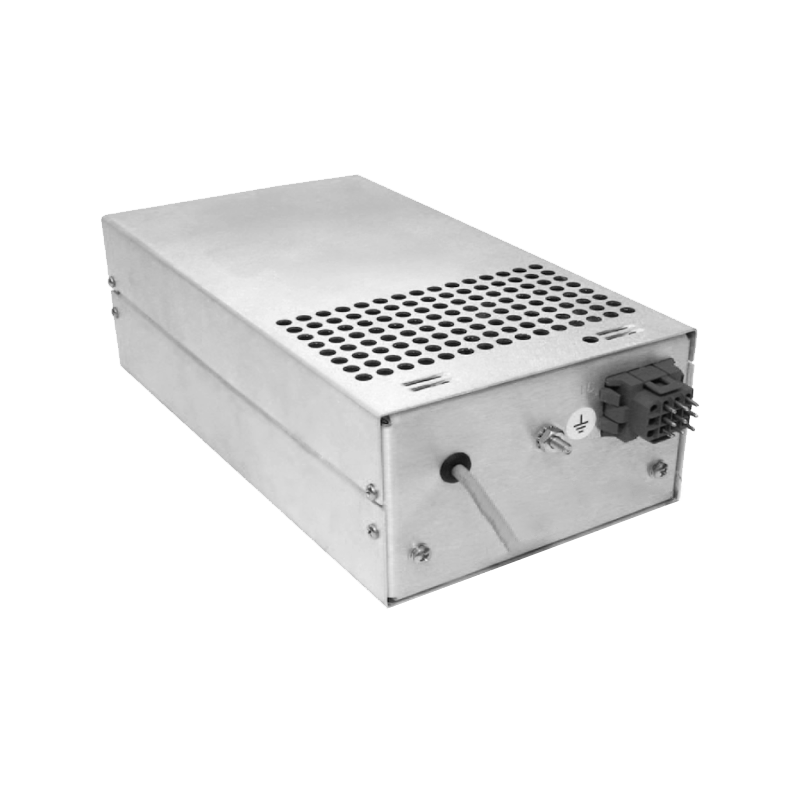
Interchannel Crosstalk Suppression of Bias High Voltage Power Supply for Single Photon Avalanche Diode Array
Single photon avalanche diode arrays have emerged as powerful detection tools for applications requiring high sensitivity and precise spatial resolution, including quantum imaging, light detection and ranging systems, and fluorescence microscopy. These arrays consist of multiple avalanche photodiodes operating in Geiger mode, where each diode acts as an independent single photon detector. The bias high voltage power supply for such arrays must provide precisely controlled voltage to maintain optimal detection efficiency while minimizing interchannel crosstalk that can degrade spatial resolution and increase false count rates.
Interchannel crosstalk in single photon avalanche diode arrays manifests through several distinct mechanisms that couple signals between adjacent detection channels. Optical crosstalk occurs when photons emitted during avalanche breakdown in one diode propagate to neighboring diodes and trigger secondary avalanches. Electrical crosstalk arises from shared bias supply connections, where current transients from one channel induce voltage fluctuations on neighboring channels through common impedance paths. Substrate crosstalk results from carrier diffusion through the semiconductor substrate, where carriers generated during an avalanche event migrate to adjacent diodes.
The bias voltage applied to single photon avalanche diodes determines the avalanche probability and detection efficiency. Higher bias voltages increase the electric field within the diode depletion region, enhancing the probability that an absorbed photon will trigger a detectable avalanche. However, excessive bias voltage increases dark count rates, afterpulsing probability, and the risk of diode damage. The optimal bias voltage typically exceeds the breakdown voltage by several volts, placing the diode in the most sensitive operating region.
Voltage fluctuations on the bias supply directly impact detection performance and crosstalk susceptibility. When one diode in the array experiences an avalanche event, the sudden current flow can cause momentary voltage drops on the shared bias line. If these voltage transients are not adequately suppressed, they can propagate to neighboring diodes, causing false triggers or altering detection efficiency. The power supply design must minimize output impedance across the frequency range relevant to avalanche events, typically spanning from megahertz to gigahertz frequencies.
Decoupling networks between the power supply and individual diode channels provide the first line of defense against electrical crosstalk. These networks typically combine series resistors with parallel capacitors to isolate individual channels while maintaining adequate bias voltage stability. The series resistors limit the peak current that can flow during an avalanche event, reducing the magnitude of voltage transients on the shared bias line. Parallel capacitors provide local charge storage to maintain bias voltage during transient events.
The design of decoupling networks involves careful tradeoffs between crosstalk suppression and detection performance. Larger series resistance provides better isolation but increases the voltage drop during quiescent operation and slows the recharge of diode capacitance after an avalanche event. Larger capacitance values improve local voltage stability but increase physical size and may introduce parasitic inductance that limits high-frequency performance. Optimal design requires detailed analysis of the specific array characteristics and application requirements.
Power supply output impedance specification must consider the unique requirements of single photon avalanche diode arrays. Conventional power supply specifications typically emphasize low frequency output impedance, but avalanche events generate high frequency transients that require low impedance at much higher frequencies. Specialized power supplies for these applications may specify output impedance across frequency bands extending to hundreds of megahertz or higher.
The physical layout of bias distribution networks significantly impacts crosstalk performance. Long interconnect traces between the power supply and diode array introduce parasitic inductance that increases the effective impedance at high frequencies. Careful printed circuit board design with short, wide traces minimizes parasitic inductance. Star routing configurations, where each channel connects independently to the power supply output, eliminate common impedance paths that could couple signals between channels.
Grounding strategy plays a critical role in crosstalk suppression. Currents flowing through ground connections can induce voltage differences that appear as signals on detection channels. Separate ground paths for analog signals, digital logic, and power supply returns minimize ground loop coupling. Guard traces surrounding sensitive signal paths provide additional isolation by intercepting stray currents before they reach detection circuits.
The power supply voltage regulation topology influences crosstalk characteristics. Linear regulators provide excellent noise performance and fast transient response but may generate significant heat when dropping large voltages. Switching regulators offer higher efficiency but generate electromagnetic interference that can couple into sensitive detection circuits. Hybrid approaches using switching preregulators followed by linear post-regulators can achieve both efficiency and low noise performance.
Active regulation circuits can enhance crosstalk suppression beyond what passive decoupling networks achieve. Feedback circuits that monitor the bias voltage at the array and adjust the power supply output in real time can compensate for voltage fluctuations faster than passive networks alone. These active circuits must have bandwidth exceeding the avalanche event frequency to provide effective compensation.
Temperature control of the bias voltage addresses the temperature dependence of avalanche photodiode characteristics. The breakdown voltage of avalanche photodiodes varies with temperature, typically increasing at higher temperatures. Without compensation, this variation causes detection efficiency changes that may be misinterpreted as crosstalk effects. Temperature sensors integrated with the diode array enable feedback to the power supply, adjusting the bias voltage to maintain constant detection efficiency across the operating temperature range.
Quenching circuits associated with each diode channel interact with the bias supply to influence crosstalk behavior. Passive quenching using series resistors is simple but results in relatively slow recharge times that limit maximum count rates. Active quenching circuits using transistor switches can achieve faster operation but may introduce additional coupling paths for crosstalk. The quenching circuit design must be coordinated with the bias supply design to optimize overall system performance.
Afterpulsing effects in single photon avalanche diodes can masquerade as crosstalk in array measurements. Trapped carriers released after an avalanche event can trigger secondary avalanches in the same diode, appearing as correlated events. The bias voltage magnitude influences trap occupation and release rates, affecting afterpulsing probability. Power supply stability and noise characteristics impact the ability to distinguish afterpulsing from true crosstalk in measurement data.
Calibration procedures for single photon avalanche diode arrays should include crosstalk characterization. Illuminating individual diodes while monitoring neighboring channels reveals the crosstalk magnitude and spatial distribution. These measurements inform the optimization of bias supply voltage, decoupling network parameters, and layout configurations. Regular calibration identifies any degradation in crosstalk performance that might indicate component aging or contamination.
Advanced array architectures incorporate crosstalk suppression features at the device level. Trench isolation between adjacent diodes reduces optical and substrate crosstalk by providing physical barriers to photon and carrier propagation. Local quenching circuits integrated with each diode reduce the current flow through shared bias connections, minimizing electrical crosstalk. These device-level improvements complement power supply and circuit-level crosstalk suppression strategies.
The bias voltage settling time after an avalanche event affects the dead time and maximum count rate of the detection system. Faster settling enables detection of subsequent photons at higher rates but may require more aggressive decoupling networks that could impact crosstalk performance. The power supply must provide sufficient current capability to recharge diode capacitance quickly while maintaining low output impedance for crosstalk suppression.
Photon detection efficiency uniformity across the array depends on bias voltage uniformity. Voltage variations between channels cause corresponding variations in detection efficiency that can degrade imaging or measurement accuracy. The power supply and distribution network must provide uniform voltage to all channels, typically requiring voltage matching within a few millivolts across the array. Kelvin sensing techniques that measure voltage directly at the array can improve regulation accuracy.
Continued advancement in single photon avalanche diode array technology drives ongoing development of bias power supply solutions. Larger array formats, higher count rates, and improved timing resolution create ever more demanding requirements for crosstalk suppression. Integrated approaches combining optimized power supply design, advanced decoupling networks, careful layout, and device-level improvements continue to push the boundaries of single photon detection performance.