Anti Shock Vibration and Electromagnetic Pulse Protection Design of Reinforced Rack Mount High Voltage Power Supply
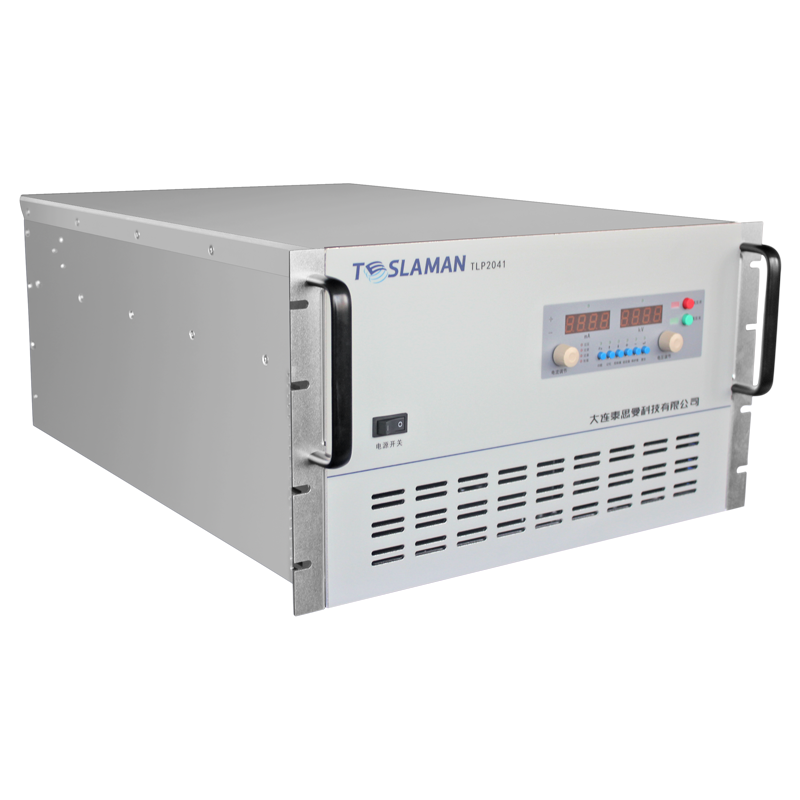
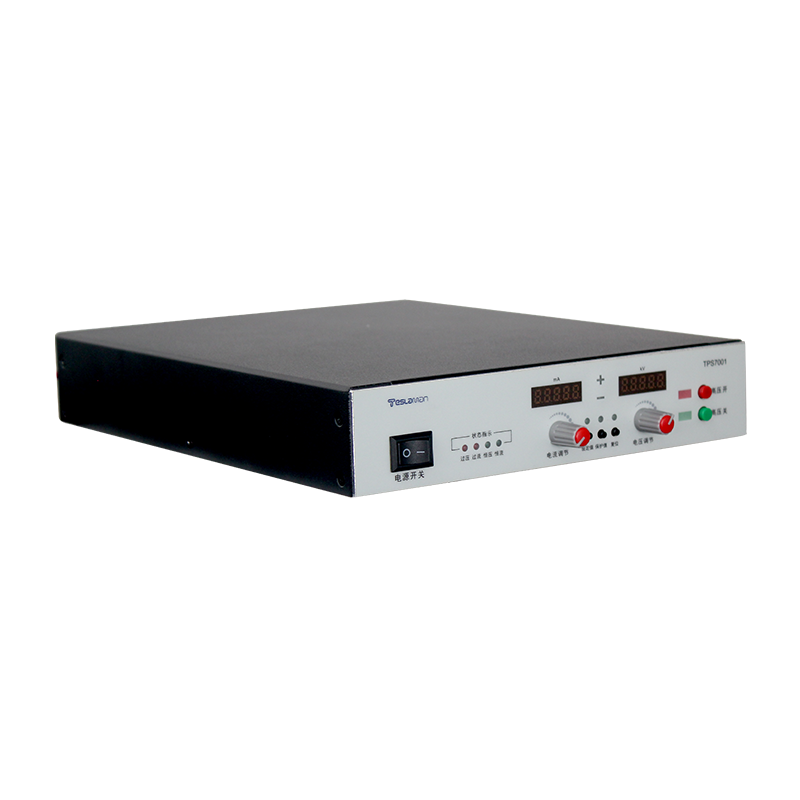
Reinforced rack mount high voltage power supplies serve critical functions in military, aerospace, and industrial applications where equipment must operate reliably under extreme environmental conditions. These power supplies must withstand mechanical shock and vibration from transportation, handling, and operational environments while simultaneously maintaining immunity to electromagnetic pulse threats that could disrupt or damage sensitive electronic circuits. The design of such robust power supplies requires comprehensive consideration of mechanical, electrical, and electromagnetic protection strategies.
Mechanical shock protection begins with the structural design of the power supply enclosure and internal component mounting. Rack mount configurations must survive shock events that can exceed fifty times the acceleration of gravity during transportation or operational impacts. The enclosure design typically incorporates rigid frame structures with reinforced corners and edges that distribute shock energy throughout the structure rather than concentrating it at vulnerable points.
Internal component mounting strategies significantly influence shock survival. Potting and encapsulation techniques embed sensitive components in rigid or semi-rigid materials that distribute mechanical stress and prevent relative motion between parts. Conformal coatings provide additional protection against shock-induced damage by securing component leads and preventing fracture at solder joints. Strain relief mechanisms for cables and wire harnesses prevent damage from differential motion during shock events.
Vibration protection addresses the continuous mechanical excitation that equipment experiences during operation in vehicles, aircraft, or industrial environments. Vibration can cause fatigue failure of components, solder joints, and mechanical fasteners over extended exposure periods. The natural frequencies of the power supply structure and internal assemblies must be designed to avoid resonance with common vibration frequencies in the operational environment.
Vibration isolation mounts decouple the power supply from external vibration sources, reducing the transmitted vibration energy. These mounts typically employ elastomeric materials or spring mechanisms that provide low stiffness in the vibration direction while maintaining adequate support. The isolation effectiveness depends on the ratio of the excitation frequency to the natural frequency of the isolated system, with higher ratios providing better isolation.
Component selection for vibration environments requires attention to mechanical robustness specifications. Electrolytic capacitors, with their internal liquid electrolyte and wound construction, are particularly susceptible to vibration damage. Solid electrolyte or tantalum capacitors offer improved vibration resistance. Transformers and inductors must be designed with secure winding terminations and adequate support for magnetic cores to prevent movement during vibration.
Printed circuit board design for vibration environments incorporates features that enhance mechanical robustness. Thicker board substrates reduce flexing and prevent trace cracking. Additional mounting points reduce unsupported span lengths. Corner mounting holes should be located away from board edges to prevent stress concentration. Components with high mass should be located near mounting points to minimize the moment arm and resulting stress during vibration.
Electromagnetic pulse protection addresses the threat of intense electromagnetic fields that can induce damaging voltages and currents in electronic circuits. These pulses can arise from natural lightning strikes, high-power radar systems, or intentional electromagnetic weapons. The extremely fast rise time and high field strength of electromagnetic pulses can penetrate equipment enclosures and damage sensitive components through multiple coupling mechanisms.
Conducted electromagnetic pulse protection focuses on preventing damaging transients from entering the power supply through input power lines, output connections, and control interfaces. Gas discharge tubes and metal oxide varistors provide primary protection by limiting voltage excursions to safe levels. These devices must be selected with appropriate voltage ratings and energy handling capability for the expected threat levels. Secondary protection using transient voltage suppression diodes provides finer voltage limiting for sensitive circuits.
Radiated electromagnetic pulse protection addresses the coupling of electromagnetic energy directly through enclosure apertures and seams. The enclosure design must provide continuous conductive paths that prevent field penetration. Gaskets made from conductive elastomers or metal mesh maintain electrical continuity across seams and joints while providing environmental sealing. Aperture filters using conductive mesh or honeycomb structures attenuate electromagnetic fields while allowing airflow for cooling.
Circuit board level protection supplements enclosure-level measures to protect against residual electromagnetic energy that penetrates the primary shielding. Filter networks on input and output lines attenuate high frequency transients. Shielded traces and ground planes reduce coupling between circuits. Component placement and orientation minimize the effective antenna area for electromagnetic pickup. Decoupling capacitors provide low impedance paths for induced currents, preventing voltage buildup on power supply rails.
Grounding strategy plays a critical role in electromagnetic pulse protection. A well-designed grounding system provides low impedance paths for induced currents to flow without creating damaging voltage differences between circuits. Single point grounding prevents ground loops that could couple electromagnetic energy into sensitive circuits. Ground plane construction on printed circuit boards provides low inductance return paths for high frequency currents.
The high voltage output section presents unique challenges for electromagnetic pulse protection. The high voltage levels and isolation requirements complicate the application of conventional protection devices. Spark gaps and voltage dependent resistors designed for high voltage applications provide primary protection against overvoltage transients. Careful attention to creepage and clearance distances ensures that protection devices do not compromise the normal high voltage isolation.
Testing and verification of shock and vibration protection requires specialized facilities and procedures. Shock testing typically employs drop towers or impact hammers that generate controlled shock pulses with specified amplitude and duration. Vibration testing uses electrodynamic shakers that can apply sinusoidal or random vibration profiles across the frequency range of interest. Testing must demonstrate that the power supply survives the specified environmental exposure while maintaining electrical performance.
Electromagnetic pulse testing requires specialized facilities that can generate intense electromagnetic fields with the appropriate waveform characteristics. Testing may include illumination testing where the entire power supply is exposed to radiated fields, and injection testing where simulated pulse waveforms are applied directly to power and signal lines. Test results verify that protection measures provide adequate margin against the specified threat levels.
Thermal management in reinforced power supplies must accommodate the additional thermal resistance introduced by vibration isolation and electromagnetic shielding. Heat sinks may require isolation mounting to prevent electromagnetic leakage through thermal interfaces. Cooling airflow paths must be designed to function correctly under vibration conditions without developing resonances that could cause mechanical failure. Liquid cooling systems offer improved thermal performance and can be designed with flexible connections that accommodate vibration isolation.
Reliability analysis for reinforced power supplies must account for the additional failure modes introduced by protection measures. Protection devices themselves can fail, potentially compromising the protection they provide. Redundant protection using multiple devices in series or parallel configurations improves protection reliability. Monitoring circuits can detect protection device failures and alert operators to the need for maintenance.
Maintenance considerations for reinforced power supplies include inspection and replacement of protection devices that may degrade over time. Elastomeric vibration isolators can harden or crack with age, reducing their effectiveness. Electromagnetic pulse protection devices may experience degradation from accumulated transient exposure. Regular maintenance intervals should include verification of protection device functionality and replacement of components approaching their end of life.
The integration of shock, vibration, and electromagnetic pulse protection requires careful coordination to avoid conflicts between different protection strategies. Vibration isolation mounts must maintain electrical continuity for electromagnetic shielding. Electromagnetic gaskets must maintain sealing effectiveness under vibration conditions. Thermal management solutions must function correctly within the constraints imposed by mechanical and electromagnetic protection requirements.
Continued advancement in protection technologies enables ever more robust power supply designs. New materials for vibration isolation offer improved damping and longer service life. Advanced electromagnetic protection devices provide faster response and higher energy handling capability. Computational modeling tools enable optimization of protection strategies before prototype construction, reducing development time and cost while improving protection effectiveness.