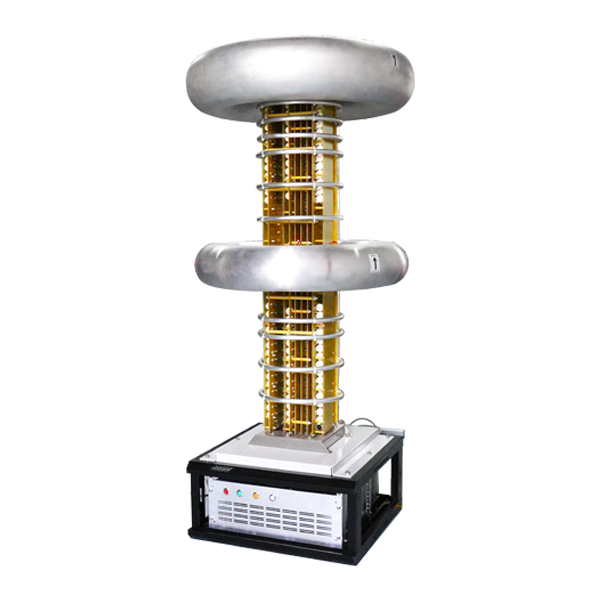
Virtual Simulation Experiment Teaching Platform Multi-scenario Construction and Interactive Teaching Design for High Voltage Power Supply
High voltage power supply technology has become fundamental knowledge in electrical engineering education, requiring comprehensive understanding of electrical principles, safety practices, and operational techniques. Traditional laboratory teaching faces challenges from safety risks, equipment costs, and facility limitations that constrain practical learning opportunities. Virtual simulation teaching platforms provide alternative approaches for high voltage education through simulated environments that enable safe, flexible, and comprehensive learning experiences. Multi-scenario construction and interactive teaching design enable effective virtual education for high voltage power supply technology.
The fundamental principle of virtual simulation teaching involves creating digital environments that simulate real equipment and conditions for educational purposes. Virtual environments replicate equipment characteristics and operational behavior through computational models. Students interact with virtual equipment through computer interfaces for learning experiences. The simulation enables learning without physical equipment risks and limitations.
Safety benefits of virtual teaching involve eliminating electrical hazards that constrain physical laboratory work. High voltage equipment presents electrical risks that require extensive safety precautions limiting student access. Virtual environments eliminate electrical hazards enabling unrestricted learning exploration. Students can experience equipment operation without safety risks through virtual simulation.
Cost benefits of virtual teaching involve reducing equipment expenses that limit physical laboratory capabilities. High voltage power supplies require substantial investment for laboratory equipment procurement. Virtual platforms reduce equipment costs through software-based learning environments. Multiple students can use virtual platforms simultaneously without equipment limitations.
Multi-scenario construction involves creating diverse virtual scenarios for comprehensive learning coverage. Different scenarios represent different equipment types, applications, and operating conditions. Multiple scenarios enable varied learning experiences covering broad knowledge scope. The scenario construction must cover comprehensive curriculum requirements.
Basic operation scenarios teach fundamental power supply operation principles and procedures. Basic scenarios introduce equipment familiarization and standard operational sequences. Students learn basic principles through guided virtual operation experiences. The basic scenarios build foundational knowledge and skills.
Advanced application scenarios teach specialized power supply applications in specific fields. Advanced scenarios represent complex applications requiring integrated understanding. Students learn application principles through simulated application operation. The advanced scenarios develop specialized knowledge and skills.
Fault diagnosis scenarios teach troubleshooting techniques for equipment problems. Fault scenarios simulate equipment malfunctions requiring diagnosis and correction. Students learn diagnostic approaches through virtual troubleshooting exercises. The fault scenarios develop analytical and problem-solving skills.
Safety emergency scenarios teach response procedures for safety incidents. Emergency scenarios simulate safety events requiring proper emergency response. Students learn emergency procedures through simulated emergency handling. The emergency scenarios develop safety awareness and response capability.
Parameter optimization scenarios teach optimization approaches for performance improvement. Optimization scenarios present parameter adjustment challenges for performance optimization. Students learn optimization principles through simulated parameter tuning. The optimization scenarios develop analytical and optimization skills.
Interactive teaching design involves creating engaging learning experiences through interactive virtual environment features. Interactive features enable student engagement with virtual content for active learning. Interactive elements promote student participation rather than passive observation. The design must create engaging learning experiences.
Interactive operation features enable students to control virtual equipment operation. Operation controls provide equipment manipulation capability through user interfaces. Students execute operational procedures through interactive control. The interactive operation promotes active learning engagement.
Interactive measurement features enable students to perform virtual measurements on simulated equipment. Measurement tools provide data acquisition capability through virtual instruments. Students collect measurement data for analysis and understanding. The interactive measurement develops measurement skills.
Interactive analysis features enable students to analyze data and results from virtual experiments. Analysis tools provide data processing capability for result interpretation. Students analyze experimental results for understanding development. The interactive analysis develops analytical skills.
Interactive feedback features provide immediate responses to student actions for learning guidance. Feedback mechanisms respond to student operations with appropriate consequences. Feedback guides learning through immediate consequences demonstration. The interactive feedback promotes effective learning.
Assessment integration involves incorporating evaluation capabilities for learning assessment. Assessment features evaluate student performance through virtual operation metrics. Performance evaluation enables learning progress tracking. The assessment enables effective education evaluation.
Learning progression design involves structuring learning sequence for progressive skill development. Progressive scenarios build knowledge and skills through sequential learning experiences. Initial scenarios establish basic understanding before advanced scenarios. The progression enables systematic learning development.
Collaborative learning features enable multiple students to work together in virtual environments. Collaboration tools enable shared virtual operation for teamwork learning. Students learn collaborative skills through shared virtual experiences. The collaboration develops teamwork capabilities.
Integration with curriculum involves coordinating virtual teaching with overall course structure. Virtual scenarios must align with curriculum learning objectives. Teaching sequence must coordinate with course progression. The integration enables comprehensive course implementation.
Testing and evaluation of virtual teaching platform require assessment of educational effectiveness. Learning outcome testing verifies knowledge and skill achievement through virtual teaching. User experience testing verifies platform usability and engagement. Teaching effectiveness testing compares virtual teaching with traditional approaches. The testing must establish confidence in virtual teaching capability.
Continued advancement in educational technology drives ongoing development of virtual teaching platforms. More sophisticated scenarios demand enhanced simulation capabilities. Better interaction demands improved interactive features. Integration with learning management enables comprehensive course delivery. These developments continue advancing the capabilities of high voltage power supply virtual education.