Standard Rack-mount High Voltage Power Supply Deployment Scheme in Laboratory Mass Spectrometry Analysis
Mass spectrometry analysis in laboratory environments demands high voltage power supplies with characteristics optimized for analytical performance, operational convenience, and integration with automated systems. Standard rack-mount configurations provide a practical deployment scheme that addresses space efficiency, thermal management, and electrical interface requirements typical of modern analytical laboratories. The deployment scheme encompasses not only the physical mounting and connection of power supplies but also the control interfaces, monitoring systems, and integration with the overall mass spectrometry instrument, directly affecting analytical workflow efficiency.
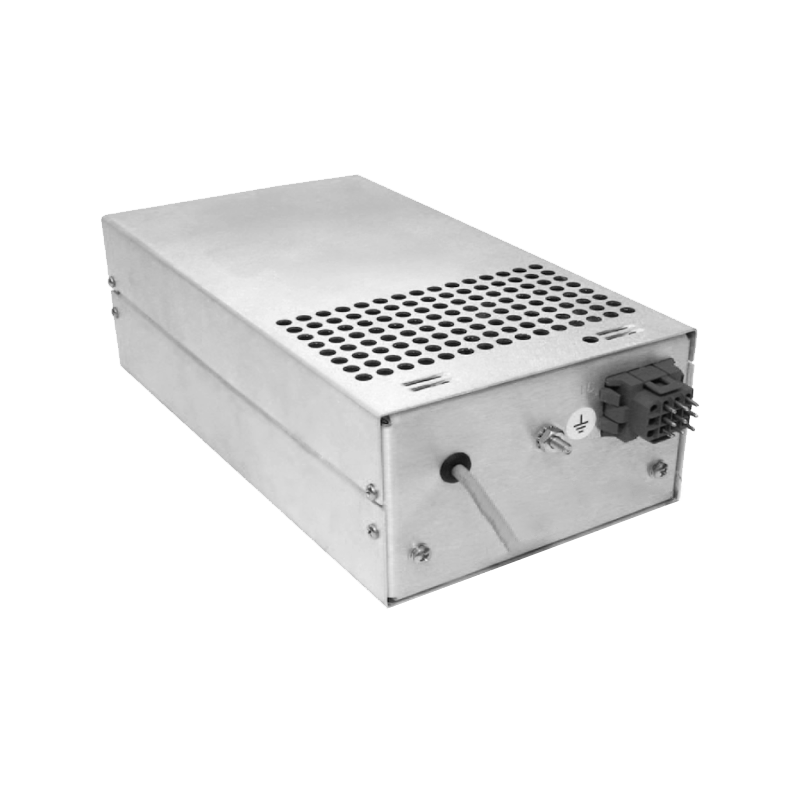
Rack-mount power supply configurations offer significant space efficiency advantages in laboratory environments where instrument density continues to increase. Standard 19-inch rack dimensions accommodate power supplies in heights ranging from one unit to multiple units depending on power and feature requirements. Vertical arrangement within racks optimizes floor space utilization while providing adequate ventilation between units. The standardized form factor also simplifies equipment planning and facility design, as rack spaces can be allocated with confidence that standard equipment will fit. Rack organization must account for cable management and service access requirements.
Thermal management in rack-mount deployments requires attention to airflow patterns and heat dissipation. High voltage power supplies generate heat through power conversion losses, with efficiency typically ranging from 70 to 90 percent depending on the design and operating conditions. Rack enclosures must provide adequate ventilation to remove this heat without creating hot spots that could affect power supply reliability. Perforated rack doors and forced-air ventilation systems help maintain acceptable ambient temperatures within the rack. Power supplies with front-to-back airflow orientation align with typical rack cooling schemes, drawing cool air from the front of the rack and exhausting warm air toward the back. Thermal monitoring must verify adequate cooling under actual operating conditions.
Electrical interface considerations for rack-mount power supplies include both power connections and control interfaces. High voltage outputs typically connect through specialized high voltage cables and connectors rated for the operating voltage. Low voltage control and monitoring signals interface through standard connectors on the power supply front or rear panels. Remote control capability enables integration with the mass spectrometer control system, allowing voltage adjustment and monitoring through the instrument software interface. Digital interfaces using standard protocols simplify integration compared to proprietary or custom interfaces. Interface design must account for electromagnetic compatibility and signal integrity.
The high voltage requirements of mass spectrometry instruments vary depending on the instrument type and configuration. Quadrupole mass spectrometers typically require voltages ranging from a few hundred volts to several kilovolts for ion guide and mass filter operation. Time-of-flight instruments require higher voltages, often in the range of 10 to 30 kilovolts, for the ion acceleration region. Ion trap and Fourier transform ion cyclotron resonance instruments have their own specific voltage requirements. Rack-mount power supplies must provide the appropriate voltage ranges and current capabilities for the specific mass spectrometry application. Voltage requirement specification must include all operating modes and conditions.
Voltage stability and noise performance directly impact mass spectrometry analytical performance. Mass resolution and accuracy depend on the stability of accelerating and deflecting voltages. Voltage noise and ripple cause peak broadening and reduced resolution. Power supplies designed for mass spectrometry applications specify stability and ripple performance appropriate for the resolution requirements of the instrument. Low-noise designs employ linear regulation stages, careful component selection, and extensive filtering to minimize output noise. Performance characterization must verify that specifications are met under actual operating conditions.
Multiple output configurations address the need for several different voltages in a typical mass spectrometry system. Ion sources, ion guides, mass analyzers, and detectors each require specific voltages, often with different polarities and magnitudes. Rack-mount power supplies may incorporate multiple independent outputs within a single enclosure, simplifying installation and reducing space requirements compared to multiple single-output supplies. The outputs must maintain isolation from each other to prevent unwanted interactions, with specifications defining the maximum voltage difference between outputs. Output isolation verification must confirm absence of cross-coupling effects.
Remote programming capability enables automated control of power supply outputs through the mass spectrometer control system. Analog control using voltage or current inputs provides simple interface capability but may have limitations in accuracy and noise immunity. Digital interfaces including RS-232, RS-485, USB, and Ethernet provide more precise control with better noise immunity and enable bidirectional communication for monitoring and diagnostics. The choice of interface depends on the mass spectrometer control system architecture and the distance between the power supply and the control computer. Interface latency must be acceptable for automated sequencing requirements.
Status monitoring features provide visibility into power supply operation for diagnostic and maintenance purposes. Voltage and current readings indicate whether the supply is operating within expected parameters. Fault indicators alert operators to problems such as overvoltage, overcurrent, or overtemperature conditions. Some power supplies provide extensive diagnostic data including internal temperatures, elapsed operating time, and cumulative fault counts. This information supports predictive maintenance programs that can identify developing problems before they cause instrument downtime. Monitoring data logging enables trend analysis and maintenance planning.
Safety interlock systems integrate the power supply into the overall instrument safety architecture. Interlocks prevent high voltage output when safety covers are removed, when vacuum conditions are inadequate, or when other fault conditions exist. Emergency stop circuits shut down the power supply immediately when activated. Proper integration of these safety functions requires coordination between the power supply design, the mass spectrometer instrument design, and the facility safety systems. Interlock testing must verify correct operation under all expected fault conditions.
Calibration and maintenance considerations influence the long-term deployment scheme. Power supplies require periodic calibration to maintain specified accuracy over time. Calibration intervals depend on the stability specifications and the criticality of voltage accuracy for the analytical method. Rack-mount designs with front-panel access to calibration adjustments simplify the calibration process. Documentation requirements for regulated environments may include calibration records, maintenance logs, and change documentation. The deployment scheme should facilitate these documentation activities while maintaining instrument availability. Calibration scheduling must minimize impact on analytical workflow.
Serviceability aspects affect the total cost of ownership over the instrument lifetime. Modular power supply designs enable rapid replacement of failed subassemblies, minimizing downtime. Power supplies designed for field service allow replacement of components such as fans, fuses, and voltage reference modules without returning the entire unit to the manufacturer. Access to spare parts and technical support influences the choice of power supply vendor. Standard form factors and interfaces provide flexibility to substitute equivalent power supplies if original equipment becomes unavailable or if requirements change over the instrument lifetime. Service planning must account for both scheduled maintenance and unscheduled repairs.