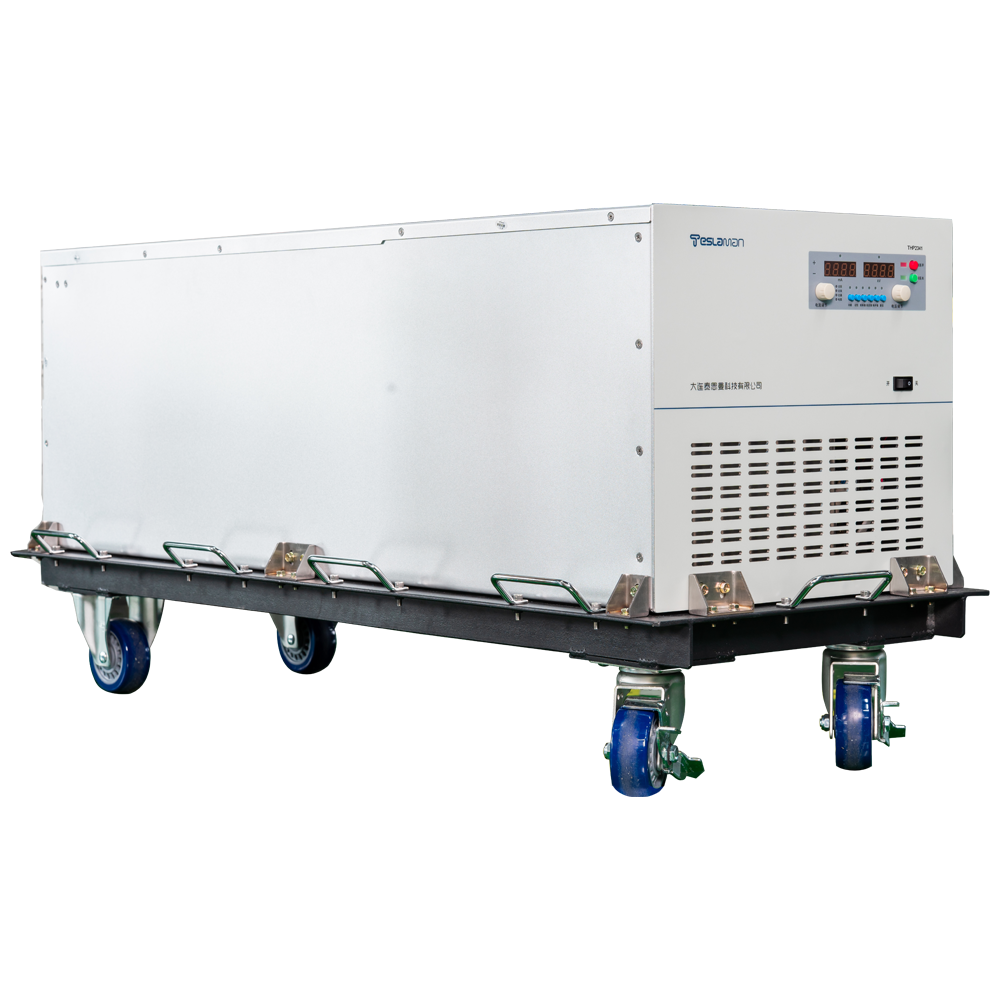
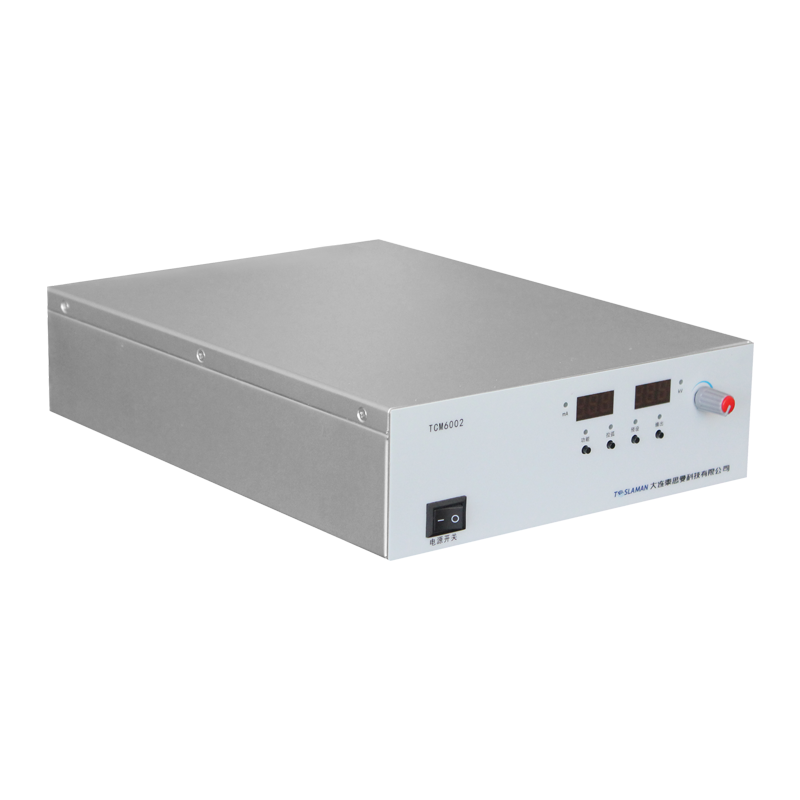
Industrial Directed Energy Equipment High Voltage Power Supply Energy Supply Technology Discussion
Industrial directed energy equipment encompasses a range of systems that convert electrical energy into focused beams or fields for materials processing, surface treatment, and precision manufacturing applications. The high voltage power supply serving as the energy source for these systems must meet demanding requirements for power density, efficiency, stability, and reliability that distinguish industrial applications from laboratory or developmental systems. Energy supply technology discussions address the fundamental challenges of converting utility power into the specialized electrical forms required by directed energy processes while optimizing system performance and operational economics.
Power density requirements represent a defining characteristic of industrial directed energy applications. Industrial systems often operate at power levels from kilowatts to megawatts, with the electrical power concentrated into focused beams or fields that interact with materials at high energy density. The high voltage power supply must deliver substantial power while occupying reasonable facility space and maintaining acceptable efficiency. Higher power density in the power supply enables more compact system designs but creates challenges for thermal management and component reliability. Power density optimization balances electrical performance against thermal, mechanical, and cost constraints. Advances in power electronics components and topologies continue to improve achievable power density.
Efficiency considerations affect both operational economics and thermal management in industrial systems. Power conversion efficiency determines the fraction of input power that reaches the directed energy load versus the fraction dissipated as heat in the power supply. Efficiency improvements reduce electricity costs and also reduce the cooling system capacity required to remove waste heat. High voltage power supplies for directed energy applications typically achieve efficiencies from 85 to 95 percent, with advanced designs reaching higher values. Efficiency varies with operating point, with partial-load efficiency particularly important for processes with variable power demand. Efficiency characterization across the operating range guides system optimization for specific duty cycles.
Power quality at the utility interface represents an increasingly important consideration for industrial directed energy systems. High power converters can draw distorted currents and generate harmonic distortion that affects facility power distribution and may violate utility interconnection requirements. Power factor correction and harmonic filtering improve power quality, reducing utility charges in many rate structures and avoiding power quality problems for other facility loads. Active front-end converters with power factor correction achieve near-unity power factor while drawing nearly sinusoidal current from the utility. Power quality compliance verification must consider operation across the full range of load conditions and utility source impedances.
Output characteristics of high voltage power supplies for directed energy applications differ substantially from conventional power supply designs. The load presented by directed energy processes often exhibits nonlinear, time-varying, or negative-resistance characteristics that challenge conventional regulation approaches. The power supply must maintain stable operation despite these challenging load conditions. Current-mode control techniques often provide better stability for nonlinear loads than voltage-mode control. Load characterization through measurement and modeling guides power supply design for specific directed energy applications. Dynamic load testing verifies stable operation under worst-case load conditions.
Pulsed operation represents a common mode for many directed energy applications, with power delivered in pulses rather than continuously. Pulsed operation enables higher peak power levels for a given average power rating, as components can be sized for average rather than peak power. The power supply must deliver rapid power transitions while maintaining pulse characteristics including amplitude, duration, and repetition rate. Energy storage in capacitor banks or inductor networks provides the peak power capability for pulsed operation, with the power supply replenishing stored energy between pulses. Pulse parameter control accuracy affects process reproducibility and must be specified based on process requirements.
Thermal management challenges increase with power level and power density. The heat generated by power conversion must be removed to maintain component temperatures within acceptable limits. Air cooling using forced air or natural convection suffices for lower power systems, while higher power systems may require liquid cooling for adequate heat removal. Cooling system reliability affects overall system reliability, as cooling failure can rapidly cause power supply damage. Thermal design must account for worst-case operating conditions including maximum ambient temperature, maximum power, and reduced cooling capability due to fouling or component degradation. Thermal protection systems prevent damage from overheating while avoiding nuisance trips during transient conditions.
Redundancy and fault tolerance considerations increase in importance for industrial systems where downtime carries significant economic consequences. Parallel operation of multiple power supplies provides redundancy against single-unit failures. Fault-tolerant architectures maintain partial operation despite component failures, enabling continued processing at reduced capacity until repairs can be performed. Fault detection and isolation systems identify failed components quickly, enabling rapid repair. System design for maintainability facilitates repairs with minimal downtime through modular construction, accessible components, and clear diagnostics. Mean time between failures and mean time to repair specifications characterize system reliability and availability.
Control system architecture for industrial directed energy power supplies must support both local operation and integration with facility control systems. Local control panels enable direct operation and adjustment by operators, while remote interfaces support automated operation and supervisory control. Industrial communication protocols including Ethernet and fieldbus standards enable integration with programmable logic controllers and distributed control systems. The control system must manage startup sequences, shutdown sequences, fault responses, and normal operation with appropriate safety interlocks. Control system reliability affects overall system reliability, with industrial-grade components and software development practices appropriate for the application.
Safety systems for industrial directed energy power supplies address electrical hazards, radiation hazards, and process safety. Electrical safety systems prevent personnel exposure to hazardous voltages through enclosure, interlocking, and proper grounding. Radiation safety systems address any X-ray generation from high voltage components or the directed energy load. Process safety interlocks prevent operation under unsafe conditions including inadequate cooling, enclosure open, or facility safety system not ready. Safety system design must meet applicable regulatory requirements and industry standards. Safety system testing and verification must be documented to demonstrate compliance.
Environmental qualification ensures reliable operation in industrial environments that may include temperature extremes, humidity, vibration, and electromagnetic interference. Industrial power supplies typically specify operating temperature ranges from zero to 40 degrees Celsius or wider, with derating at temperature extremes. Humidity specifications account for both condensation risk and effects on insulation resistance. Vibration specifications reflect the mechanical environment typical of industrial facilities. Electromagnetic compatibility requirements ensure that the power supply neither causes interference nor suffers susceptibility at levels typical of industrial environments. Environmental testing verifies compliance with specifications.
Service life and maintenance planning address the total cost of ownership over the system lifetime. Industrial systems often operate for decades, requiring power supply designs with corresponding service life. Component selection for long life, particularly electrolytic capacitors and cooling fans with limited lifetimes, affects system reliability. Maintenance procedures and intervals must be established based on component service life and failure rate predictions. Spare parts availability for the system lifetime must be considered in vendor selection. Documentation and training support maintenance personnel in keeping systems operational over their intended service lives.