Standard Rack-Mount High Voltage Power Supply Standardized Deployment in Laboratory Accelerator Platforms
Laboratory accelerator platforms require reliable, standardized high voltage power supply solutions that can be rapidly deployed and easily maintained across diverse research applications. The adoption of standard rack-mount high voltage power supply form factors enables research institutions to establish common infrastructure supporting particle accelerators, ion implanters, and various experimental apparatus requiring precisely controlled high voltage potentials. This standardization approach offers substantial benefits in terms of reduced engineering costs, simplified maintenance procedures, and improved equipment interchangeability across different research programs. The trend toward standardization in accelerator facilities has significantly improved operational efficiency and reduced total cost of ownership.
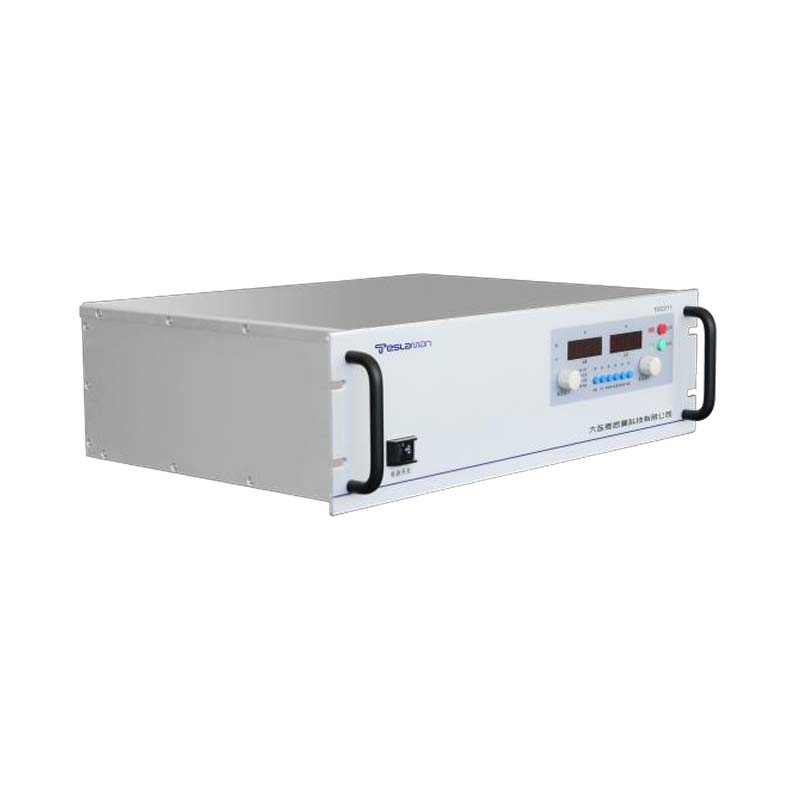
Standard form factor advantages extend beyond simple mechanical compatibility, as rack-mount enclosures conforming to international standard dimensions enable seamless integration into existing laboratory infrastructure including equipment racks, cooling systems, and cable management architectures. Standardized front panel layouts with consistent control interfaces reduce operator training requirements and minimize errors during equipment configuration, while common connector types for input power, output voltage, and control signals simplify system integration and troubleshooting procedures across multiple power supply units from different manufacturers. The consistency in human-machine interface design reduces the learning curve for new operators and minimizes operational errors.
Voltage and current specifications for laboratory accelerator applications span a wide range depending on specific application requirements. Electrostatic accelerators typically require voltages from several hundred kilovolts to several megavolts with current capabilities ranging from microamperes to milliamperes, while ion implantation systems demand higher currents up to several amperes at voltages from tens to hundreds of kilovolts. Standard product families offering multiple voltage and current combinations enable researchers to select optimal configurations without custom development costs and delays that would otherwise extend project timelines significantly. The availability of standard products reduces both initial procurement costs and long-term maintenance costs.
Regulation and stability requirements for accelerator applications exceed typical industrial application demands, where voltage stability specifications of 0.001% over eight-hour periods ensure beam energy remains within tight tolerances required for precise nuclear physics experiments. Low ripple specifications below 0.005% peak-to-peak prevent beam energy modulation that would degrade experimental resolution, while temperature coefficient specifications below 10 parts per million per degree Celsius ensure laboratory temperature variations do not introduce measurement errors that could compromise experimental data quality. The stringent stability requirements drive the need for sophisticated control algorithms and precision component selection.
Remote control interfaces enable integration of rack-mount power supplies into automated experimental control systems, where standardized communication protocols including universal serial bus, ethernet, and legacy serial interfaces provide connectivity options compatible with diverse control system architectures. Programmable logic controller interfaces enable integration into industrial control systems common in production-oriented accelerator facilities, while software development kits providing application programming interface libraries simplify custom control software development for specialized experimental requirements. The ability to control power supplies remotely enables centralized control room operation and reduces the need for personnel access to high voltage areas.
Interlock and protection systems safeguard both equipment and personnel from hazards associated with high voltage operation, with hard-wired interlock circuits connected to facility safety systems preventing power supply operation when safety conditions are not satisfied. Access door interlocks, radiation monitor interlocks, and vacuum system interlocks provide multiple layers of protection, while fast-acting fault detection circuits disconnect power within microseconds following detection of overcurrent, overvoltage, or arc conditions to prevent equipment damage and personnel injury. The layered approach to safety ensures that no single failure can compromise personnel safety.
Redundant power supply configurations enhance system availability for experiments requiring extended continuous operation, where primary and backup power supplies connected through automatic transfer switches enable seamless transition following primary supply failure. Load-sharing configurations using multiple power supplies operating in parallel provide higher total current capability while offering graceful degradation following individual supply failures, and maintenance bypass circuits enable servicing of individual power supplies without interrupting accelerator operation. Redundant configurations significantly improve overall system availability and reduce the impact of individual component failures.
Thermal management challenges increase with power supply power density in standard rack-mount enclosures, where forced-air cooling systems using variable-speed fans maintain component temperatures within specified operating ranges while minimizing acoustic noise that could disturb laboratory personnel. Temperature monitoring systems provide early warning of cooling system degradation before component damage occurs, and cable management designs ensuring adequate airflow across heat sink surfaces prevent local hot spots that accelerate component aging and reduce equipment reliability. Proper thermal management is essential for achieving rated service life in high-power-density designs.
Electromagnetic compatibility considerations become increasingly important as laboratory environments accommodate growing numbers of sensitive electronic instruments, with conducted emission limits specified in international standards preventing power supply switching noise from propagating onto facility power distribution systems. Radiated emission limits protect nearby sensitive equipment from interference, while immunity requirements ensure power supplies maintain specified performance despite electromagnetic disturbances from other equipment sharing the laboratory environment. The increasing density of electronic equipment in modern laboratories makes electromagnetic compatibility increasingly challenging.
Installation procedures for rack-mount power supplies must address both mechanical and electrical requirements, where rack enclosure structural integrity verification ensures the rack can safely support power supply weight. Seismic restraint provisions in regions subject to earthquake activity prevent equipment displacement during seismic events, while electrical installation verification confirms proper grounding, correct supply voltage, and adequate circuit protection before energizing the power supply. Proper installation procedures are essential for safe and reliable operation throughout the equipment lifetime.
Maintenance access considerations influence power supply placement within equipment racks, where slide-mount assemblies enable power supply withdrawal from the rack for maintenance access without disconnecting cables. Rear access requirements constrain rack placement relative to walls and other equipment, and regular maintenance schedules specifying cleaning, calibration verification, and component replacement intervals ensure continued reliable operation throughout the power supply service life. Designing for maintainability reduces maintenance time and improves overall system availability.
Documentation requirements for laboratory accelerator installations include power supply specifications, installation records, maintenance logs, and calibration certificates, where configuration management systems track power supply settings and modifications throughout the equipment lifetime. Failure analysis documentation capturing root cause analysis and corrective actions supports continuous improvement in system reliability, while training records verify that personnel operating and maintaining power supplies possess required competencies for safe and effective operation. Comprehensive documentation is essential for regulatory compliance and quality assurance.