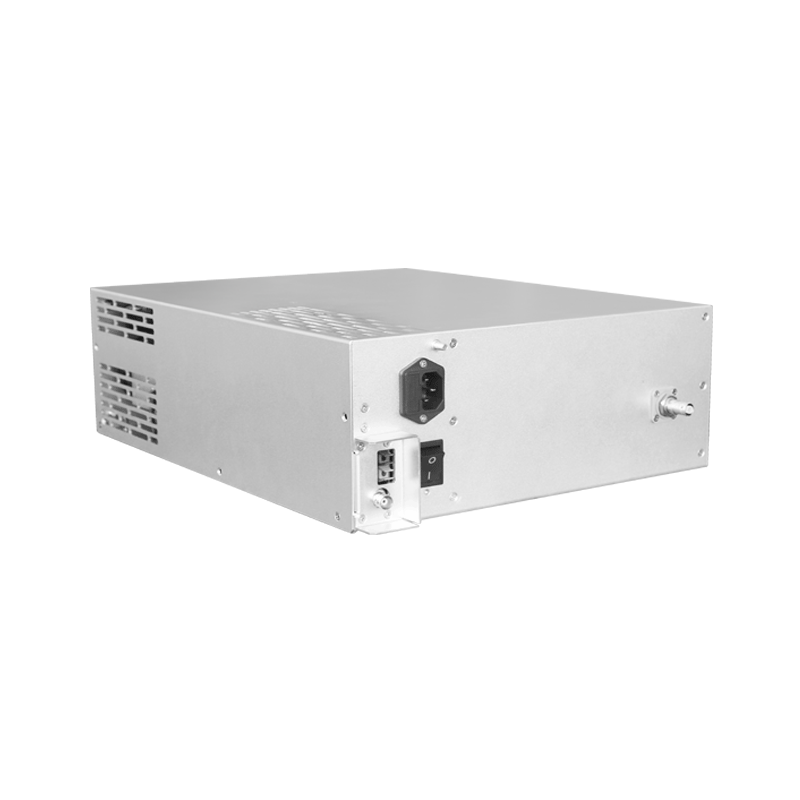
Electron Beam System High Voltage Power Supply Precision Power Supply in Nanometer Processing Technology
Electron beam systems have revolutionized nanometer-scale processing, enabling fabrication and modification of structures with dimensions far below the limits of conventional optical techniques. The high voltage power supply driving the electron optical column must deliver exceptional precision, stability, and control to support nanometer-scale features where sub-nanometer positioning accuracy demands corresponding electrical precision. Understanding the power supply requirements for electron beam nanometer processing illuminates the critical role of electrical precision in advanced fabrication technology. These systems enable capabilities ranging from mask fabrication for semiconductor manufacturing to direct-write nanolithography for emerging device technologies.
The relationship between accelerating voltage and electron wavelength fundamentally determines resolution capability in electron beam systems. Higher accelerating voltages produce shorter electron wavelengths, enabling resolution of finer details. However, voltage stability requirements scale inversely with feature size, making nanometer-scale processing extraordinarily demanding of power supply performance. Voltage fluctuations translate directly into probe size variations and positioning errors through chromatic aberration effects in the electron optical system. The fundamental physics of electron optics establishes performance requirements that power supply design must satisfy for successful nanometer-scale operation.
Chromatic aberration in electron lenses magnifies the impact of voltage instability on resolution. Electrons with energy deviations focus at different positions, broadening the probe size and reducing resolution. The chromatic aberration coefficient of the lens system, typically in the range of a few millimeters, multiplies the effect of voltage fluctuations on probe size. For nanometer-scale processing, voltage stability must reach the part-per-million level to maintain aberration contributions below significant fractions of the target feature size. Understanding chromatic aberration effects enables appropriate specification of voltage stability requirements for particular resolution targets.
Voltage ripple and noise directly affect electron beam positioning precision through instantaneous energy variations. High-frequency ripple components cause beam deflection through chromatic effects during the brief time electrons traverse the column. Power supply designs for nanometer processing employ sophisticated filtering, regulation topologies, and shielding techniques to achieve ripple levels measured in parts per million across the relevant frequency spectrum. Measurement and verification of ripple performance require specialized instrumentation capable of detecting microvolt-level variations on kilovolt-level signals. Ripple and noise characteristics determine ultimate positioning precision achievable with electron beam systems.
Temperature stability of power supply components influences long-term voltage drift characteristics. Component parameters drift with temperature, causing gradual voltage changes during warmup and in response to ambient temperature variations. Thermal management systems maintain power supply internal temperature within narrow bounds, while compensation circuits correct for residual temperature effects. Systems designed for continuous operation achieve warmup stability within specified time limits, enabling productive processing after defined stabilization periods. Temperature control requirements scale with voltage stability requirements, with nanometer-scale systems demanding exceptional thermal stability.
Beam current control complements voltage stability for nanometer processing applications. Probe current determines the electron flux available for writing or imaging, affecting both throughput and resolution. Current stability requirements parallel those for voltage, with fluctuations causing dose variations that affect processing uniformity. Emission current regulation circuits maintain stable beam current despite cathode temperature variations and contamination effects that influence electron emission characteristics. Current stability determines dose uniformity across written patterns, essential for consistent nanometer-scale processing.
Multi-electrode systems in advanced electron columns require multiple precisely controlled voltages for optimal performance. Gun electrodes, lens elements, deflection plates, and stigmators each require specific voltage levels with defined stability and tracking characteristics. Power supply systems provide multiple outputs with controlled inter-channel relationships, ensuring proper electron optical performance across all column elements. Tracking specifications define how closely related outputs maintain proportional relationships despite common-mode disturbances. Multi-output capability integrates control of all electron optical elements within unified power supply systems.
Fast voltage switching capabilities enable advanced processing techniques that modify beam characteristics on-the-fly during pattern writing. Dynamic focus adjustment compensates for substrate topography variations during writing. Beam blanking for pattern generation requires rapid voltage transitions to deflect the beam beyond the aperture opening. Power supply response time limits the maximum pattern generation rate, with faster switching enabling higher throughput for complex patterns. Switching speed requirements depend upon pattern complexity and throughput demands of particular applications.
High voltage isolation between power supply components and ground must be maintained without compromising stability performance. Floating power supply sections operate at high potential while delivering low-level control signals to column electronics. Optical isolation and transformer coupling techniques transmit control and monitoring signals across high voltage barriers without introducing noise or compromising isolation integrity. Isolation design must accommodate both electrical requirements and mechanical constraints of electron beam system architecture.
Microphonics and vibration sensitivity affect power supply performance in environments where mechanical disturbances are present. Transformer cores and capacitors exhibit voltage variations in response to mechanical vibration, introducing noise that degrades electron optical performance. Component mounting, internal damping, and external vibration isolation prevent mechanical disturbances from affecting electrical output stability. Microphonics sensitivity becomes increasingly important as positioning precision requirements approach atomic dimensions.
Integration with electron optical column control systems enables coordinated operation of all system elements. Digital interfaces allow pattern generation computers to command voltage levels appropriate for each processing step. Feedback from column sensors enables active correction of drift and disturbance effects. The communication protocol must support the data rates and determinism required for real-time control without introducing latency that could compromise process quality. Integration capabilities determine suitability for automated production environments.
Calibration and verification procedures confirm power supply performance meets specifications for nanometer processing. Voltage accuracy verification using precision voltage dividers and reference instruments confirms output levels match commanded values. Stability measurements over extended time periods characterize drift performance. Ripple and noise measurements using sensitive instrumentation confirm high-frequency performance. These measurements support system qualification for production use and ongoing monitoring for maintenance scheduling.
Environmental control within the electron beam system enclosure supports power supply stability performance. Temperature regulation maintains consistent operating conditions regardless of external ambient variations. Humidity control prevents moisture-related variations in component parameters and surface leakage currents. Vibration isolation prevents mechanical disturbances from affecting electrical performance through microphonic effects in transformers and capacitors. Electromagnetic shielding attenuates external interference that could affect sensitive measurement circuits. These environmental provisions enable realization of inherent power supply performance capabilities under actual operating conditions.
The economic impact of power supply performance on nanometer processing operations extends throughout the production value chain. High-quality power supplies reduce scrap rates, minimize rework requirements, and enable higher throughput through stable, predictable operation. Reliability improvements reduce unplanned downtime that disrupts production schedules and delays customer deliveries. Investment in high-performance power supplies yields returns through improved yield, reduced maintenance costs, and extended equipment lifetime. Total cost of ownership analysis must account for these factors when evaluating power supply selection for nanometer processing applications. Continued advancement in electron beam power supply technology will enable further progress in nanometer-scale fabrication capabilities essential for next-generation semiconductor and nanotechnology applications.