Ion Implantation High Voltage Power Supply Dose Precision Control in Chip Manufacturing
Ion implantation processes in semiconductor chip manufacturing require high voltage power supplies that provide exceptional precision in both voltage and current parameters to achieve accurate control of implanted dose. The dose of ions implanted into semiconductor wafers directly affects device electrical characteristics, making power supply precision a critical factor in manufacturing yield and product performance.
The ion implantation process accelerates ionized atoms to high energies determined by the extraction and acceleration voltages, then directs the resulting ion beam onto semiconductor wafer surfaces. The total number of ions implanted per unit area, termed the dose, correlates directly with the integrated beam current over the implantation time. Precise dose control requires accurate measurement of beam current throughout the implant and precise timing control for beam start and stop.
Beam energy determination in ion implanters depends on the total accelerating voltage applied across the ion source, extraction electrode, and ground electrode. Variations in any of these voltages affect the ion energy and therefore the implanted depth profile. Power supplies for ion implantation typically specify voltage accuracy and stability of 0.1 percent or better to maintain implant depth control within required tolerances.
Current integration for dose measurement must account for both the primary beam current and secondary electron emission from the wafer surface. Secondary electrons produced by ion impact can significantly affect measured current if not properly suppressed or compensated. Power supply systems incorporate secondary electron suppression electrodes biased at appropriate potentials to prevent electron escape from the target chamber.
Charge neutralization systems employed in modern ion implanters to prevent wafer charging require coordination with high voltage power supply operation. Electron flood guns or plasma sources provide low-energy electrons that neutralize positive charge buildup on insulating surfaces during implantation. The power supplies controlling these neutralization systems must operate stably in the electromagnetic environment created by the high-voltage ion acceleration system.
Beam scanning systems that distribute implanted dose uniformly across wafers require synchronized control with beam current measurement. Electrostatic or magnetic deflection systems sweep the beam across the wafer surface while current integration continues. The timing accuracy of sweep synchronization with current integration directly affects dose uniformity across the wafer, requiring precise control of scan timing relative to beam on/off transitions.
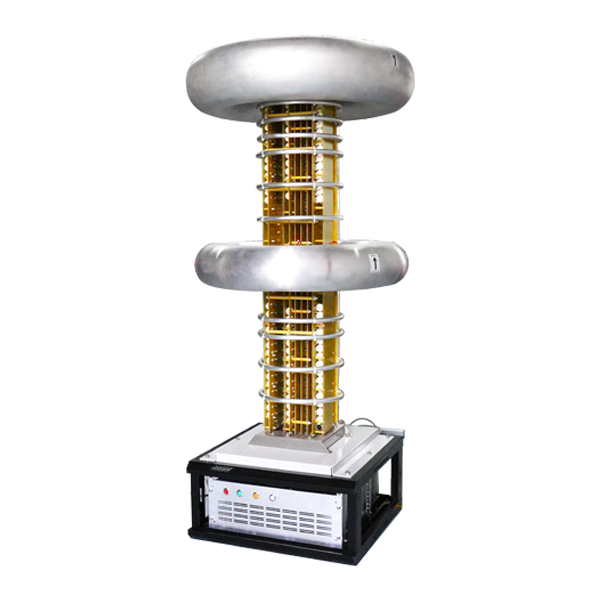
The high voltage power supply topology employed in ion implantation systems significantly influences the achievable precision and stability. Resonant charging systems and Insulated Gate Bipolar Transistor based designs offer different combinations of voltage regulation, ripple performance, and response time characteristics. Selection of appropriate topology depends on the specific implant requirements including energy range, current range, and dose precision specifications.
Arc protection in ion implantation power supplies must balance the need for rapid arc interruption against the need to minimize beam downtime for dose accuracy. Ion source discharges and acceleration column arcing occur periodically in high-current implanters, requiring detection and recovery systems that restore operation quickly while accounting for dose already delivered. Sophisticated control algorithms track dose accumulation through arc events and adjust implant termination timing accordingly.
Energy contamination effects in ion implanters relate to power supply characteristics through charge exchange processes in the beamline. Ions that change charge state during transport experience different effective energies depending on where the charge exchange occurs relative to the accelerating electrodes. Power supply voltage ripple and transient behavior affect the energy distribution of both primary ions and charge-exchanged species, potentially influencing implant profile characteristics.
Beam current stability requirements for precise dose control typically specify variations less than 1 percent over implant durations ranging from seconds to hours. Achieving this stability requires stable ion source operation, consistent vacuum conditions, and power supply characteristics that do not introduce current fluctuations. Active feedback systems that adjust extraction voltage to maintain constant beam current help compensate for source aging effects and environmental variations.
Dose uniformity specifications for semiconductor manufacturing typically require variations less than 0.5 percent across the wafer surface. This uniformity depends on both the mechanical scanning systems and the power supply beam current stability throughout the implant. Any correlation between beam current drift and wafer position in the scan pattern can produce dose non-uniformity that must be corrected through calibration or real-time compensation.
Multi-charging implant processes that implant ions with multiple charge states require power supplies capable of operating at different voltage ranges while maintaining precision across all charge states. The power supply may need to rapidly transition between energy levels for different implant steps in batch processing configurations. Energy transition accuracy and settling time characteristics become important parameters for such multi-energy implant applications.
The ongoing advancement of semiconductor technology toward smaller device dimensions and more complex structures will continue to demand improvements in ion implantation dose precision. Power supply designs that combine the stability of traditional architectures with the flexibility and precision of modern digital control will enable implantation processes meeting future manufacturing requirements.