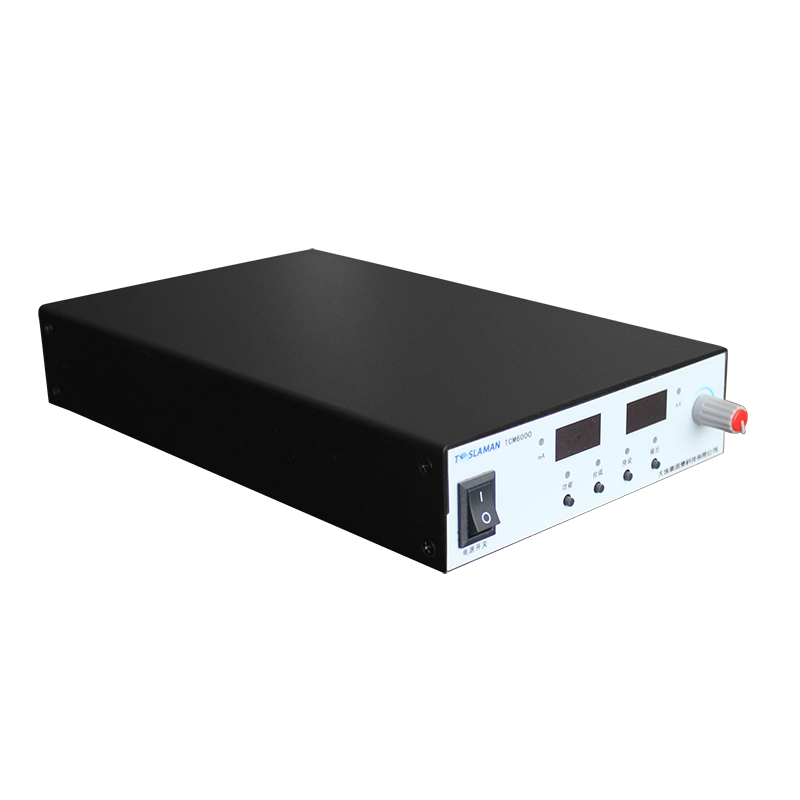
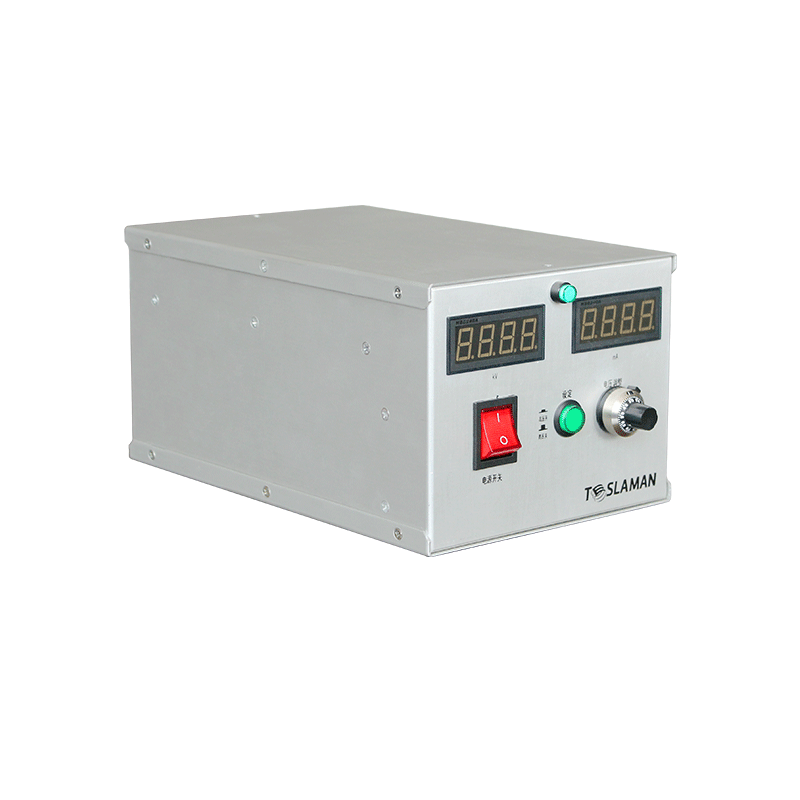
450kV High Voltage Power Supply Image Quality Enhancement in Industrial CT Non-Destructive Testing
Industrial computed tomography has revolutionized non-destructive testing by enabling three-dimensional visualization of internal structures without dismantling or destroying the test objects. The image quality achievable with industrial CT systems depends critically on the performance characteristics of the X-ray source high voltage power supply. At the 450kV energy level commonly employed for medium to large industrial components, power supply stability and precision directly determine spatial resolution, contrast sensitivity, and density discrimination capabilities.
The fundamental relationship between high voltage stability and CT image quality stems from the physics of X-ray generation. Higher accelerating voltages produce X-ray spectra with increased average energy and greater penetrating power. The penetrating ability determines which materials and component thicknesses can be effectively imaged. However, variations in voltage during scanning create artifacts and reduce the effective resolution of the imaging system. Power supply stability at 450kV must exceed 0.02 percent to enable high-resolution CT imaging without voltage-induced artifacts.
Voltage ripple creates detectable artifacts in CT reconstructions when the ripple frequency is not synchronized with the scanning rotation. The reconstructed image integrates X-ray transmission measurements over multiple voltage cycles. Any voltage variation creates corresponding variations in X-ray intensity and energy spectrum. These variations manifest as ring artifacts or concentric patterns in the reconstructed image. Advanced 450kV power supplies achieve ripple below 0.01 percent to minimize such artifacts in demanding CT applications.
The spatial resolution of industrial CT systems depends on the focal spot size of the X-ray source, which is determined by electron beam focusing and power supply stability. Higher beam currents create larger focal spots due to electron repulsion effects. Power supplies must maintain stable beam current with regulation better than 0.1 percent to achieve consistent focal spot size throughout the scanning duration. Focal spot stability directly affects the minimum detectable feature size in CT images.
Contrast sensitivity in CT imaging requires precise control of X-ray output intensity throughout the scanning process. The contrast between different materials in the reconstructed image depends on differences in X-ray attenuation coefficients. Power supply current regulation accuracy determines the stability of X-ray output intensity. Current fluctuations create noise in the projection data that propagates through the reconstruction algorithm as reduced contrast sensitivity. Industrial CT power supplies achieve current regulation below 0.1 percent to maintain contrast sensitivity above 1 percent in most applications.
Long scanning times for large industrial components place stringent requirements on power supply stability over extended periods. Scans of complex castings or assemblies may require several hours of continuous operation. During this period, the power supply must maintain voltage and current stability without drift. Temperature variations in power supply components can cause gradual parameter drift. Advanced thermal compensation circuits and cooling systems maintain stability throughout extended scans.
Penetrometer sensitivity represents a key performance metric for industrial CT systems used in casting inspection. The ability to detect small density variations within a homogeneous material depends on X-ray output stability and detector performance. Power supply noise and drift contribute to penetrometer sensitivity limitations. Industrial CT applications for aerospace and automotive casting inspection typically require penetrometer sensitivity of 2 percent or better, demanding exceptional power supply stability.
Dual-energy CT techniques enable material discrimination beyond simple density mapping. By acquiring scans at different accelerating voltages, the system can differentiate materials with similar density but different composition. Implementing dual-energy CT requires power supplies capable of rapid and precise voltage switching. The transition between voltages must settle within the time required for detector response to avoid artifacts. Modern 450kV power supplies achieve voltage switching and settling within 100 milliseconds for dual-energy CT applications.
Scatter radiation in industrial CT creates haze and reduces contrast in reconstructed images. Higher accelerating voltages increase scatter production, particularly when imaging dense materials. Power supply characteristics influence scatter levels through their effect on X-ray spectrum stability. Stable voltage output produces consistent X-ray spectra that enable effective scatter correction algorithms. Voltage fluctuations create spectrum variations that complicate scatter correction and reduce image quality.
Detector performance optimization requires matching the X-ray output characteristics to detector capabilities. Different detector technologies have optimal performance at different X-ray energy levels and intensity ranges. Power supply settings must be optimized for the specific detector system to maximize image quality. Flexible power supply control enables optimization for different detector types and scanning configurations.
Geometric unsharpness in CT imaging relates to the ratio of focal spot size to magnification factor. Higher magnifications provide better spatial resolution but also magnify the effects of focal spot size. Stable power supply operation maintains consistent focal spot size, enabling optimization of geometric factors for maximum resolution. Power supplies with excellent current stability support higher magnification CT geometries without focal spot-induced blurring.
The dynamic range of CT imaging systems depends on both detector characteristics and X-ray source stability. Power supply stability determines the usable dynamic range by establishing the noise floor for X-ray output. Higher stability enables detection of smaller signals and improves the effective dynamic range of the complete imaging system. Industrial CT applications often require dynamic ranges exceeding 100,000:1 to capture both dense and light regions in complex components.
Real-time radiography modes in industrial CT systems enable rapid inspection of production components. Real-time imaging requires power supplies with fast response to parameter changes and excellent stability during continuous operation. The ability to rapidly adjust voltage and current enables optimization for different regions within a single component. Power supplies with programmable waveforms support adaptive scanning strategies that optimize image quality throughout the component volume.
Quality assurance protocols for industrial CT systems include regular verification of power supply performance. Periodic measurements of voltage and current stability, ripple, and drift ensure continued compliance with imaging specifications. Automated QA procedures incorporate power supply diagnostics to detect developing problems before they affect production imaging. Power supplies designed for industrial CT include diagnostic outputs that facilitate ongoing performance monitoring.
Energy efficiency considerations become significant in high-throughput industrial CT facilities operating multiple systems continuously. Modern 450kV power supplies achieve conversion efficiency above 90 percent through advanced switching topologies and optimized magnetic components. Improved efficiency reduces operating costs and thermal management requirements while maintaining the stability essential for high-quality CT imaging. The continued development of power supply technology enables ongoing improvement in industrial CT image quality and throughput.