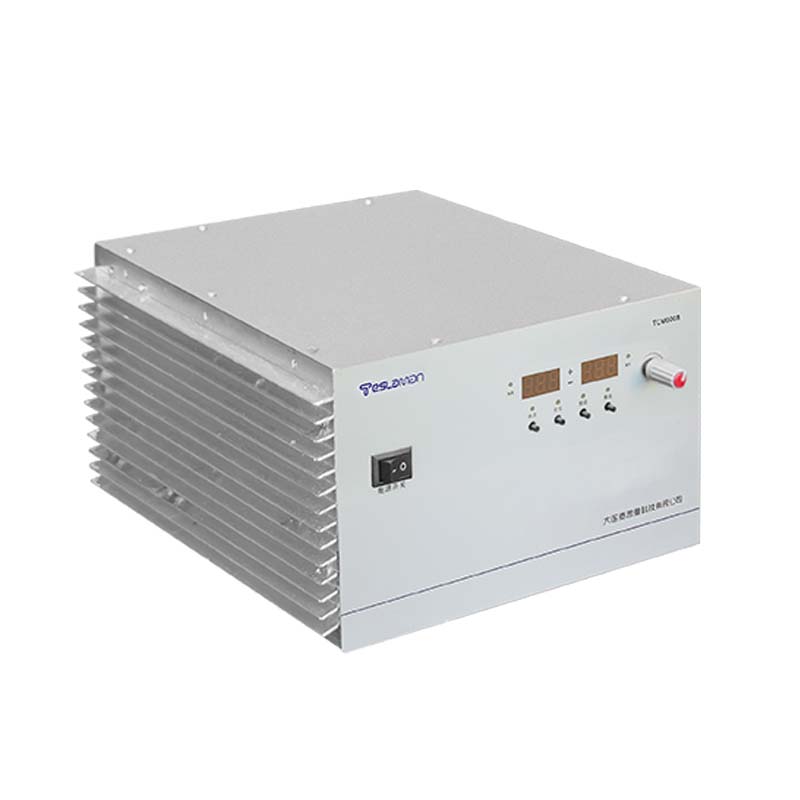
ppm-Level High Voltage Power Supply Micro-Voltage Regulation in Atomic Precision Instruments
Atomic precision instruments including scanning probe microscopes, focused ion beam systems, and atom probe tomography equipment demand high voltage power supplies with stability and resolution capabilities substantially exceeding conventional industrial requirements. Achieving voltage regulation at parts-per-million levels presents unique engineering challenges requiring specialized design approaches, careful component selection, and sophisticated control strategies. Understanding these requirements enables development of power supplies supporting atomic-scale measurements and manipulations. Such precision enables revolutionary capabilities in materials characterization and nanofabrication. The continued advancement of atomic precision instruments drives increasing demands for power supply stability and accuracy.
Parts-per-million regulation implies voltage stability and resolution of one part in one million, equivalent to one microvolt per volt. For a 10 kilovolt supply serving many atomic precision applications, this translates to stability and setability of 10 millivolts. Achieving such performance requires addressing thermal effects, noise sources, component tolerances, and measurement limitations comprehensively through integrated design approaches. The challenge increases as voltage levels rise, requiring proportionally tighter absolute stability in absolute voltage terms. Parts-per-million performance requires systematic optimization of all design parameters.
Temperature sensitivity represents the fundamental limitation in achieving parts-per-million stability. All electronic components exhibit temperature coefficients causing output variations with temperature changes. Voltage reference devices, the foundation of regulation accuracy, typically exhibit temperature coefficients ranging from 0.1 to 10 parts per million per degree Celsius even in premium grades. Achieving overall system temperature coefficient below 0.01 parts per million per degree Celsius requires sophisticated compensation techniques and carefully controlled thermal environments. Temperature-induced drift limits achievable stability regardless of other design optimizations. Temperature management is essential for ultra-stable power supply design.
Thermal design strategies for ultra-stable power supplies employ multiple approaches simultaneously. Temperature-controlled enclosures maintain power supply internal temperature constant within 0.01 degrees Celsius, reducing effective temperature coefficients by factors exceeding 100 compared to uncontrolled operation. Component matching techniques use temperature tracking between critical elements to cancel temperature coefficients. Active temperature compensation circuits measure temperature and apply correction factors derived from calibration data. Combined application of these techniques achieves effective temperature coefficients below 0.1 parts per million per degree Celsius. Thermal design must balance stability requirements against power consumption and system complexity.
Noise reduction in parts-per-million stable power supplies demands attention to numerous noise sources. Thermal noise in resistive components, shot noise in semiconductor junctions, and external electromagnetic interference all contribute to output noise. Low-noise design techniques including low resistor values in critical networks, low-leakage semiconductor selections, and comprehensive filtering reduce intrinsic noise below one microvolt root-mean-square in bandwidths up to 10 hertz. Shielding against external interference requires careful enclosure design and attention to grounding and cabling practices. Noise performance must be verified across all frequencies affecting instrument operation. Noise reduction requires addressing all noise sources systematically.
Voltage reference selection critically determines achievable stability. Zener diode references offer excellent noise performance but exhibit higher temperature coefficients and drift compared to alternative technologies. Buried zener references improve temperature stability through integrated compensation circuits. Thermally stabilized references achieve temperature coefficients below 0.05 parts per million per degree Celsius through integrated temperature control. The highest stability applications employ Josephson junction arrays providing intrinsic accuracy derived from fundamental physical constants. Reference selection must balance stability requirements against cost, size, and power consumption constraints. Reference technology selection fundamentally limits achievable performance.
Digital-to-analog converter resolution determines voltage setability in programmable supplies. Achieving one part per million setability requires converters with resolution exceeding 20 bits. Commercially available converters achieve resolutions up to 32 bits, though differential nonlinearity and integral nonlinearity specifications limit usable accuracy below nominal resolution. Careful characterization and correction of converter nonlinearity enables effective setability approaching the resolution limit. Converter selection must consider both resolution and linearity specifications relevant to the application. High-resolution converter design requires attention to both accuracy and stability.
Feedback control loop design for ultra-stable power supplies optimizes for stability over bandwidth. Regulation bandwidths of a few hertz suffice for atomic precision applications because these instruments operate slowly relative to electronic timescales. Low bandwidth enables aggressive filtering of high-frequency noise without compromising stability margins. Proportional-integral-derivative control algorithms with carefully tuned parameters maintain stability across operating ranges while rejecting disturbances within the regulation bandwidth. Control loop design must account for component variations and aging effects over equipment lifetime. Control system design determines stability and noise rejection performance.
Output measurement and monitoring capability enables verification of performance specifications. Precision voltage dividers scaling high voltage outputs to measurable levels must maintain ratio stability better than the specified regulation accuracy. Temperature-stable resistor networks and capacitive dividers achieve ratio stabilities below one part per million when properly designed and constructed. Calibration against traceable standards verifies absolute accuracy, while relative stability measurements over time characterize drift behavior. Measurement system design must avoid introducing errors that mask power supply performance. Precision measurement capability supports performance verification and quality assurance.
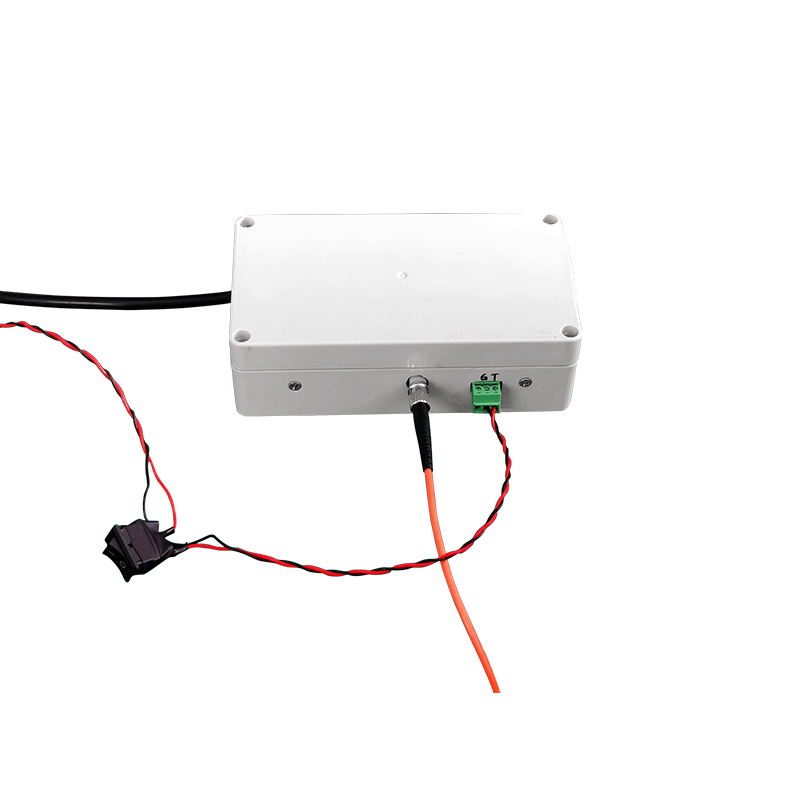
Isolation requirements for atomic precision instruments address both safety and noise rejection. High voltage electrodes in scanning probe microscopes typically operate at potentials of several kilovolts relative to ground. Isolation barriers must withstand these potentials while introducing minimal stray capacitance coupling noise into sensitive measurement circuits. Optical fibers provide excellent isolation for control and data signals, while high voltage isolation amplifiers enable analog feedback across isolation barriers. Isolation system design must maintain both safety and performance requirements simultaneously. Isolation design affects both safety and measurement quality.
Environmental requirements for parts-per-million stable power supplies often exceed those of the instruments they serve. Temperature stability within 0.1 degrees Celsius enables achievement of ultra-stable performance, while greater temperature variations compromise stability specifications. Humidity control prevents insulation degradation and leakage current variations. Vibration isolation prevents microphonic effects in components with mechanical sensitivity. Meeting these environmental requirements in laboratory settings typically requires dedicated enclosures or rooms. Environmental control costs must be considered in total system cost.
Calibration and verification procedures for ultra-stable power supplies employ precision instrumentation traceable to national standards. Calibrated digital voltmeters with accuracy exceeding one part per million verify output voltage. Precision voltage dividers enable measurement of outputs exceeding voltmeter ranges. Calibration laboratories specializing in high voltage metrology provide traceable calibration services. Regular calibration intervals, typically monthly for highest stability applications, maintain specification compliance. Calibration procedures must verify all performance parameters affecting instrument operation. Calibration supports both performance verification and regulatory compliance.