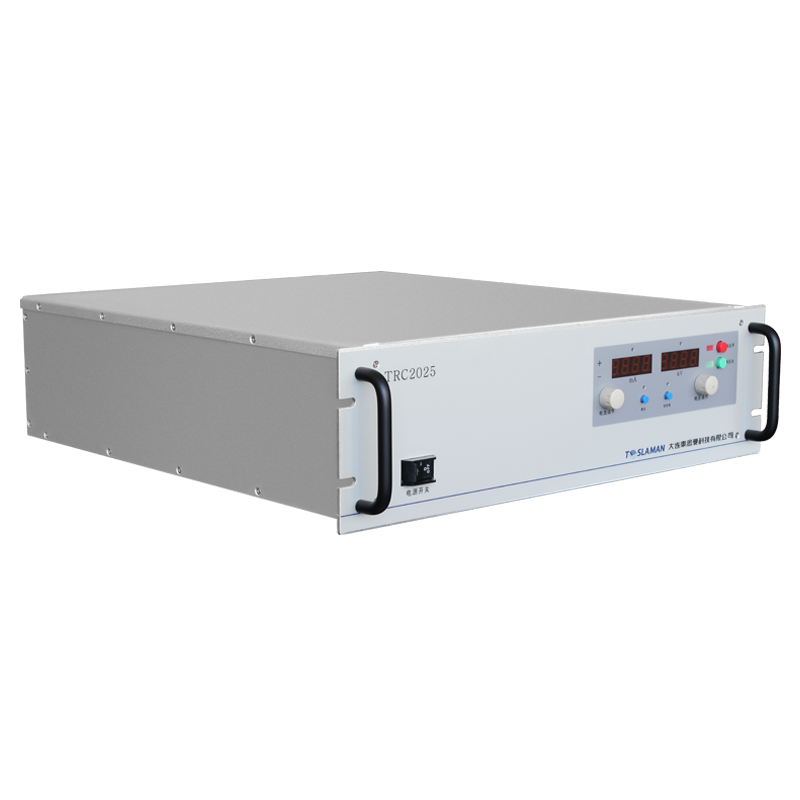
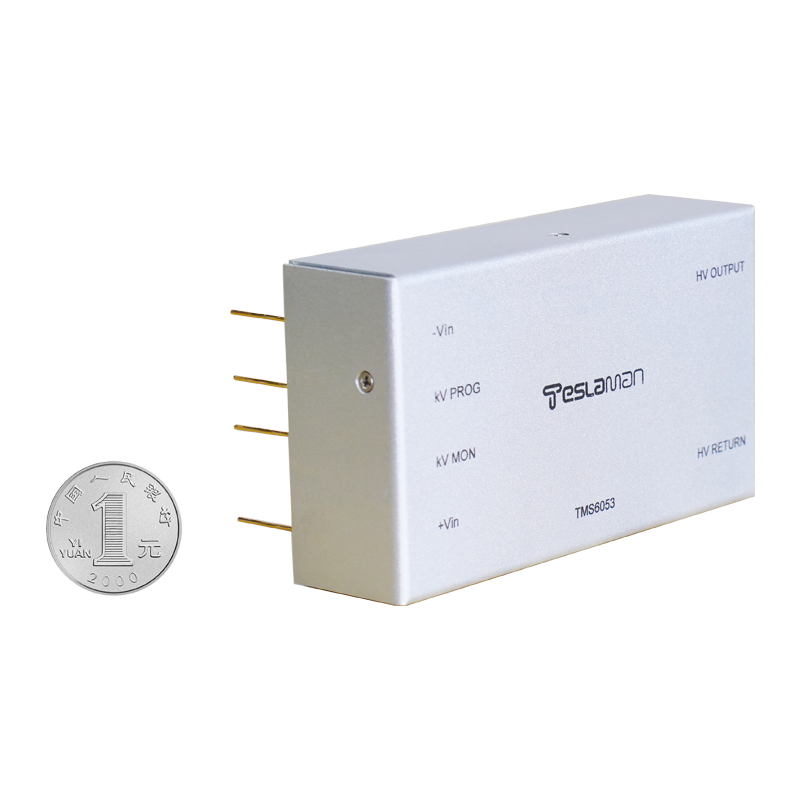
Ion Beam System High Voltage Power Supply Precise Dose in Ion Etching Process
Ion beam etching processes employed in semiconductor manufacturing require precise control of ion dose to achieve reproducible etch results across diverse material systems. The high voltage power supply providing the ion acceleration potential directly influences both the ion energy and the dose delivered to the substrate. Understanding the relationship between power supply performance and etch process characteristics enables optimization of manufacturing processes for advanced semiconductor devices. This integration of high voltage technology with ion beam processing represents a critical semiconductor manufacturing capability.
The fundamental operation of ion beam etching systems involves extracting ions from a plasma source, accelerating them through a high voltage potential, and directing the resulting beam toward the substrate surface. Ion energy, determined by the extraction voltage, affects both the etch rate and the selectivity between different materials. The ion dose, determined by the integrated beam current over time, determines the total material removed during the etch process. Power supply characteristics fundamentally influence both of these critical parameters. Understanding these relationships is essential for process control.
Voltage stability requirements for ion beam etching arise from the sensitivity of etch characteristics to ion energy variations. Variations in extraction voltage create variations in ion energy that affect etch rate uniformity and selectivity. For processes requiring nanometer-scale etch depth control, voltage stability approaching 0.1 percent may be necessary throughout the etch sequence. Power supplies designed for ion beam etching incorporate precision regulation circuits that achieve the necessary stability under varying load conditions. Voltage stability represents a critical specification for ion beam etching power supplies.
Beam current control in ion etching systems requires accurate measurement and regulation over a wide dynamic range to accommodate different process requirements. The ion beam current determines the etch rate and must be controlled precisely to achieve target etch depths. Current measurement circuits must maintain accuracy over several decades of current range to accommodate different process conditions. Current regulation loops must respond to variations in plasma conditions while maintaining stable beam current throughout the etch process. Current control represents a critical capability for ion beam etching systems.
Ion source operation places specific requirements on the high voltage power supply beyond the extraction voltage function through multiple power supply requirements. Plasma generation typically requires additional power supplies for discharge maintenance and neutralization. Coordination between these various power supplies enables stable plasma conditions that support consistent ion beam characteristics. Power supply designs optimized for ion beam systems integrate these various functions within a unified control architecture. Power supply coordination represents an important aspect of ion beam system design.
Beam profile uniformity across the substrate depends partially upon extraction electrode geometry and the associated electric field distribution. The high voltage applied to the extraction electrodes creates the electric field that accelerates ions from the plasma boundary. Non-uniformities in this field translate to non-uniformities in ion flux across the substrate. Power supply designs must minimize ripple and noise that could create time-varying non-uniformities in the beam profile. Uniformity control represents a critical requirement for semiconductor etching applications.
Charge neutralization systems in ion beam etching require coordination with the high voltage power supply to prevent substrate charging during etching. Ion bombardment can cause charge accumulation on insulating surfaces, creating potentials that distort ion trajectories and affect etch uniformity. Neutralizer systems that provide electron flood guns require power supplies synchronized with the ion beam operation. The extraction voltage influences neutralizer operating parameters, and coordinated control ensures effective charge neutralization. Charge neutralization represents an important capability for etching insulating materials.
Endpoint detection systems for ion beam etching may utilize optical emission or mass spectrometry to detect the completion of etch processes. These detection systems must operate reliably in the presence of high voltage fields generated by the ion beam power supply. Electromagnetic compatibility design ensures that power supply operation does not interfere with sensitive endpoint detection electronics. Shielding and filtering techniques minimize coupling between power supply and detection systems. Endpoint detection integration represents an important capability for automated etching processes.
Process gas introduction and control systems must coordinate with ion beam power supply operation to maintain stable plasma conditions. Gas flow rates affect plasma characteristics and hence ion beam current and composition. The power supply must accommodate the varying plasma impedance that results from gas flow variations. Automated process control systems coordinate gas flow and power supply parameters to maintain consistent etch conditions throughout the process. Gas flow coordination represents an important aspect of etch process control.
Temperature management in ion beam etching systems involves both process temperature control and power supply thermal management to ensure stable operation. Substrate temperature affects etch characteristics and must be controlled through chuck heating or cooling. Power supply thermal management ensures stable operation despite heat generation in high voltage components. The power supply enclosure may incorporate active cooling systems that maintain component temperatures within specified limits. Temperature management represents a critical design consideration for ion beam etching systems.
Safety systems for ion beam etching power supplies must address both electrical and radiation hazards present during system operation. High voltage presents shock and arc flash risks that require comprehensive interlock systems. Ion beam operation generates secondary radiation that requires shielding and access controls. Power supply designs integrate with facility safety systems to ensure operator protection during all operational modes. Safety system design represents a critical aspect of ion beam system development.
Calibration and process qualification procedures for ion beam etching require verification of power supply output parameters to ensure process accuracy. Beam energy, determined by extraction voltage, must be verified using calibrated measurement systems. Beam current measurement accuracy directly affects dose calculation and etch depth prediction. Comprehensive calibration protocols support the quality systems necessary for semiconductor manufacturing environments. Calibration represents an essential quality assurance activity for ion beam etching systems. The precise dose control enabled by high voltage power supplies has become essential for advanced ion beam etching processes in semiconductor manufacturing. The continued advancement of electron beam modification technology depends upon ongoing improvements in high voltage power supply performance. Precision, stability, and reliability requirements continue to increase as semiconductor device dimensions shrink.