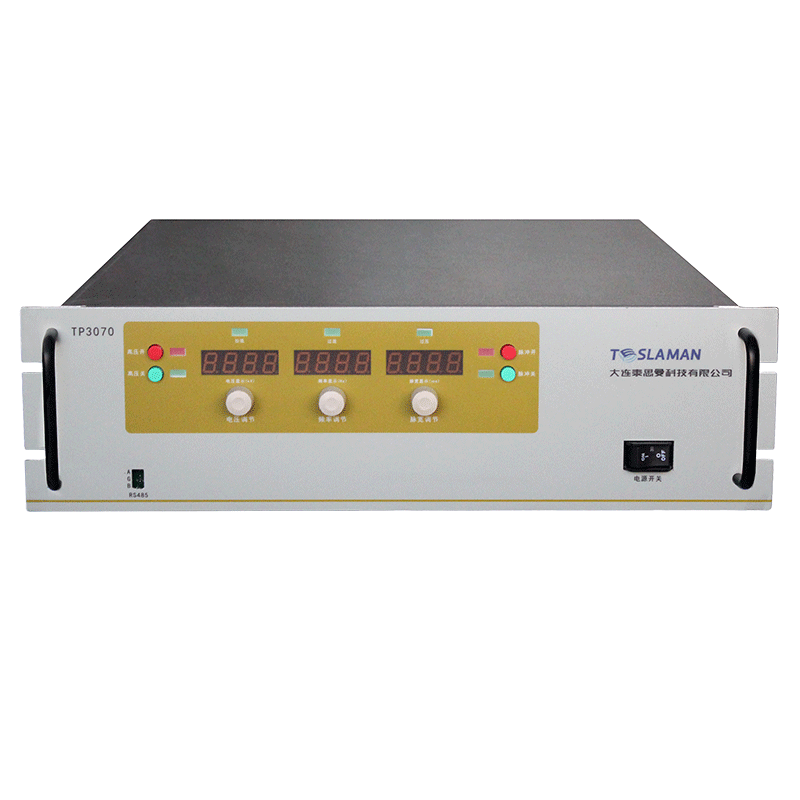
Electrostatic Flocking High-Voltage Power Supply in Automotive Seat Fabric Adhesion Density
Electrostatic flocking is a process in which short fibers are deposited onto an adhesive-coated substrate to create a velvet-like surface. The process is used extensively in the production of automotive interior materials, including seat fabrics, where the flocked surface provides a soft texture and an attractive appearance. The high-voltage power supply that charges the fibers during the flocking process determines the density and orientation of the flocked fibers, which are key indicators of the quality of the finished material.
The electrostatic flocking process relies on the charging of the fibers as the fibers pass through an electric field. The fibers are oriented by the electric field and propelled toward the adhesive-coated substrate, where the fibers embed to form the flocked surface. The charging voltage and the field strength determine the force acting on the fibers and the density with which the fibers deposit on the substrate. The control of these parameters is essential for achieving the desired flock density and uniformity.
The density of the flocked fibers affects the appearance, texture and durability of the seat fabric. A higher fiber density produces a denser, more uniform surface with better coverage of the substrate, while a lower density may leave gaps and produce a thinner appearance. The power supply must deliver the voltage and field conditions that produce the target fiber density, and the process must be controlled to maintain the density consistently across the fabric.
The orientation of the flocked fibers is also influenced by the electric field. Fibers aligned perpendicular to the substrate produce a more uniform and attractive surface, while misaligned fibers can create a patchy or irregular appearance. The field configuration and the charging conditions must be optimized to promote the correct orientation of the fibers during deposition. The power supply and the electrode arrangement work together to establish the required field characteristics.
The uniformity of the flock density across the fabric is important for the consistency of the product. Variations in the flock density across the width or along the length of the fabric would produce visible differences in the appearance and quality. The power supply must maintain a stable field across the full flocking area, and the process conditions must be controlled to ensure uniform deposition.
The throughput of the flocking process depends on the efficiency with which the fibers are deposited. The process must operate at a production speed that meets the demand for seat fabric, and the flocking conditions must be maintained as the substrate moves through the process. The power supply must support the continuous operation of the process without degradation of the output characteristics.
The adhesion of the flocked fibers depends on the condition of the adhesive layer and the penetration of the fibers into the adhesive. The fiber density and the process conditions affect the degree to which the fibers become embedded and bonded to the substrate. The power supply contributes to the adhesion quality through the control of the deposition process, and the finished fabric must meet the durability requirements for automotive interior applications.
The environment of the flocking process must be managed to achieve consistent results. The moisture content of the fibers and the ambient humidity affect the charging behavior, and the process must be controlled to compensate for environmental variations. The power supply and the process control system must respond to these variations to maintain the target flock density and quality.
The safety of the electrostatic flocking system requires appropriate protective measures. The high voltage used in the process presents a hazard to personnel, so the equipment must be enclosed and interlocked to prevent access to live parts. The potential for static discharge must be managed, and the grounding of the equipment must be maintained to ensure safe operation. The safe operation of the system is essential in an industrial production environment.
The efficiency of the flocking process is influenced by the energy consumption of the power supply and the effectiveness of the charging. Efficient power conversion reduces the energy cost and the thermal load on the system. The charging efficiency affects the transfer of the fibers and the amount of material required to achieve the target density. The optimization of these factors contributes to the economic performance of the flocking operation.
The quality control of the flocked fabric involves the measurement of the fiber density, the uniformity and the adhesion. The measured quality indicators provide feedback for the adjustment of the process parameters, including the charging voltage and the field conditions. The relationship between the process parameters and the product quality guides the optimization of the flocking process. The high-voltage power supply plays a central role in this optimization, as the output characteristics of the supply directly influence the deposition of the fibers and the resulting quality of the automotive seat fabric.
The productivity of the flocking operation is influenced by the speed of the substrate transport and the efficiency of the fiber deposition. The process must balance the production throughput with the quality requirements, since excessive speed may reduce the flock density and the uniformity. The power supply and the process control system must support the adjustment of the operating parameters to achieve the desired balance. The continuous monitoring of the process and the feedback of the quality data enable the optimization of the operating conditions, supporting the efficient production of the high-quality flocked fabric for automotive interiors.
The development of the flocking process for new fabrics and applications involves the characterization of the material properties and the optimization of the process parameters. The trials conducted with different settings of the charging voltage and the process conditions provide the data for the selection of the optimal operating point. The evaluation of the trial results, including the flock density, the uniformity and the adhesion, guides the refinement of the process. The systematic development approach ensures that the flocking process is well adapted to the specific requirements of each application.
The comparison of the trial results across the different process conditions provides the basis for the selection of the optimal settings and the establishment of the standard operating parameters for the production.