Optimization of electrostatic flocking high-voltage power supplies in home textiles and automotive seat fabrics
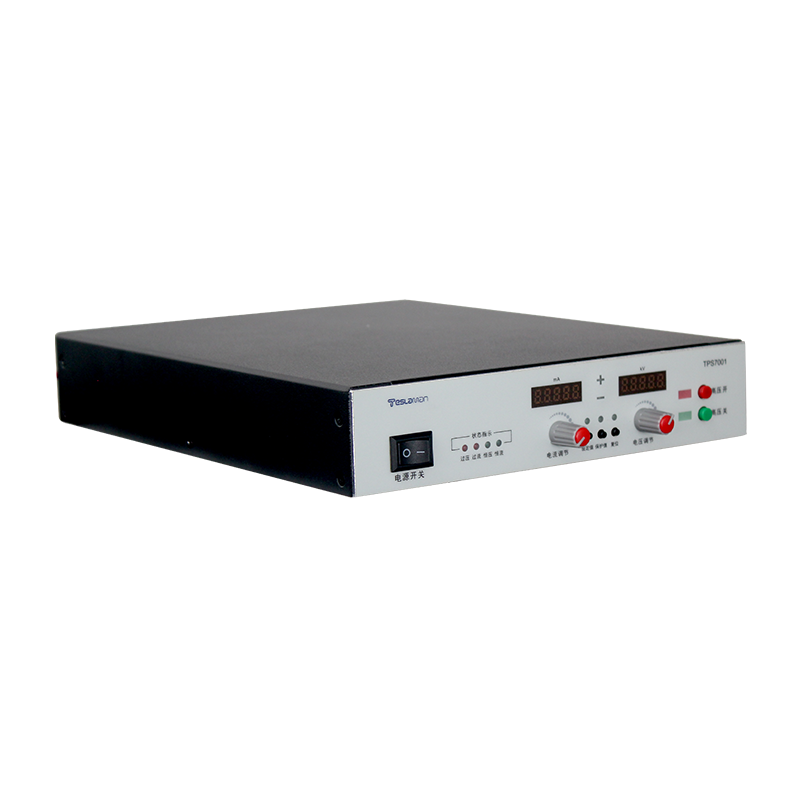
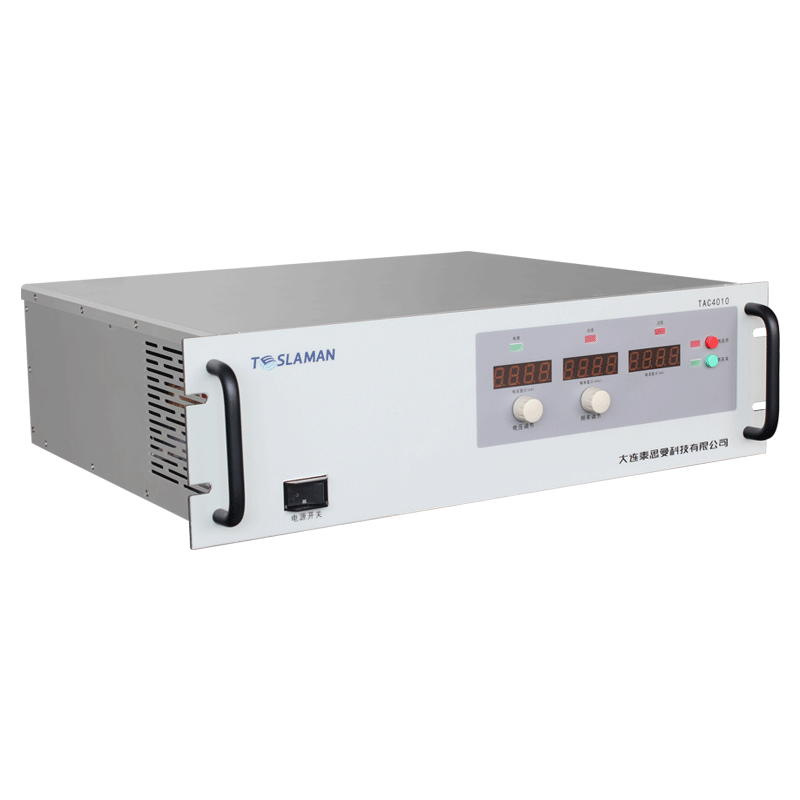
The flocking line in the textile shop runs a 90 kV supply, rated 15 mA, feeding a row of horizontal electrode bars above the conveyor belt. Fabric passes under the bars at 6 m per minute, adhesive-coated on the face, and short nylon fibers fly from a vibrating feed box onto the charged field. Working field strength at the fabric surface holds around 5.5 kV per centimeter, measured by dividing 90 kV by the 16 cm bar-to-fabric gap. Fiber length on home textile jobs runs 0.9 mm, and on automotive seat fabric jobs runs 1.5 mm, and the longer fibers need a slightly stronger field to stand upright, so the automotive recipe sets 96 kV. The supply cabinet sits beside the line at floor level, and the HV runs to the bars through rigid aluminum channel covered by a slotted aluminum duct for operator protection.
Fiber charge decides flight behavior more than raw voltage. Each fiber picks up charge proportional to the bar field, and at 96 kV the 1.5 mm fibers carry roughly 12 pC each, enough to accelerate through the gap in about 40 ms and embed in the adhesive with the tip standing vertical. Raising voltage to 110 kV shortens flight time but sends a fraction of fibers past the fabric into the booth wall, and the overspray on the wall rises from 8 percent to 18 percent of the feed. The shop settled at 96 kV on the automotive line and 84 kV on the curtain line, since lower voltage on the curtain fabric leaves fibers lying flatter, which the curtain customers want for a soft hand feel. Voltage changes between recipes take 10 seconds of ramp, and the line controller remembers the setpoint per product code.
Electrode layout spreads the field across the 1.8 m fabric width. Seven bars, each 2 m long, spaced 25 cm apart, span the booth, and each bar hangs from two ceramic insulators. Field at the fabric edges measures 12 percent weaker than center because the edge bars see half a return path, and the edge zones show 15 percent lower fiber density on the first pass. The fix tapered the edge bar supply current: edge bars now run 1.2 times the center bar current through individual current regulators, and the density spread fell to 4 percent. Adding a full eighth bar at each edge would cost another regulator channel and 30 percent more cabinet wiring, and the shop left that option on the drawing board after the taper fix worked.
Adhesive wetness interacts with voltage in a way the suppliers never warn about. Freshly coated PVC adhesive holds moisture, and a damp layer conducts the landing fibers into a slow discharge that pulls nearby fibers sideways, producing swirl patterns in the nap. The booth extraction, a 12000 cubic meter per hour fan, pulls moist air off the fabric and drops the layer moisture enough that swirls disappear, but on humid mornings the extraction runs at full speed for 20 minutes before the first good fabric leaves. Humidity above 65 percent in the shop also raises the surface conductivity of the adhesive, and the supply current creeps from 6 mA to 9 mA as leakage through the wet layer grows. The creep trips a nuisance overcurrent alarm on damp days, and the alarm threshold moved from 12 mA to 14 mA after two months of false stops.
Booth extraction removes loose flock but ages the insulators. Overspray fibers drift into the booth air and settle on the ceramic insulators above the bars, forming a fuzzy layer that slowly tracks under the 90 kV stress. After 3 months, one insulator developed a faint surface discharge visible in the dark as a blue glow, and the discharge current added 0.4 mA to the supply reading. The insulator swap takes 40 minutes with the booth open, and the shop wipes all seven insulators at the quarterly maintenance stop rather than waiting for the glow. A silicone coating on the insulator sheds flock dust and extends the wipe interval to 6 months, and the coating cost 25 dollars per bar at application time.
Current limit protection prevents fabric burn-through. If a fabric seam or thick adhesive blob touches the bar gap through a wrinkle, the field collapses into an arc, and the supply sees the current jump past 15 mA in under 5 ms. The supply trips and the conveyor stops, and the operator inspects the fabric length for burn marks. On the home textile line, trips average 2 per shift; on the automotive line, where adhesive weight runs higher at 90 grams per square meter, trips run 5 per shift. A slower trip delay of 20 ms was tried to catch fewer nuisance stops, and one delayed trip burned a 3 mm hole through a seat fabric sample, so the delay went back to 5 ms. The burn repair, patch and reflock, takes 20 minutes per hole.
Voltage stability across the 8-hour shift sets nap uniformity. Bar field drifts with ambient temperature, because the supply output rises 0.1 percent per degree of cabinet temperature, and the cabinet warms from 22 to 31 degrees over a shift, pushing field strength up 0.9 percent. The nap height on a trial fabric measured with a needle profilometer grew from 1.48 mm to 1.51 mm across the shift, a spread that customers tolerantly accept for automotive trim but reject on dark curtain fabrics, where nap direction shows as shading. The curtain supply now sits in a small air-conditioned alcove held at 24 degrees, and the nap spread shrank to 0.01 mm. The alcove adds 400 W of cooling load continuously.
Flock recycling changes the current picture. Overspray fibers collected by the booth filter get screened and fed back into the vibrating box, and recycled fibers carry residual charge and residual adhesive dust. After three recycles, the fibers clump and draw extra charging current, pushing supply current from 6 mA to 7.5 mA on the same fabric. The clumps also produce visible thick spots in the nap, and the shop caps recycles at two passes before discarding the flock and opening a new bag. Flock cost per meter of seat fabric runs 2.1 dollars, and capping recycles adds 0.3 dollars to that figure. The line accepted the cost after a customer rejected a batch for clump density.
Line start-up follows a fixed order. Conveyor runs first at speed, adhesive roller engages, extraction fan reaches full airflow, and only then ramps high voltage from zero to setpoint over 5 seconds. Reverse order in the first months of operation left charged fibers floating in the booth air at start, and the fibers coated the inside walls with a static film that attracted lint for days. The written start sequence now lists the ramp step last, and the PLC enforces the order so an operator cannot skip. Shut-down ramps voltage down first and waits 30 seconds before stopping the extraction, to let charged air clear.
A short trial on molded seat bolsters exposed a gap in the booth design. The bolsters are 3D shapes, not flat fabric, and the bar field treats the curved surface unevenly: the crown sees full field, the side walls see 40 percent, and fibers on the walls lay flat. The trial ran a hand-held electrostatic gun beside the booth, and the gun supply, a portable 60 kV at 2 mA unit, treated the side walls manually while the main booth covered the crown. Cycle time per bolster doubled to 90 seconds, and the trial batch of 300 bolsters passed inspection but at a cost the job estimator flagged as marginal. A new booth with a rotating electrode array sits in the capital plan for next year.
Spare parts stock stays small but specific. The cabinet carries one spare bar transformer, one spare insulator set of 7, and a spare current regulator board. Bar transformer failures average one per year, and a failed transformer takes 3 hours to swap including cooldown of the booth. The insulator set gets used once per quarter on schedule, and the regulator board has never failed in 5 years. Routine cleaning of the HV channel, wiping dust from the aluminum duct inside, happens monthly and takes 1 hour. Energy consumption per meter of flocked fabric averages 0.45 kWh, dominated by the extraction fan rather than the high-voltage supply, which draws under 1 kW at the bars.
Edge trim on customer fabric rolls is the silent loss in the costing. Booth width covers 1.9 m of fabric, but customer rolls arrive at 1.8 m, leaving two 5 cm side strips where the bar field falls off and fibers lie flat. The flat strips show as a smooth border that customers cut off and discard, and the waste runs 6 percent of roll area on home textile orders. On automotive seat fabric, where the pattern cuts follow a layout, the side strips feed sample swatches and get used fully, so the waste there stays under 2 percent. The line weighs trim bins per shift and reconciles against the roll ticket, and one quarter the trim weight ran 9 percent high, traced to the edge density recipe running at the old 84 kV instead of the retuned 88 kV after a control board swap. The board swap had lost the recipe parameter, and the retune took a 2-hour trial panel before the line agreed on the new value. Adhesive buildup on the underside of the conveyor belt, a 2 mm layer per week, gets scraped off during the weekly stop, and the scraped adhesive goes to solvent recovery.
Booth lighting decides whether a batch passes visual inspection. Two rows of LED strips above the conveyor illuminate the fabric at 800 lux, and the inspector checks nap uniformity under the strips on a sample swatch at each roll end. After 2 years, the LED lenses yellow from flock dust exposure, and the color temperature drifts from 5000 K to 4200 K, which makes white nylon fibers look cream on the booth while looking white under customer showroom lights. Three batches went to the customer with a color dispute before the lens replacement schedule started. LED strips now swap on a 24-month schedule, at 60 dollars per row, and a luminance meter check at the quarterly visit flags any row below 750 lux. Fiber color varies between production lots of nylon, and incoming flock gets compared against a sealed swatch book before unloading, with out-of-tolerance lots returned to the flock supplier. The swatch book pages, replaced yearly, cost 120 dollars.
Adhesive application rollers set the coating weight that the booth works with. The applicator rolls a water-based adhesive at 90 grams per square meter onto seat fabric, and the roll gap sets the weight, checked weekly with a magnetic foil gauge on 5 sample points across the width. Roll gap drift of 0.05 mm changes coating weight by 6 percent, and the drift showed as fibers lying flat where adhesive ran thin. The roller cleaning, a solvent wipe at every shift change, removes adhesive skin that otherwise builds a ridge and stripes the fabric. A dried ridge once ran 300 meters before the inspector spotted the stripe pattern, and the 300 meters went to the secondary market at half price. The adhesive tank, a 60 liter heated unit held at 35 degrees, gets a nightly drain and refill, and the refill batch gets viscosity checked with a dip cup, at 18 seconds per cup. Viscosity above 21 seconds means the adhesive is setting in the tank, and the tank jacket flushing procedure takes 45 minutes. Pump filters on the adhesive line change monthly, and a clogged filter once starved the roll, cutting coating weight to 60 grams per square meter and producing a batch of loose-nap fabric that the customer rejected.
The rejected batch of 1200 meters sits in secondary stock, and the account writes off nap quality at 40 percent of fabric value. The line now adds a mid-shift foil gauge check between the two weekly checks, and the extra check catches gap drift within one shift rather than waiting a week. Gap adjustment follows a dial on the roll stand, and the dial vernier reads 0.01 mm, enough resolution to hold the 90 grams per square meter target within 4 grams. The dip cup viscosity check also runs at the mid-shift point, and a viscosity reading outside 17 to 19 seconds triggers a tank sample before the next roll of fabric starts. Sample trays under the applicator collect drips, and the trays empty at every shift change. Dry drips on the tray, a sign of slow seepage past the roll doctor blade, get reported to maintenance, and the doctor blade re-tightening takes 15 minutes.